Electric Toothbrush Market Size, Share, Growth, Trends, Industry Analysis & Forecast 2026–2034
Buy NowElectric Toothbrush Market Forecast
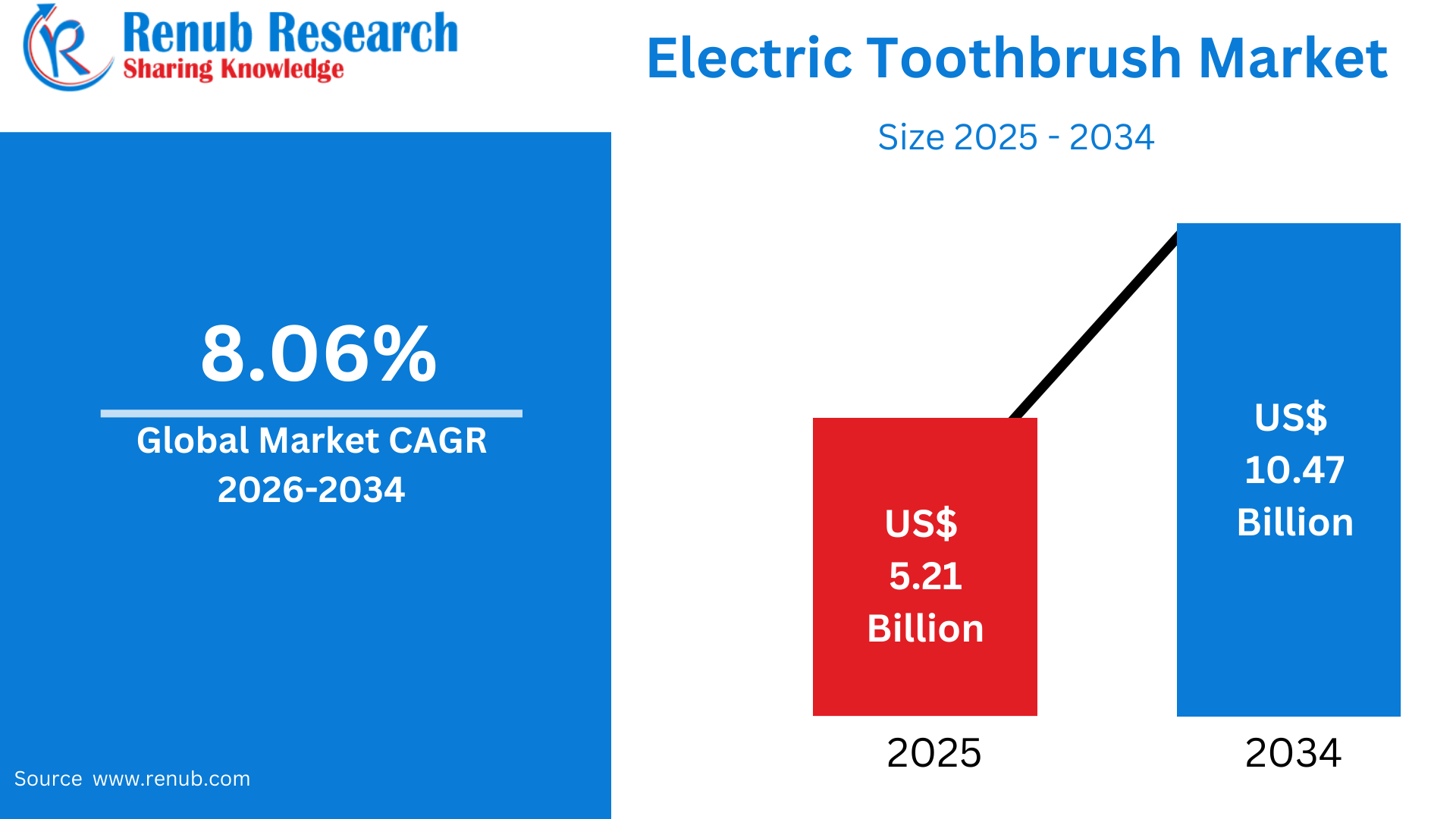
Electric Toothbrush Market is projected to grow from US$ 5.21 billion in 2025 to US$ 10.47 billion by 2034, expanding at a CAGR of 8.06% during the forecast period from 2026 to 2034. The market is experiencing strong growth due to increasing awareness of oral health and preventive dental care, coupled with the rising adoption of smart personal healthcare devices. Consumers are increasingly choosing electric toothbrushes for their superior plaque removal, ease of use, and ability to promote healthier brushing habits. Technological advancements, including sonic and oscillating brush technologies, pressure sensors, Bluetooth connectivity, mobile app integration, and AI-powered brushing guidance, are further enhancing product appeal.
What is an Electric Toothbrush and Its Uses & Popularity Worldwide?
An electric toothbrush is a battery-operated or rechargeable oral care device that uses oscillating, rotating, sonic, or ultrasonic movements to clean teeth more effectively than a traditional manual toothbrush. It is designed to remove plaque, reduce tartar buildup, improve gum health, and maintain overall oral hygiene with minimal effort from the user. Many modern electric toothbrushes feature advanced technologies such as pressure sensors, multiple brushing modes, timers, Bluetooth connectivity, mobile app integration, and artificial intelligence (AI)-based brushing guidance, helping users develop proper brushing habits and achieve better cleaning results.
Electric toothbrushes are widely recommended by dental professionals for individuals with braces, dental implants, sensitive gums, limited hand mobility, and those seeking enhanced oral care. Worldwide, the popularity of electric toothbrushes has increased significantly due to rising awareness of preventive dental care, growing disposable incomes, and expanding access to premium personal care products. Increasing urbanization, technological innovation, and the availability of smart oral care devices through online and retail channels have further accelerated adoption. As consumers place greater emphasis on health, convenience, and advanced personal care solutions, electric toothbrushes have become an essential part of modern daily oral hygiene routines across both developed and emerging markets.
Dental disease prevalence
- Dental caries remains the most common health condition worldwide, with an estimated 2.5 billion people living with untreated tooth decay in permanent teeth.
- Around 514 million children have untreated decay in their primary teeth.
- Severe periodontal (gum) disease affects almost one-in-five adults globally (19%), which equates to around 1 billion people.
- Edentulism (complete tooth loss) is widespread in older populations, with prevalence exceeding 30% of adults over 65 years in many high-income countries.
Growth Drivers of the Electric Toothbrush Market
Rising Awareness of Oral Hygiene and Preventive Dental Care
Growing awareness of oral hygiene and preventive dental care is one of the primary drivers of the Electric Toothbrush Market. Consumers are increasingly recognizing the importance of maintaining good oral health to prevent tooth decay, gum disease, plaque buildup, and other dental conditions. Electric toothbrushes provide more consistent brushing motions than manual toothbrushes, enabling better plaque removal and improved gum care. According to the World Health Organization (WHO), oral diseases affect approximately 3.5 billion people worldwide, making preventive oral care a global health priority. Governments, dental associations, and healthcare organizations are promoting regular brushing, routine dental checkups, and oral hygiene education, encouraging consumers to adopt advanced oral care products. Dentists also recommend electric toothbrushes for individuals with orthodontic appliances, dental implants, and limited hand mobility. Rising disposable incomes, increasing urbanization, and greater consumer willingness to invest in premium personal care products are further accelerating demand. As preventive healthcare becomes more important worldwide, electric toothbrush adoption continues to grow steadily across developed and emerging economies.
Technological Advancements and Growing Adoption of Smart Oral Care Devices
Continuous technological innovation is significantly driving the growth of the Electric Toothbrush Market. Manufacturers are introducing advanced features such as sonic cleaning technology, oscillating-rotating brush heads, pressure sensors, Bluetooth connectivity, artificial intelligence (AI)-powered brushing guidance, smartphone applications, and personalized brushing reports to enhance user experience. These innovations improve cleaning efficiency, encourage proper brushing techniques, and support better long-term oral health. Smart electric toothbrushes can monitor brushing duration, coverage, and pressure while providing real-time feedback through connected mobile applications. The rapid expansion of digital healthcare and connected consumer devices has also encouraged greater acceptance of intelligent oral care products. According to industry estimates, global smartphone penetration exceeds 70%, creating a strong ecosystem for app-connected personal healthcare devices. Longer battery life, fast charging, waterproof designs, and replaceable brush heads further improve product convenience. As consumers increasingly embrace smart health technologies and connected lifestyles, demand for technologically advanced electric toothbrushes continues to expand worldwide.
Expansion of E-commerce and Rising Consumer Spending on Personal Care
The rapid growth of e-commerce platforms and increasing expenditure on personal healthcare products are creating significant opportunities for the Electric Toothbrush Market. Online retail channels provide consumers with access to a wide variety of electric toothbrush models, replacement brush heads, subscription services, customer reviews, and competitive pricing, making premium oral care products more accessible than ever before. According to the World Bank, global internet penetration has surpassed 68% of the world's population, supporting the rapid expansion of digital commerce and online consumer purchasing. Manufacturers are leveraging digital marketing, influencer campaigns, and direct-to-consumer sales channels to increase brand visibility and educate consumers about the benefits of electric toothbrushes. Additionally, rising middle-class populations, higher disposable incomes, and greater awareness of personal wellness are encouraging consumers to upgrade from manual to electric toothbrushes. Subscription-based replacement brush head programs and attractive promotional offers further improve customer retention. These factors collectively continue to drive strong global demand for electric toothbrushes.
Challenges of the Electric Toothbrush Market
High Product Cost and Limited Affordability in Developing Markets
The relatively high cost of electric toothbrushes remains one of the biggest challenges limiting market expansion, particularly in low- and middle-income countries. Compared with conventional manual toothbrushes, electric models require a substantially higher initial investment, while ongoing expenses for replacement brush heads, batteries, and maintenance increase the total cost of ownership. Premium smart toothbrushes equipped with Bluetooth connectivity, AI features, pressure sensors, and multiple brushing modes are often priced beyond the purchasing capacity of price-sensitive consumers. Although disposable incomes are rising globally, affordability continues to influence purchasing decisions in emerging economies where manual toothbrushes remain the dominant choice. In addition, limited consumer awareness regarding the long-term oral health benefits of electric toothbrushes discourages many first-time buyers from upgrading. Manufacturers continue introducing affordable product variants; however, price remains a major barrier to widespread adoption, especially among lower-income households and rural populations where cost-sensitive purchasing behavior is more prevalent.
Consumer Resistance and Replacement Cycle Challenges
Another significant challenge for the Electric Toothbrush Market is consumer resistance to changing long-established oral care habits and the relatively long replacement cycle of electric toothbrush devices. Many consumers remain satisfied with manual toothbrushes due to their simplicity, familiarity, and significantly lower cost. In several developing countries, awareness of advanced oral care technologies remains limited, reducing the adoption of electric alternatives. Furthermore, electric toothbrushes are durable products that typically remain functional for three to five years, meaning consumers generally replace only the brush heads every few months rather than purchasing entirely new devices frequently. This long replacement cycle limits repeat hardware sales and slows overall market growth. Manufacturers must continuously invest in innovation, product differentiation, and consumer education to encourage upgrades to newer models featuring AI-powered guidance, enhanced battery performance, and additional smart functions. Maintaining customer engagement while overcoming resistance to premium pricing remains a key challenge for companies competing in the global electric toothbrush market.
Electric Toothbrush Launches Worldwide
- Philips Sonicare Next-Generation DiamondClean 9900 Prestige (2026)
Philips introduced its most advanced AI-powered electric toothbrush featuring an on-device Mouth Map, real-time brushing guidance, SenseIQ technology, smart pressure sensing, eight brushing modes, and personalized oral care analytics. The model is designed to improve brushing coverage and provide premium oral hygiene experiences. - Philips Sonicare 5000–7000 Series (2026)
Philips expanded its Sonicare portfolio with the Next-Generation 5000, 5900, 6000, and 7000 Series, offering improved sonic technology, refreshed designs, multiple brushing modes, sustainability-focused packaging, and enhanced pressure sensors across different price points. - Laifen Wave Pro Electric Toothbrush (CES 2026)
Laifen unveiled the Wave Pro featuring dual-action oscillation and sonic vibration technology, smart pressure sensing, app connectivity, long battery life, and ergonomic premium design aimed at delivering professional-level cleaning performance. - Oral-B iO Series 10
Oral-B launched the iO Series 10 featuring AI-guided brushing, interactive smart charging station, real-time feedback, multiple cleaning modes, and advanced magnetic drive technology for superior plaque removal and personalized oral care. - Oclean X Ultra 20
Oclean introduced the X Ultra 20 with AI voice guidance, color touchscreen display, ultra-high sonic vibration technology, intelligent brushing tracking, and extended battery life for technology-focused consumers. - SURI 2.0 Sonic Toothbrush
SURI launched its upgraded sustainable electric toothbrush featuring TouchSense pressure sensing, 33,000 sonic vibrations per minute, USB charging, recyclable brush heads, UV self-cleaning travel case, and eco-friendly construction materials. - Xiaomi Mijia Oscillation Electric Toothbrush Pro
Xiaomi expanded its oral care portfolio with the Mijia Oscillation Electric Toothbrush Pro, offering oscillating cleaning technology, USB-C charging, extended battery performance, multiple brushing modes, and smart brushing controls. - Bitvae R2 Rotating Electric Toothbrush
Bitvae introduced the R2 Rotating Electric Toothbrush featuring rotating brush head technology, multiple cleaning modes, long battery life, ADA acceptance in select markets, and replacement brush head bundles targeting value-conscious consumers. - Philips Sonicare 1000–4000 Series 2026
Philips refreshed its entry-level Sonicare lineup with improved next-generation sonic motors, simplified user interfaces, multiple color options, enhanced plaque removal capabilities, and accessible pricing for first-time electric toothbrush users. - Oral-B iO Simple Clean Rechargeable Electric Toothbrush
Oral-B expanded its affordable iO portfolio with the iO Simple Clean model, incorporating magnetic drive technology, pressure control, rechargeable battery, and simplified smart brushing features for mainstream consumers.
Growth Drivers of the Electric Toothbrush Market
Rising Awareness of Oral Hygiene and Preventive Dental Care
Growing awareness of oral hygiene and preventive dental care is one of the primary drivers of the Electric Toothbrush Market. Consumers are increasingly recognizing the importance of maintaining good oral health to prevent tooth decay, gum disease, plaque buildup, and other dental conditions. Electric toothbrushes provide more consistent brushing motions than manual toothbrushes, enabling better plaque removal and improved gum care. According to the World Health Organization (WHO), oral diseases affect approximately 3.5 billion people worldwide, making preventive oral care a global health priority. Governments, dental associations, and healthcare organizations are promoting regular brushing, routine dental checkups, and oral hygiene education, encouraging consumers to adopt advanced oral care products. Dentists also recommend electric toothbrushes for individuals with orthodontic appliances, dental implants, and limited hand mobility. Rising disposable incomes, increasing urbanization, and greater consumer willingness to invest in premium personal care products are further accelerating demand. As preventive healthcare becomes more important worldwide, electric toothbrush adoption continues to grow steadily across developed and emerging economies.
Technological Advancements and Growing Adoption of Smart Oral Care Devices
Continuous technological innovation is significantly driving the growth of the Electric Toothbrush Market. Manufacturers are introducing advanced features such as sonic cleaning technology, oscillating-rotating brush heads, pressure sensors, Bluetooth connectivity, artificial intelligence (AI)-powered brushing guidance, smartphone applications, and personalized brushing reports to enhance user experience. These innovations improve cleaning efficiency, encourage proper brushing techniques, and support better long-term oral health. Smart electric toothbrushes can monitor brushing duration, coverage, and pressure while providing real-time feedback through connected mobile applications. The rapid expansion of digital healthcare and connected consumer devices has also encouraged greater acceptance of intelligent oral care products. According to industry estimates, global smartphone penetration exceeds 70%, creating a strong ecosystem for app-connected personal healthcare devices. Longer battery life, fast charging, waterproof designs, and replaceable brush heads further improve product convenience. As consumers increasingly embrace smart health technologies and connected lifestyles, demand for technologically advanced electric toothbrushes continues to expand worldwide.
Expansion of E-commerce and Rising Consumer Spending on Personal Care
The rapid growth of e-commerce platforms and increasing expenditure on personal healthcare products are creating significant opportunities for the Electric Toothbrush Market. Online retail channels provide consumers with access to a wide variety of electric toothbrush models, replacement brush heads, subscription services, customer reviews, and competitive pricing, making premium oral care products more accessible than ever before. According to the World Bank, global internet penetration has surpassed 68% of the world’s population, supporting the rapid expansion of digital commerce and online consumer purchasing. Manufacturers are leveraging digital marketing, influencer campaigns, and direct-to-consumer sales channels to increase brand visibility and educate consumers about the benefits of electric toothbrushes. Additionally, rising middle-class populations, higher disposable incomes, and greater awareness of personal wellness are encouraging consumers to upgrade from manual to electric toothbrushes. Subscription-based replacement brush head programs and attractive promotional offers further improve customer retention. These factors collectively continue to drive strong global demand for electric toothbrushes.
Challenges of the Electric Toothbrush Market
High Product Cost and Limited Affordability in Developing Markets
The relatively high cost of electric toothbrushes remains one of the biggest challenges limiting market expansion, particularly in low- and middle-income countries. Compared with conventional manual toothbrushes, electric models require a substantially higher initial investment, while ongoing expenses for replacement brush heads, batteries, and maintenance increase the total cost of ownership. Premium smart toothbrushes equipped with Bluetooth connectivity, AI features, pressure sensors, and multiple brushing modes are often priced beyond the purchasing capacity of price-sensitive consumers. Although disposable incomes are rising globally, affordability continues to influence purchasing decisions in emerging economies where manual toothbrushes remain the dominant choice. In addition, limited consumer awareness regarding the long-term oral health benefits of electric toothbrushes discourages many first-time buyers from upgrading. Manufacturers continue introducing affordable product variants; however, price remains a major barrier to widespread adoption, especially among lower-income households and rural populations where cost-sensitive purchasing behavior is more prevalent.
Consumer Resistance and Replacement Cycle Challenges
Another significant challenge for the Electric Toothbrush Market is consumer resistance to changing long-established oral care habits and the relatively long replacement cycle of electric toothbrush devices. Many consumers remain satisfied with manual toothbrushes due to their simplicity, familiarity, and significantly lower cost. In several developing countries, awareness of advanced oral care technologies remains limited, reducing the adoption of electric alternatives. Furthermore, electric toothbrushes are durable products that typically remain functional for three to five years, meaning consumers generally replace only the brush heads every few months rather than purchasing entirely new devices frequently. This long replacement cycle limits repeat hardware sales and slows overall market growth. Manufacturers must continuously invest in innovation, product differentiation, and consumer education to encourage upgrades to newer models featuring AI-powered guidance, enhanced battery performance, and additional smart functions. Maintaining customer engagement while overcoming resistance to premium pricing remains a key challenge for companies competing in the global electric toothbrush market.
Rising Consumer Preference for Sonic Cleaning Technology
Electric Vibrational Toothbrush market is witnessing strong growth as consumers increasingly prefer sonic vibration technology for superior plaque removal and improved gum care. Vibrational toothbrushes use high-frequency brush movements that can generate tens of thousands of strokes per minute, making them highly effective for daily oral hygiene. Manufacturers are integrating advanced features such as pressure sensors, Bluetooth connectivity, smart brushing guidance, AI-powered tracking, and multiple cleaning modes to improve the user experience. Dental professionals are also recommending vibrational toothbrushes for individuals with sensitive gums, braces, implants, and periodontal conditions. Rising disposable income, increasing awareness about preventive dental care, and growing demand for connected healthcare devices are expected to further accelerate demand for vibrational electric toothbrushes across developed and emerging economies. The segment continues attracting significant investments from leading oral care companies focused on technological differentiation.
Dentist Recommendations Strengthen Soft Bristle Demand
The Electric Soft Bristle Toothbrush market holds a significant share of the overall electric toothbrush industry because soft bristles are widely recommended by dental professionals for everyday oral care. Soft bristles effectively remove plaque while minimizing enamel wear and gum irritation, making them suitable for individuals of all ages. Consumers with sensitive teeth, gum disease, orthodontic appliances, implants, and veneers increasingly choose soft-bristle electric toothbrushes for comfortable cleaning. The segment also benefits from rising awareness regarding preventive dental care and improved oral hygiene education worldwide. Pediatric and adult consumers alike prefer soft-bristle models due to their safety and comfort. Leading manufacturers continue launching specialized brush heads designed for whitening, sensitive gums, deep cleaning, and orthodontic care while maintaining soft filament technology. Growing demand from aging populations, who often experience gum recession and tooth sensitivity, further supports market expansion. Continuous product innovation, attractive product designs, and broader retail availability continue strengthening the global position of the soft bristle electric toothbrush segment.
Digital Marketing and Smart Healthcare Drive Online Growth
Digital transformation is reshaping consumer purchasing behavior within the Online Electric Toothbrush market. Companies increasingly utilize artificial intelligence, personalized recommendations, targeted advertising, and customer analytics to improve shopping experiences and maximize conversion rates. Educational content explaining oral hygiene benefits and smart toothbrush functionality has increased consumer confidence in premium products. Virtual product demonstrations, dentist endorsements, influencer collaborations, and user-generated reviews continue supporting purchasing decisions. Cross-border e-commerce platforms also enable consumers to access international brands that were previously unavailable in local markets. Online retailers frequently bundle electric toothbrushes with replacement heads, travel cases, and oral care products to increase average order values. Rapid expansion of quick-commerce platforms and same-day delivery services further enhances customer convenience. As digital healthcare awareness grows and consumers increasingly prioritize preventive wellness products, online sales channels are expected to capture an even larger share of the global electric toothbrush market during the coming years.
Premium Healthcare Spending Supports Long-Term Market Expansion
Adults increasingly consider electric toothbrushes an essential investment in preventive healthcare rather than a discretionary consumer product. Premium models featuring Bluetooth connectivity, smartphone applications, AI-powered brushing analysis, personalized coaching, and smart pressure monitoring appeal particularly to technology-oriented consumers seeking data-driven wellness solutions. Corporate wellness programs, employer healthcare initiatives, and expanding awareness campaigns promoting oral hygiene are further increasing product adoption. Manufacturers continue introducing ergonomic handles, longer battery life, fast charging capabilities, travel-friendly designs, and quieter motors to improve customer satisfaction. Aging populations worldwide also represent a significant growth opportunity because older adults often require specialized oral care due to gum recession, reduced dexterity, and dental restorations. Growing demand for subscription-based replacement brush heads and complementary oral care accessories strengthens recurring revenue opportunities for manufacturers. With continuous technological innovation and increasing consumer awareness, the Adults Electric Toothbrush market is expected to remain the dominant end-user segment over the coming decade.
Growing Smart Oral Care Adoption Drives Premium United States Market Growth
United States Electric Toothbrush Market represents one of the largest and most mature markets globally, supported by high oral healthcare awareness, advanced dental infrastructure, and widespread adoption of smart healthcare technologies. Industry estimates indicate that over 45% of U.S. households have adopted electric toothbrushes, while premium smart toothbrushes continue to gain popularity among middle- and high-income consumers. The country’s overall electric toothbrush market accounts for a substantial share of North America’s oral care industry, driven by increasing preventive dental care and regular dental checkups. Consumers are increasingly choosing rechargeable electric toothbrushes equipped with Bluetooth connectivity, pressure sensors, brushing timers, AI-powered coaching, and smartphone integration. Rising cases of periodontal diseases, tooth sensitivity, and orthodontic treatments have further increased product demand. Retail pharmacies, supermarkets, specialty healthcare stores, and online platforms offer extensive product availability across various price segments. Continuous product innovation, subscription-based brush head replacement programs, and strong brand competition are expected to maintain healthy market growth throughout the forecast period.
Increasing Oral Health Awareness Supports United Kingdom Market Expansion
United Kingdom Electric Toothbrush Market continues to grow steadily as consumers become increasingly focused on preventive oral healthcare and maintaining long-term dental wellness. Industry estimates suggest that more than one-third of UK adults regularly use electric toothbrushes, with adoption rates continuing to rise across younger and older age groups. Government-led oral health awareness initiatives and frequent dental recommendations encourage consumers to replace manual toothbrushes with electric alternatives that offer superior plaque removal and gum protection. Rechargeable toothbrushes featuring timers, pressure sensors, and multiple cleaning modes remain highly popular among households. Increasing prevalence of gum disease, tooth decay, and cosmetic dentistry procedures has also contributed to higher product demand. Consumers increasingly view electric toothbrushes as essential healthcare investments rather than premium lifestyle products. The expanding availability of products through pharmacies, supermarkets, electronics retailers, and e-commerce platforms continues to improve accessibility, while competitive pricing encourages broader consumer adoption across different income groups.
Rising Urbanization and Healthcare Awareness Accelerate India Market Growth
India Electric Toothbrush Market is experiencing rapid expansion due to rising disposable income, improving oral healthcare awareness, and increasing urbanization. Although manual toothbrushes still dominate the market, electric toothbrush penetration remains below 10%, creating substantial opportunities for future growth. Growing middle-class populations, expanding organized retail networks, and increasing internet penetration are encouraging consumers to explore premium oral care products. Young professionals, technology-conscious consumers, and families are increasingly adopting rechargeable electric toothbrushes that offer timers, pressure sensors, and multiple brushing modes. Rising prevalence of dental caries, gum disease, and orthodontic treatments has further strengthened market demand. Educational campaigns by dentists and oral healthcare organizations are improving public understanding of preventive dental care. E-commerce platforms have significantly increased accessibility by offering affordable product choices, promotional discounts, and subscription services for replacement brush heads. Continued improvements in healthcare awareness are expected to support sustained market expansion over the coming decade.
Premium Healthcare Spending Boosts Electric Toothbrush Adoption in Saudi Arabia
Saudi Arabia Electric Toothbrush Market is expanding steadily due to increasing healthcare expenditure, rising disposable income, and growing awareness regarding preventive dental care. Consumers are increasingly investing in premium oral healthcare products that improve plaque removal, gum protection, and overall dental hygiene. Industry estimates indicate that premium oral care products are gaining strong momentum across urban areas, particularly among younger consumers and high-income households. Rising prevalence of dental diseases associated with sugar consumption, changing dietary habits, and lifestyle-related oral health concerns has encouraged greater adoption of electric toothbrushes. Government healthcare initiatives promoting preventive healthcare are also supporting market development. Modern rechargeable toothbrushes equipped with smart sensors, brushing timers, multiple cleaning modes, and long-lasting batteries are becoming increasingly popular. Pharmacies, supermarkets, electronics retailers, and online platforms continue expanding product availability throughout the country, making advanced oral care solutions accessible to a larger consumer base.
Recent Developments in Electric Toothbrush Market
- In July 2024, quip unveiled its first-ever oscillating electric toothbrush, the quip 360 Oscillating Toothbrush. The model features a built-in pressure sensor, three intensity levels, and a battery life of up to 30 days. It also earned American Dental Association (ADA) approval, reinforcing its credibility in delivering safe and effective oral care.
- In March 2024, Keosaa introduced a new electric toothbrush lineup on Amazon. The collection includes two brushing modes—Standard and White—along with DuPont nylon bristles and ultrasonic cleaning technology. Available in black, white, pink, and blue, the range aims to offer consumers affordable yet efficient oral hygiene options.
- In March 2024, Philips Sonicare launched a new electric toothbrush designed for children aged 3 to 12. Named Philips One for Kids, it features bright colors and kid-friendly designs to encourage consistent brushing. Backed by global dental professionals, the device supports better oral hygiene habits from an early age.
Market Segmentation
Technology
- Rotational
- Vibrational
Bristle Type
- Soft Bristle
- Nanometer Bristle
Distribution Channel
- Online
- Offline
End User
- Adults
- Children
Countries
North America
- United States
- Canada
Europe
- France
- Germany
- Italy
- Spain
- United Kingdom
- Belgium
- Netherlands
- Turkey
Asia Pacific
- China
- Japan
- India
- South Korea
- Thailand
- Malaysia
- Indonesia
- Australia
- New Zealand
Latin America
- Brazil
- Mexico
- Argentina
Middle East & Africa
- Saudi Arabia
- UAE
- South Africa
All companies have been covered with 5 Viewpoints
- Overview
- Key Persons
- Recent Development & Strategies
- Product Portfolio
- Financial Insights
Company Analysis
- Church & Dwight Co. Inc.
- Colgate-Palmolive Company
- Conair Corporation
- FOREO
- Koninklijke Philips N.V.
- Lion Corporation
- Panasonic Corporation
- Procter & Gamble Company
Report Details:
| Report Features | Details |
| Base Year |
2025 |
| Historical Period |
2022 - 2025 |
| Forecast Period |
2026 - 2034 |
| Market |
US$ Billion |
| Segment Covered |
Technology, Bristle Type, Distribution Channel, End User and Countries |
| Countries Covered |
|
| Companies Covered |
|
| Customization Scope |
20% Free Customization |
| Post-Sale Analyst Support |
1 Year (52 Weeks) |
| Delivery Format |
PDF and Excel through Email (We can also provide the editable version of the report in PPT/Word format on request) |
Key Questions Answered in Report:
- How big is the Electric Toothbrush industry?
- What is the Electric Toothbrush growth rate?
- Who are the key players in Electric Toothbrush industry?
- What are the factors driving the Electric Toothbrush industry?
- Which Region held the largest market share in the Electric Toothbrush industry?
- What segments are covered in the Electric Toothbrush Market report?
Customization Services available
- Analysis of Market Size and Its Segments
- More Company Profiles (Upto 10 without any additional cost):
- Additional Countries (Other than mentioned Countries):
- Region/Country Specific Reports:
- Market Entry Strategy:
- Region-Specific Market Dynamics:
- Regional Market Share Analysis:
- Trade Analysis:
- Production Insights:
- Others Customized Requests:
For more information contact our analysts.
Need More Assistance?
- Talk to our analysts to get more precious information on the current market trends.
- Include more countries and segments and customize the report based on the final requirement.
- Get a competitive advantage in your industry by knowing the report findings and making a positive impact on your revenues and operations.
- Our analysts are always ready to provide more help and pertinent information if you need any additional assistance.