Global Diabetic Food Market Report by Products, Distribution Channel, Countries and Companies Analysis 2026-2034
Buy NowDiabetic Food Market Size and Forecast 2026-2034
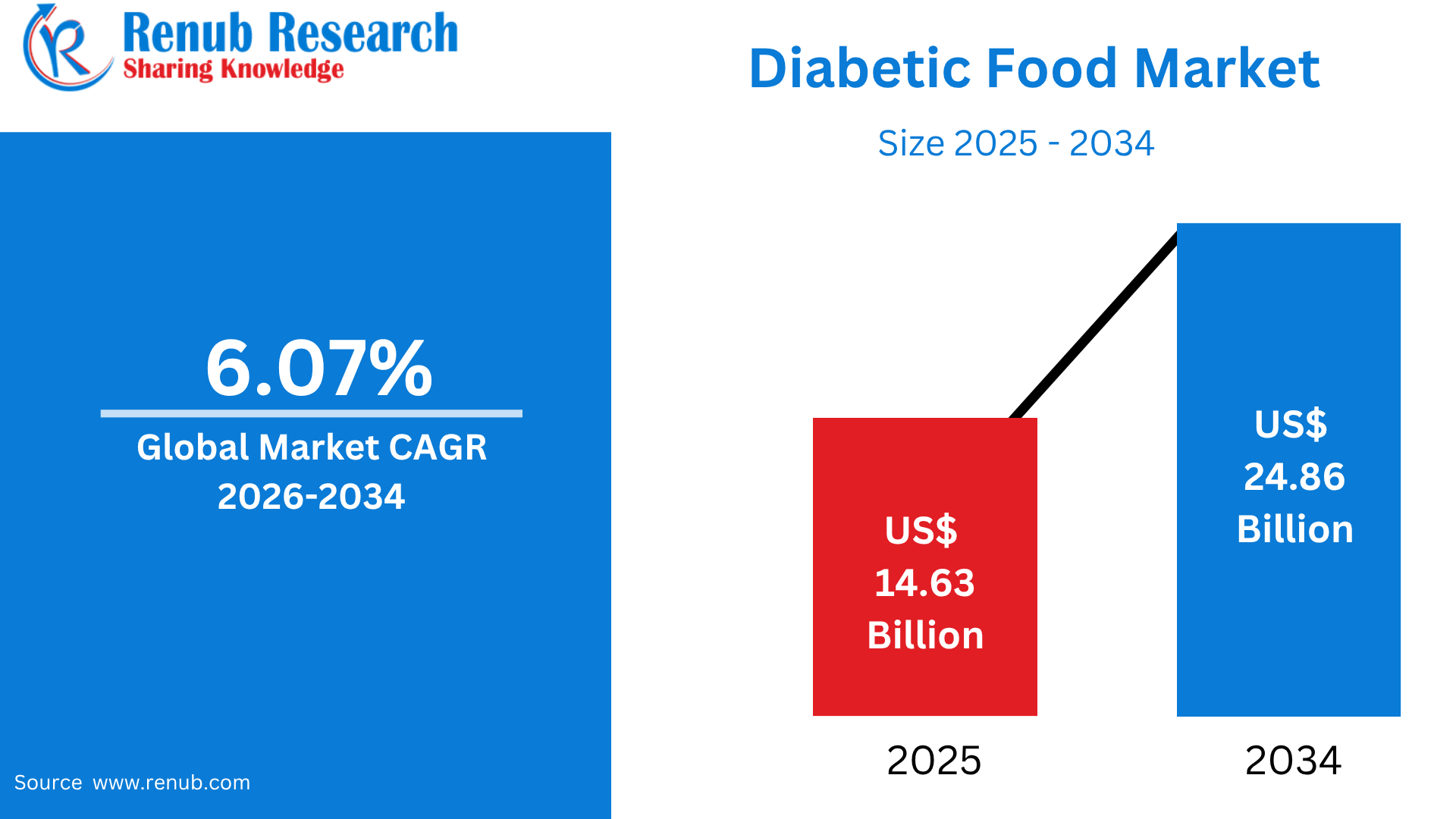
Diabetic Food Market is expected to reach US$ 24.86 Billion by 2034 from US$ 14.63 Billion in 2025, with a CAGR of 6.07% from 2026 to 2034. Rising diabetes prevalence, increasing health awareness, growing demand for low-sugar products, and expanding availability of functional foods are driving the diabetic food market. Product innovation, celebrity endorsements, supportive regulatory developments, and changing consumer lifestyles are further accelerating global market growth and adoption.
Diabetic Food Industry Overview
Diabetic food refers to specially formulated food and beverage products designed to help individuals manage blood sugar levels effectively. These products generally contain reduced sugar, low carbohydrates, high fiber, healthy fats, and sugar substitutes such as stevia or artificial sweeteners. Diabetic foods include snacks, bakery products, beverages, dairy items, cereals, and confectionery products developed to support balanced glucose metabolism. Growing awareness about diabetes management and preventive healthcare has increased consumer demand for healthier food alternatives. Manufacturers are focusing on developing nutritious and flavorful diabetic-friendly products that meet dietary requirements without compromising taste. These foods are widely consumed by diabetic patients and health-conscious consumers globally.
The diabetic food market is witnessing strong growth due to the increasing prevalence of diabetes and rising consumer preference for healthier dietary choices. Growing awareness regarding blood sugar management and preventive nutrition is encouraging demand for low-sugar and sugar-free products worldwide. Food manufacturers are introducing innovative diabetic-friendly snacks, beverages, and dairy products with improved taste and nutritional value. Regulatory approvals supporting health claims and the use of natural sweeteners are also boosting market expansion. Celebrity endorsements and marketing campaigns are increasing consumer engagement and product visibility. In addition, expanding retail distribution channels and rising disposable incomes are supporting greater accessibility to diabetic food products across developed and emerging markets.
Recent Developments in Diabetic Food Market
- In December 2024, Conagra Brands introduced “On Track” badges across its frozen meal portfolio to support consumers using GLP-1 medications for diabetes and weight management. The labels highlight meals that are high in protein, low in calories, and rich in fiber, enabling consumers to identify nutritionally suitable options without requiring changes to existing product formulations. The initiative reflects the food industry’s growing focus on addressing the dietary needs of individuals undergoing pharmaceutical treatment for diabetes and obesity.
- In September 2024, Nestlé launched , a frozen food range developed for consumers using GLP-1 weight-loss medications and those managing diabetes. The line includes portion-controlled meals high in protein and fiber, along with key nutrients such as vitamin A, potassium, and iron. Products include whole-grain bowls, protein pasta, and sandwich melts, designed to provide convenient and nutrient-dense meal options for individuals following medical weight-management programs.
- Also in September 2024, Chobani expanded its diabetic-friendly offerings with the launch of Zero Sugar Coffee Creamers in Sweet Cream and Salted Caramel flavors. Made with natural milk and cream and containing no added sugar, the products target health-conscious and diabetic consumers seeking lower-sugar alternatives without compromising taste. The launch complements the company’s broader zero-sugar portfolio and aligns with increasing consumer demand for clean-label, low-glycemic food and beverage products.
Growth Drivers for the Diabetic Food Market
Rising Demand for Sugar-Free and Low-Calorie Food Products
Increasing awareness regarding diabetes management and healthy eating habits is significantly driving demand for sugar-free and low-calorie food products worldwide. Consumers are becoming more conscious about reducing sugar intake to prevent obesity, diabetes, and cardiovascular diseases. This shift in dietary preferences is encouraging manufacturers to introduce innovative diabetic-friendly snacks, bakery products, beverages, and confectionery items. Food companies are also focusing on improving taste, texture, and nutritional value to attract a wider consumer base.
In October 2024, Zydus Wellness’ Sugar Free brand entered the packaged foods segment with the launch of Sugar Free D’lite cookies. The company introduced the product to provide consumers with sugar-free alternatives that support healthier lifestyles without compromising taste. The brand also collaborated with Bollywood actor Shahid Kapoor to strengthen consumer engagement and promote healthy living. Such product launches and celebrity-driven marketing strategies are increasing awareness and boosting the adoption of diabetic food products among health-conscious consumers globally.
Growing Preference for Natural Sweeteners and Healthy Lifestyle Trends
The increasing popularity of natural sweeteners and health-focused lifestyles is contributing significantly to the expansion of the diabetic food market. Consumers are increasingly replacing conventional sugar with healthier alternatives such as stevia and plant-based sweeteners due to rising concerns regarding calorie intake and long-term health risks. This trend is encouraging manufacturers to develop innovative diabetic-friendly products that support balanced nutrition while maintaining flavor and convenience.
In December 2024, Zydus Wellness appointed Bollywood actress Malaika Arora as the brand ambassador for Sugar Free Green, its stevia-based sweetener product. The collaboration aimed to strengthen consumer awareness regarding healthy lifestyle choices and sugar-free consumption habits. Rising demand for clean-label and naturally sourced ingredients is also encouraging manufacturers to invest in research and product development. As fitness awareness and preventive healthcare continue to gain importance globally, the demand for diabetic food products made with natural sweeteners is expected to increase steadily.
Regulatory Support and Scientific Validation of Diabetes-Friendly Foods
Supportive regulatory developments and scientific recognition of diabetes-friendly foods are creating favorable conditions for diabetic food market growth. Governments, healthcare organizations, and food regulatory authorities are increasingly supporting healthier dietary choices to reduce the burden of chronic diseases such as diabetes and obesity. Scientific evidence linking certain food products with improved glucose metabolism is encouraging manufacturers to promote functional and preventive nutrition products.
In March 2024, Danone North America announced that the U.S. Food and Drug Administration recognized a qualified health claim connecting regular yogurt consumption with a reduced risk of Type 2 diabetes. The approval followed scientific reviews demonstrating yogurt’s potential role in supporting glucose metabolism. This development enables manufacturers to communicate diabetes-related health benefits directly on packaging, increasing consumer trust and market visibility. Growing scientific validation of functional foods is expected to encourage innovation and strengthen long-term demand for diabetic-friendly products.
Challenges in the Diabetic Food Market
High Product Costs and Limited Affordability
One of the major challenges affecting the diabetic food market is the relatively high cost of specialized diabetic-friendly products. Sugar substitutes, natural sweeteners, functional ingredients, and advanced manufacturing processes often increase production expenses, resulting in higher retail prices compared to conventional food products. Many consumers in developing and low-income regions may find diabetic foods less affordable, limiting widespread adoption. Premium pricing can also discourage regular consumption among price-sensitive buyers. In addition, fluctuations in raw material costs and supply chain disruptions may further affect product pricing and profitability for manufacturers. Although demand for healthier food options continues to rise, affordability concerns remain a significant barrier for broader market penetration and long-term consumer accessibility.
Taste Perception and Consumer Acceptance Issues
Consumer perception regarding taste and product quality remains a major challenge for the diabetic food market. Many consumers associate sugar-free or diabetic-friendly products with bland flavor, unpleasant aftertaste, or reduced texture quality compared to traditional foods. Despite technological advancements in sweeteners and food formulation, achieving the same sensory experience as regular sugar-based products remains difficult for manufacturers. Limited awareness regarding the benefits of diabetic foods also affects adoption rates in certain regions. In addition, some consumers remain skeptical about artificial sweeteners and processed sugar substitutes due to health concerns and misinformation. Companies must continuously invest in research, product innovation, and consumer education to improve acceptance and encourage long-term consumption of diabetic-friendly food products worldwide.
United States Diabetic Food Market
The United States remains one of the largest diabetic food markets due to increasing diabetes prevalence, growing obesity rates, and rising consumer demand for healthier dietary products. Consumers are increasingly purchasing sugar-free snacks, low-carbohydrate beverages, diabetic-friendly dairy products, and functional nutrition foods to support blood sugar management and preventive healthcare. Strong retail distribution networks, expanding e-commerce channels, and continuous product innovation are supporting market growth. Food manufacturers are also focusing on natural sweeteners, clean-label ingredients, and protein-rich diabetic foods to meet evolving consumer preferences.
According to the Centers for Disease Control and Prevention (CDC), nearly 40.1 million people in the United States had diabetes in 2023, representing around 12% of the total population. This growing diabetic population is significantly driving demand for diabetic-friendly food products and nutritional alternatives.
Germany Diabetic Food Market
Germany represents a strong European market for diabetic food products because of increasing health awareness, rising diabetes prevalence, and growing consumer preference for preventive nutrition. Consumers are increasingly adopting low-sugar, low-calorie, and clean-label food products to support healthier lifestyles and manage blood glucose levels effectively. Supermarkets, pharmacies, and specialty health stores are expanding their diabetic-friendly product offerings, including sugar-free snacks, beverages, cereals, and dairy products. Manufacturers are also investing in plant-based sweeteners and nutritional innovation to meet changing consumer preferences.
According to the International Diabetes Federation (IDF) , Germany recorded approximately 6.5 million adults living with diabetes in 2024, while diabetes prevalence among adults aged 20–79 reached 7.8%. Rising healthcare awareness and preventive nutrition trends continue to support market expansion across the country.
China Diabetic Food Market
China is emerging as one of the fastest-growing diabetic food markets due to rapid urbanization, changing dietary habits, and increasing diabetes prevalence. Rising disposable incomes and growing awareness regarding preventive healthcare are encouraging consumers to shift toward sugar-free beverages, low-carbohydrate snacks, and diabetic-friendly nutritional products. Expanding middle-class populations and strong growth in online grocery platforms are also increasing the accessibility of diabetic foods across urban and semi-urban areas. Manufacturers are introducing innovative low-sugar and functional food products to meet evolving health-conscious consumer demand.
According to the International Diabetes Federation (IDF), China had approximately 148 million adults living with diabetes in 2024, making it the country with the highest diabetic population globally. Diabetes prevalence among adults reached nearly 11.9% in 2024, creating substantial demand for diabetic-friendly food and beverage products nationwide.
Saudi Arabia Diabetic Food Market
Saudi Arabia is witnessing increasing demand for diabetic food products due to rising diabetes prevalence, growing obesity rates, and increasing awareness regarding healthy eating habits. Consumers are actively seeking sugar-free beverages, low-calorie snacks, and healthier dietary alternatives to support blood sugar management and overall wellness. Government healthcare initiatives promoting preventive healthcare and nutrition awareness are also supporting market growth. Expanding retail infrastructure and increasing availability of imported diabetic food products are improving consumer access throughout the country.
According to the International Diabetes Federation (IDF), diabetes prevalence among adults in Saudi Arabia reached approximately 23.1% in 2024, with nearly 5.34 million adults living with diabetes. The country remains one of the most affected markets in the Middle East region, significantly increasing demand for diabetic-friendly food and nutritional products.
Confectionery Market
The confectionery market is increasingly adapting to the growing demand for diabetic-friendly and weight-management products, driven by the rising use of GLP-1 medications and greater consumer awareness of sugar intake. Manufacturers are introducing reduced-sugar, zero-sugar, and high-protein confectionery options that align with healthier dietary preferences while maintaining taste and indulgence. Functional ingredients such as natural sweeteners, fiber, and protein fortification are becoming more common in chocolates, candies, and snack bars. Companies are also focusing on clean-label formulations and portion-controlled packaging to attract health-conscious consumers. Innovation in diabetic-friendly confectionery reflects the broader transformation of the food industry toward nutrition-focused products. The market is expected to witness steady growth as consumers increasingly seek convenient treats that support blood sugar management and overall wellness goals.
Specialty Stores Market
Specialty stores play a significant role in expanding access to diabetic-friendly and GLP-1-supportive food products by offering curated selections tailored to specific nutritional needs. These stores provide consumers with healthier alternatives, including zero-sugar snacks, high-protein meals, fiber-rich foods, and low-glycemic beverages. Rising awareness of diabetes management and weight-loss therapies has increased demand for personalized shopping experiences, encouraging specialty retailers to expand their health-focused product portfolios. Many stores also emphasize clean-label, organic, and functional food options that appeal to wellness-oriented consumers. In addition, knowledgeable staff and targeted merchandising help customers identify products suitable for medical nutrition plans. The specialty stores market is benefiting from the growing preference for customized dietary solutions and premium health-oriented food products across urban consumer segments.
Diabetic Food Market Segmentation
Products
- Confectionery
- Snacks
- Bakery Products
- Dairy Products
- Others
Distribution Channel
- Supermarkets & Hypermarkets
- Specialty Stores
- Online
- Others
Countries
North America
- United States
- Canada
Europe
- France
- Germany
- Italy
- Spain
- United Kingdom
- Belgium
- Netherlands
- Turkey
Asia Pacific
- China
- Japan
- India
- Australia
- South Korea
- Thailand
- Malaysia
- Indonesia
- New Zealand
Latin America
- Brazil
- Mexico
- Argentina
Middle East & Africa
- South Africa
- Saudi Arabia
- United Arab Emirates
All companies have been covered with 5 Viewpoints
- Overviews
- Key Person
- Recent Developments
- SWOT Analysis
- Revenue Analysis
Company Analysis:
- Nestlé
- Unilever
- The Kellogg Company
- Conagra Brands, Inc.
- Tyson Foods
- The Hershey Company
- Hain Celestial Group
Report Details:
| Report Features | Details |
| Base Year |
2025 |
| Historical Period |
2022 - 2025 |
| Forecast Period |
2026 - 2034 |
| Market |
US$ Billion |
| Segment Covered |
Products, Distribution Channel and Countries |
| Countries Covered |
|
| Companies Covered |
|
| Customization Scope |
20% Free Customization |
| Post-Sale Analyst Support |
1 Year (52 Weeks) |
| Delivery Format |
PDF and Excel through Email (We can also provide the editable version of the report in PPT/Word format on request) |
Key Questions Answered in Report:
- What is the expected market size and CAGR of the global diabetic food market during 2025–2033?
- What are the major growth drivers influencing the global diabetic food market expansion?
- How is the rising global diabetes prevalence impacting the demand for diabetic food products?
- Which product categories (Confectionery, Snacks, Bakery, Dairy, Others) are dominating the market, and why?
- What are the most preferred distribution channels for diabetic foods across various regions?
- What challenges are faced by manufacturers in terms of taste, texture, pricing, and consumer perception?
- How do regional markets such as the United States, India, UAE, and the United Kingdom differ in consumer behavior and product demand?
- Which key players are leading the global diabetic food market, and what are their latest strategies and innovations?
- How are government initiatives, regulations, and public awareness campaigns shaping market dynamics?
- What role does personalized nutrition and functional food innovation play in the future of the diabetic food market?
Customization Services available
- Analysis of Market Size and Its Segments
- More Company Profiles (Upto 10 without any additional cost):
- Additional Countries (Other than mentioned Countries):
- Region/Country Specific Reports:
- Market Entry Strategy:
- Region-Specific Market Dynamics:
- Regional Market Share Analysis:
- Trade Analysis:
- Production Insights:
- Others Customized Requests:
For more information contact our analysts.
Need More Assistance?
- Talk to our analysts to get more precious information on the current market trends.
- Include more countries and segments and customize the report based on the final requirement.
- Get a competitive advantage in your industry by knowing the report findings and making a positive impact on your revenues and operations.
- Our analysts are always ready to provide more help and pertinent information if you need any additional assistance.