Global Dairy Alternative Market Report by Product, Source, Distribution Channel, Countries and Company Analysis 2026-2034
Buy NowDairy Alternative Market Size and Forecast
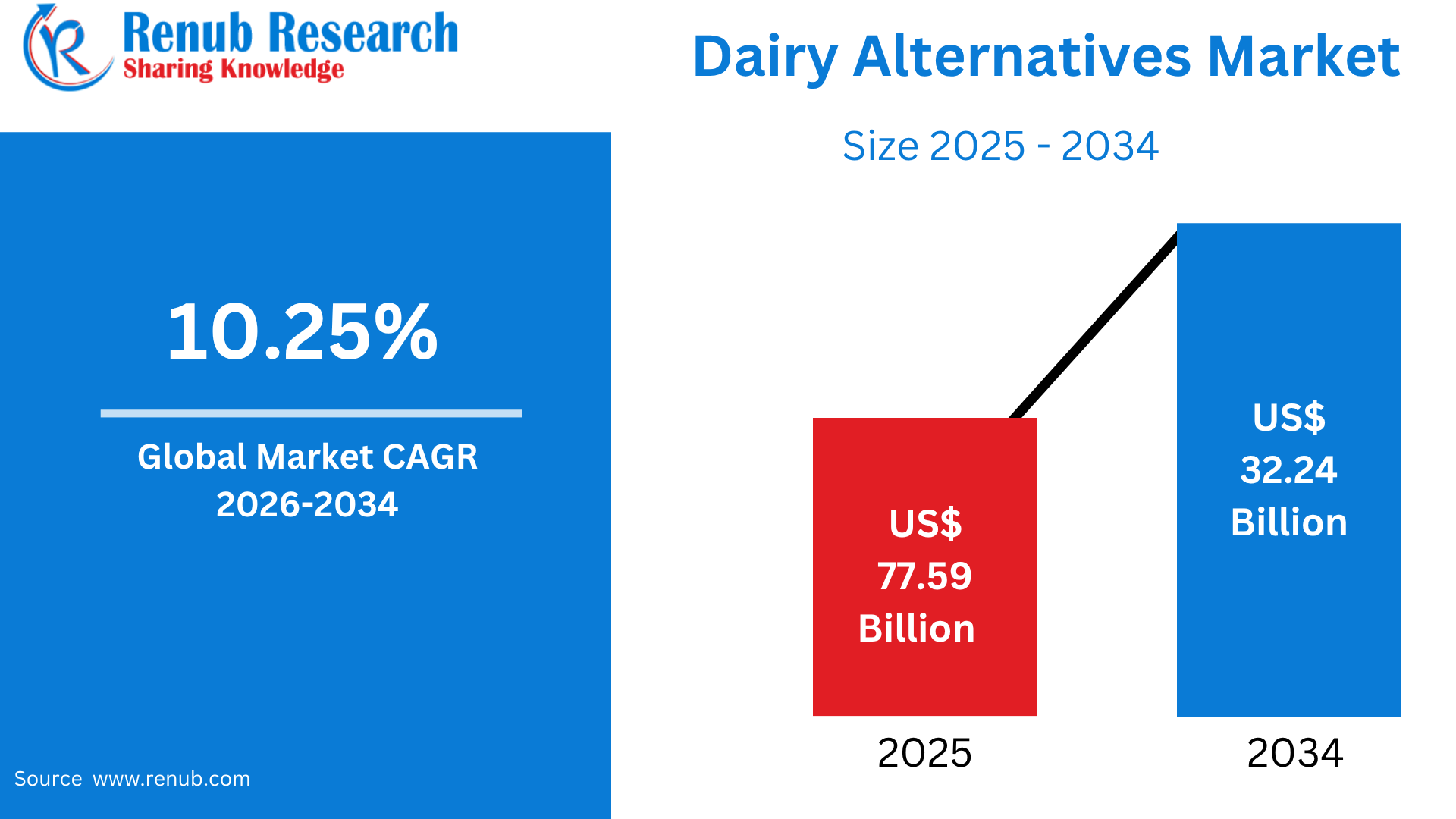
Dairy Alternative Market is projected to grow significantly, increasing from US$ 32.24 billion in 2025 to US$ 77.59 billion by 2034, representing a CAGR of 10.25% during 2026–2034. Market expansion is being supported by growing consumer awareness of healthy dietary choices, increasing prevalence of lactose intolerance, and the rising popularity of vegan and plant-based lifestyles. Continuous innovation in plant-derived milk, yogurt, cheese, and other dairy substitute products is further broadening consumer choices. Improvements in taste, texture, nutritional profiles, and product formulations are helping dairy alternatives appeal to a wider consumer base beyond traditional vegan and lactose-intolerant groups.
What is Dairy Alternative and Its Uses & Popularity Worldwide?
Dairy alternatives are food and beverage products designed to replace conventional dairy products such as cow’s milk, yogurt, cheese, cream, and ice cream. They are commonly produced from plant-based sources including soy, almonds, oats, coconut, rice, peas, and cashews. These products are used by consumers who experience lactose intolerance or milk allergies, as well as individuals following vegan, vegetarian, or flexitarian diets.
Dairy alternatives can provide important nutrients such as calcium, vitamin D, protein, and vitamins when products are appropriately fortified. They are widely used in households, restaurants, cafés, bakeries, and food-processing applications. Plant-based milk is particularly popular for drinking, breakfast cereals, coffee, smoothies, and cooking, while dairy-free yogurt and cheese are increasingly used as substitutes in everyday meals.
Worldwide popularity is rising as consumers become more conscious of health, nutrition, animal welfare, and environmental sustainability. Product innovation has also improved taste, texture, nutritional value, and functionality, encouraging broader consumer acceptance. Growing retail availability, expanding foodservice applications, and increasing demand for convenient plant-based foods are further supporting the global adoption of dairy alternatives.
Global Dairy Consumption Outlook: 2021–23 to 2033
- Fresh dairy consumption: Global per-capita consumption is projected to increase by approximately 18% by 2033 compared with the 2021–23 average.
- Developed countries – fresh dairy: Per-capita consumption is expected to decline by around 1%, indicating relatively stable demand in developed markets.
- Developing countries – fresh dairy: Consumption is projected to rise substantially and is the main contributor to the overall growth in fresh dairy consumption.
- Processed dairy consumption: Global per-capita consumption is expected to increase by approximately 6% by 2033 compared with the 2021–23 average.
- Developed countries – processed dairy: Per-capita consumption is projected to increase by around 6%.
- Developing countries – processed dairy: Per-capita consumption is expected to grow by approximately 16%, indicating stronger demand growth than in developed countries.
- Key trend: The chart indicates that developing countries will drive most of the growth in global dairy consumption, particularly for fresh and processed dairy products.
Source: OECD/FAO
Growth Drivers of the Dairy Alternative Market
Rising Demand for Plant-Based and Lactose-Free Products
Growing consumer interest in plant-based and lactose-free diets is a major driver of the dairy alternative market. Consumers are increasingly choosing products made from oats, soy, almonds, coconut, rice, and peas because of dietary preferences, lactose sensitivity, vegan lifestyles, and interest in alternative nutrition. The global plant-based dairy category demonstrates this shift: retail sales of plant-based milk, yogurt, ice cream, and cheese reached an estimated US$22.4 billion in 2024, increasing 5% from 2023. Plant-based milk represented more than 80% of global plant-based dairy sales, highlighting its dominant position. The category is also moving beyond exclusively vegan consumers as flexitarian and health-conscious consumers increasingly incorporate dairy substitutes into regular diets. In the U.S., four in ten households purchased plant-based milk in 2025, with household penetration reaching 38% and a 75% repeat-purchase rate. Expanding product variety and improved nutritional formulations are therefore helping dairy alternatives achieve wider mainstream acceptance.
Product Innovation and Improved Taste, Nutrition, and Functionality
Continuous innovation in taste, texture, protein content, fortification, and product functionality is accelerating dairy alternative adoption worldwide. Manufacturers are developing products that more closely replicate conventional milk, yogurt, cheese, butter, cream, and ice cream while addressing consumer expectations for nutrition and convenience. Global retail sales across plant-based meat, seafood, milk, yogurt, ice cream, and cheese reached US$28.6 billion in 2024, representing a 5% increase over 2023. Product innovation is also expanding manufacturing capacity. At least 26 plant-based facilities were opened, expanded, or announced globally in 2024, demonstrating continued investment in production infrastructure. In the foodservice sector, U.S. plant-based milk dollar sales increased 9% in 2024, while volume rose 6%; oat milk alone accounted for 38% of plant-based milk foodservice dollar sales. Innovation is consequently helping dairy alternatives move from niche products toward mainstream food and beverage applications.
Expanding Retail and Foodservice Availability
The increasing availability of dairy alternatives through supermarkets, convenience stores, cafés, restaurants, foodservice distributors, and e-commerce platforms is strengthening market penetration. Retail accessibility has made it easier for consumers to experiment with plant-based products and repurchase them regularly. In 2024, plant-based dairy generated approximately US$22.4 billion in global retail sales, with Asia Pacific accounting for more than one-third of sales and Europe and North America also representing significant markets. In the United States, plant-based milk accounted for approximately 13% of total milk-category dollar sales in 2025, while 38% of households purchased plant-based milk. Foodservice is another important growth channel: U.S. plant-based milk sales through foodservice distributors reached approximately US$280 million in 2024, up 9% year over year. Wider distribution allows dairy alternatives to reach consumers beyond specialist health-food stores, while cafés and restaurants help familiarize customers with oat, almond, soy, and other plant-based beverages. This broader accessibility supports trial, repeat purchasing, and long-term category growth.
Challenges of the Dairy Alternative Market
Higher Prices and Consumer Affordability
Price competitiveness remains one of the key challenges limiting wider adoption of dairy alternatives. Although consumers increasingly recognize the benefits of plant-based products, higher prices compared with conventional dairy can discourage price-sensitive households. The broader plant-based sector continues to face the challenge of achieving taste and price parity with conventional products. Higher production costs can result from specialized ingredients, processing technologies, fortification, packaging, and comparatively smaller production volumes. Economic pressure is particularly important because food inflation has made consumers more cautious about premium products. The Good Food Institute reported that the U.S. plant-based food retail market reached US$8.1 billion in 2024, but consumer frustration around grocery costs remained widespread. While some dairy alternatives are becoming more competitively priced, the category still needs greater manufacturing efficiency and economies of scale to narrow the price gap. Affordable products are particularly important for expanding adoption among mainstream consumers who may be interested in plant-based foods but are unwilling to consistently pay a premium. Consequently, cost reduction, supply-chain optimization, and scalable production remain important priorities for market participants.
Taste, Texture, Nutrition, and Consumer Perception Gaps
Despite substantial innovation, taste, texture, nutritional expectations, and consumer perceptions remain challenges for the dairy alternative market. Some consumers continue to prefer conventional dairy because they perceive it as offering superior taste, texture, protein content, or versatility. The Good Food Institute notes that consumer research indicates some plant-based products do not yet consistently meet expectations for taste and price, while companies also need to communicate product benefits more effectively. Nutritional composition can also vary substantially by product and ingredient base. For example, some plant-based beverages require fortification with calcium, vitamin D, vitamin B12, or other nutrients to provide nutritional characteristics comparable to dairy milk. Consumer expectations are particularly demanding in categories such as cheese, yogurt, and ice cream, where achieving the same melting, stretching, creaminess, and mouthfeel as dairy can be technically challenging. In 2024, plant-based cheese was still a relatively nascent category globally, although its sales grew 11%, faster than the overall plant-based dairy category. Continued formulation improvements will therefore be essential for overcoming sensory and nutritional barriers.
Dairy Alternative Product Launches Worldwide
- Silk Protein Yogurt – United States, 2026: Danone-owned Silk launched its Protein Yogurt in Vanilla, Strawberry, Peach, and Mixed Berry. The plant-based yogurt provides at least 12 g of protein per serving, along with fiber, calcium, vitamin D, and vitamin B12.
- Silk Protein Shakes – United States, 2026: Silk expanded into ready-to-drink plant-based nutrition with Protein Shakes in Vanilla and Chocolate. Each serving provides 30 g of protein and 5 g of fiber, targeting consumers seeking convenient high-protein alternatives.
- Swees Vegan Yogurt – Thailand, 2026: Thai plant-based brand Swees introduced a soy-based yogurt range made with organic Chiang Mai soybeans and coconut milk. The launch includes Original, Strawberry, and Greek Original varieties, with live cultures and lactose-free positioning.
- Forager Project Greek Style Yogurt – United States, 2026: Forager expanded its dairy-free Greek yogurt portfolio with Strawberry Rhubarb, Mango Passion Fruit, Vanilla Cinnamon, and Summer Berry in 5-ounce cups, plus a 24-ounce Vanilla tub. The products use cashews, coconut milk, and rice protein.
- Vanilla MALK Shake – United States, 2026: MALK and The Coconut Cult launched the Vanilla MALK Shake, combining plant-based milk with fermented coconut ingredients to create a creamy, probiotic dairy-free product. It was initially sold directly online, with broader retail expansion planned.
- Oatly Classic Cheddar – United States, 2024: Oatly launched its first oat-based cheese, Classic Cheddar, expanding beyond oat milk into plant-based cheese. The product was introduced as an alternative to conventional cheddar and represented a new category for the brand.
- Nature’s Fynd Dairy-Free Fy Yogurt – United States, 2024: Nature’s Fynd introduced what it described as the world’s first fungi-based yogurt, using its Fy fungal protein rather than dairy, nuts, oats, or soy. The product launched nationally at Whole Foods Market.
- Oatly Unsweetened & Super Basic Oatmilk – North America, 2024: Oatly launched two new oatmilk varieties. Unsweetened Oatmilk contains 0 g of sugar and 40 calories per serving, while Super Basic Oatmilk uses a four-ingredient formulation.
- Truly Gluten Free Premium Irish Oat Milk – United States, 2024: Tirlan expanded its Truly Grass Fed brand into dairy alternatives with Original and Extra Creamy Irish Oat Milk. The products are fortified and provide nutrients including calcium and vitamins B2, B12, and D2.
- Fazer Aito Smooth Oat Gurts – Finland, 2025: Fazer introduced a redesigned Aito Smooth oat-gurt range focused on improving flavor, texture, and similarity to conventional yogurt. The refreshed portfolio includes six flavors and three package sizes.
Growing Demand for Convenient Dairy-Free Beverages
The milk alternative market is the largest product category within dairy alternatives, encompassing soy, almond, oat, coconut, rice, and other plant-based beverages. Milk alternatives are increasingly consumed by people with lactose intolerance, milk allergies, vegan consumers, and flexitarians seeking plant-based options. Almond, oat, and soy milk remain among the most recognized varieties, while newer formulations based on pea and other proteins are expanding consumer choice. Plant-based milk accounted for approximately 66% of plant-based dairy sales, demonstrating its central role in the category. Product innovation has improved taste, texture, protein content, and nutritional fortification, while barista-style formulations have increased use in coffee and foodservice applications. Expanding supermarket, convenience-store, café, and online distribution is further improving accessibility. As consumers increasingly prioritize convenience and dietary flexibility, milk alternatives are expected to remain a major growth engine for the global dairy alternatives industry.
Fermentation Innovation and Growing Plant-Based Consumption
The yogurt dairy alternative market includes yogurt-style products produced from soy, coconut, almond, oat, cashew, and other plant-based ingredients. Demand is supported by rising interest in vegan diets, lactose-free foods, digestive health, and convenient nutritional snacks. Manufacturers are improving fermentation processes, texture, creaminess, protein levels, and probiotic formulations to make plant-based yogurt more comparable with conventional dairy yogurt. Soy and coconut remain important bases, while almond and oat formulations are expanding product variety. The category is also benefiting from greater availability in supermarkets, convenience stores, specialty retailers, and online channels. Plant-based yogurt remains smaller than dairy-free milk, but its growth potential is significant because it provides manufacturers with opportunities to diversify beyond beverages. Increasing consumer interest in high-protein and functional foods is encouraging the development of fortified products containing calcium, vitamin D, probiotics, and plant proteins, further strengthening the segment’s long-term potential.
High Protein Content Supports Soy-Based Product Demand
The soy dairy alternative market remains an important segment because soy provides relatively high-quality plant protein and has a long history of use in dairy replacement products. Soy-based products include soy milk, yogurt, desserts, and other dairy substitutes. Soy milk continues to have strong acceptance in Asian markets, where it has been consumed for decades, while Western markets increasingly use it as a protein-rich dairy substitute. In India, soy milk represented approximately 45% of plant-based beverage sales in FY2024, equivalent to around ₹95 crore, according to an Ipsos industry report. The nutritional profile of soy, particularly its protein content, provides an advantage over several lower-protein alternatives. However, concerns surrounding soy allergies, genetically modified ingredients, and processing can influence consumer preferences in some markets. Continued development of cleaner-label, fortified, better-tasting soy products is therefore important for maintaining competitiveness.
Established Consumer Acceptance and Premium Positioning
The almond dairy alternative market is one of the most established segments within plant-based dairy, particularly in milk alternatives. Almond-based products are valued for their mild taste, relatively light texture, and versatility in beverages, cereals, smoothies, coffee, and cooking. In India, almond milk represented around 31% of plant-based beverage sales in FY2024, generating approximately ₹65 crore, making it the second-largest beverage category after soy milk. Almond milk has benefited from strong brand recognition, extensive retail availability, and its positioning as a premium dairy-free beverage. Product manufacturers are increasingly offering unsweetened, fortified, organic, and flavored varieties to address different dietary requirements. However, almond production is associated with significant water requirements, creating sustainability concerns in some regions. Increasing competition from oat, soy, and pea-based beverages is also influencing the segment. Nevertheless, strong consumer familiarity and broad applications continue to make almond products an important component of the dairy alternatives market.
Expanding Availability Through High-Frequency Retail Channels
Convenience stores are becoming an increasingly relevant distribution channel for dairy alternatives because they provide consumers with quick access to beverages, snacks, yogurt, and other ready-to-consume products. Although supermarkets and hypermarkets remain the dominant distribution channel, convenience stores are expanding their plant-based product selections as consumer demand becomes more mainstream. Convenience stores can particularly benefit from the growing demand for single-serve plant-based beverages, chilled coffee products, dairy-free yogurt, and grab-and-go nutritional products. Urbanization and busy lifestyles further increase demand for convenient food and beverage formats. Retailers are also expanding plant-based assortments as products move beyond specialist health-food outlets into mainstream retail. Wider availability can encourage trial purchases and improve consumer familiarity with new brands and formulations. As manufacturers introduce smaller packages, ready-to-drink products, and functional beverages, convenience stores are expected to become increasingly important for reaching younger, urban, and time-conscious consumers.
Strong Retail Availability and Nutritional Standards Support United States Market Development
United States dairy alternative market is highly developed, supported by broad retail distribution, growing consumer interest in lactose-free and plant-based foods, and continued product innovation. Government policy is also helping define nutritional standards for these products. The USDA permits state WIC agencies to offer qualifying plant-based milk alternatives, including soy, almond, and oat milk, provided they meet specified nutritional requirements. Eligible products must generally provide 276 mg of calcium, 8 g of protein, 500 IU of vitamin A, and 100 IU of vitamin D per cup, along with other nutrients. The USDA’s 2025–2030 Dietary Guidelines also distinguish fortified soy milk from other plant-based alternatives because of its closer nutritional similarity to dairy. These standards encourage manufacturers to improve fortification, protein content, and nutritional quality. Meanwhile, strong café culture and demand for oat, almond, and soy beverages continue to expand consumption occasions. However, competition from conventional dairy, price differences, and changing government dietary policies remain important market considerations.
Growing Plant-Based Food Production Reflects Changing Consumer Preferences in Germany
Germany is one of Europe’s important markets for plant-based food products, supported by growing interest in vegetarian and vegan diets, environmental sustainability, and alternative protein sources. Government statistics demonstrate the increasing scale of the country’s plant-based food industry. According to Destatis, German companies produced approximately 126,500 tonnes of meat-substitute products in 2024, up 4.0% from 2023, while production had more than doubled since 2019. Although this statistic relates to meat alternatives rather than dairy alternatives specifically, it indicates the broader strength of Germany’s plant-based food manufacturing ecosystem. The country has extensive supermarket and discount-store networks that provide consumers with access to plant-based milk, yogurt, cheese, and other dairy substitutes. Oat-based beverages are particularly attractive because of their taste and positioning around sustainability. At the same time, consumers increasingly expect transparent ingredients, nutritional value, and high-quality formulations. The market continues to face competition from conventional dairy and concerns about the price and sensory characteristics of alternatives. Nevertheless, Germany’s expanding plant-based food sector and established retail infrastructure provide a strong foundation for continued dairy-alternative adoption.
China Urbanization and Changing Consumption Habits Create Growth Opportunities
China’s dairy alternative market is developing as consumers increasingly explore plant-based beverages and other non-dairy products, particularly in major urban centers. The expansion of modern cafés, foodservice outlets, e-commerce, and convenience-oriented retail has increased consumer exposure to soy, oat, almond, and other plant-based beverages. Soy has a particularly strong cultural and dietary presence in China, providing an established foundation for alternative dairy consumption. Younger urban consumers are increasingly interested in products associated with convenience, nutrition, and modern lifestyles, while domestic manufacturers are developing localized flavors and formulations. Government nutrition policy also places increasing emphasis on improving dietary quality and nutritional balance, creating opportunities for fortified dairy alternatives. However, government data specifically quantifying China’s dairy-alternative market are limited, so market-size estimates should be interpreted cautiously. Product affordability, nutritional differences, and relatively lower awareness outside major cities remain challenges. The country’s enormous consumer base and continuing urban development nevertheless create substantial long-term potential. As retail infrastructure and online commerce continue expanding, dairy alternatives can reach consumers across a broader range of cities and income groups, supporting gradual mainstream adoption.
Health Transformation and Expanding Modern Retail Support Saudi Arabia Market Potential
Saudi Arabia’s dairy alternative market is gaining opportunities from increasing health awareness, changing dietary preferences, expanding modern retail, and the country’s broader healthcare transformation. Government initiatives under Saudi Vision 2030 emphasize prevention, healthier lifestyles, and improvements in population health, creating a supportive environment for nutritious food and beverage categories. Saudi Arabia’s Ministry of Health reported that the proportion of adults engaging in physical activity reached 59%, while life expectancy increased to 79.9 years in 2025, compared with 74 years in 2016. The Kingdom also achieved a Universal Health Coverage Index score of 83, reflecting improvements in healthcare access and coverage. These developments can indirectly support consumer interest in healthier dietary choices, including plant-based and lactose-free alternatives. Almond, oat, and soy beverages are increasingly available through supermarkets, specialty retailers, cafés, and online channels. However, conventional dairy remains deeply established, while imported dairy alternatives can carry higher prices. The market’s long-term prospects are supported by rising health consciousness, a young consumer population, expanding premium retail, and ongoing healthcare modernization under Vision 2030.
Recent Developments in Dairy Alternative Market
- May 2025: California-based plant-based dairy innovator Eclipse Foods introduced a new whole-milk alternative made from purified pea and chickpea proteins. The formulation is designed to mimic the molecular structure of traditional dairy, delivering a richer and more authentic milk experience without animal ingredients.
- March 2024: South Canara Coconut Farmers' Producer Company Ltd. launched three value-added coconut products—tender coconut milkshake, tender coconut ice cream, and a coconut-based sprout dessert—expanding its portfolio of innovative coconut offerings.
- April 2024: Singapore-based beverage company Yeo Hiap Seng released Yeo’s Immuno Soy Milk, a fortified soy drink containing vitamin B6 and zinc to help support immune function. Marketed as a Healthier Choice in Singapore and Malaysia, it provides a lactose-free, nutritious alternative to conventional breakfast beverages.
Dairy Alternatives Market Segments
Product
- Milk
- Yogurt
- Cheese
- Ice Cream
- Creamer
- Others
Source
- Soy
- Almond
- Coconut
- Rice
- Oats
- Others
Distribution Channel
- Supermarkets and Hypermarkets
- Convenience Stores
- Online Retail
- Others
Countries
North America
- United States
- Canada
Europe
- France
- Germany
- Italy
- Spain
- United Kingdom
- Belgium
- Netherlands
- Turkey
Asia Pacific
- China
- Japan
- India
- Australia
- South Korea
- Thailand
- Malaysia
- Indonesia
- New Zealand
Latin America
- Brazil
- Mexico
- Argentina
Middle East & Africa
- South Africa
- Saudi Arabia
- United Arab Emirates
All companies have been covered with 5 Viewpoints
- Overviews
- Key Person
- Recent Developments
- SWOT Analysis
- Revenue Analysis
Key Players Analysis:
- Danone S.A.
- SunOpta Inc.
- Blue Diamond Growers Inc.
- Noumi Limited
- Vitasoy International Holdings Limited
- Oatley Group AB
- The Hain Celestial Group Inc.
- Archer-Daniels-Midland Company
Report Details:
| Report Features | Details |
| Base Year |
2025 |
| Historical Period |
2022 - 2025 |
| Forecast Period |
2026 - 2034 |
| Market |
US$ Billion |
| Segment Covered |
Product, Source, Distribution Channel and Countries |
| Countries Covered |
|
| Companies Covered |
1. Danone S.A. |
| Customization Scope |
20% Free Customization |
| Post-Sale Analyst Support |
1 Year (52 Weeks) |
| Delivery Format |
PDF and Excel through Email (We can also provide the editable version of the report in PPT/Word format on request) |
Customization Services available
- Analysis of Market Size and Its Segments
- More Company Profiles (Upto 10 without any additional cost):
- Additional Countries (Other than mentioned Countries):
- Region/Country Specific Reports:
- Market Entry Strategy:
- Region-Specific Market Dynamics:
- Regional Market Share Analysis:
- Trade Analysis:
- Production Insights:
- Others Customized Requests:
For more information contact our analysts.
Need More Assistance?
- Talk to our analysts to get more precious information on the current market trends.
- Include more countries and segments and customize the report based on the final requirement.
- Get a competitive advantage in your industry by knowing the report findings and making a positive impact on your revenues and operations.
- Our analysts are always ready to provide more help and pertinent information if you need any additional assistance.