Global Cystic Fibrosis Therapeutics Market Report by Drug Class, Route of Administration, Distribution Channel, Countries and Company Analysis 2026-2034
Buy NowCystic Fibrosis Therapeutics Market Size & Forecast 2026–2034
The global cystic fibrosis therapeutics market is projected to expand substantially, increasing from US$ 8.23 billion in 2025 to US$ 17.92 billion by 2034, registering a CAGR of 9.03% during 2026–2034. Market growth is being supported by increasing awareness of cystic fibrosis, improvements in disease diagnosis, and continued advances in targeted treatment approaches. The development of therapies designed to address the underlying genetic causes of cystic fibrosis is transforming disease management and improving long-term patient outcomes. Growing investment in research and development, precision medicine, and innovative drug formulations is further strengthening the therapeutic pipeline.

What are Cystic Fibrosis Therapeutics and Its Uses & Popularity Worldwide?
Cystic fibrosis (CF) therapeutics refers to medicines and treatment approaches used to manage cystic fibrosis, a genetic disorder caused by mutations in the CFTR gene. These therapies aim to reduce symptoms, prevent complications, improve lung function, and address the underlying defect in CFTR where possible. Treatment includes CFTR modulators, antibiotics, mucus-thinning medicines, bronchodilators, and other supportive therapies.
CFTR modulators have transformed disease management because they target the defective CFTR protein. Correctors help the protein reach the cell surface, while potentiators improve its ability to allow chloride to flow through cells. Current therapies include Trikafta, Alyftrek, Kalydeco, Orkambi, and Symdeko, although eligibility depends on the patient’s specific CFTR mutation.
The worldwide adoption of cystic fibrosis therapeutics is increasing as genetic testing, diagnosis, specialized CF centers, and access to disease-modifying treatments improve. Continuous research into next-generation CFTR modulators, RNA therapies, gene therapy, and gene editing is further expanding future treatment possibilities, particularly for patients whose mutations are not adequately addressed by existing modulators.
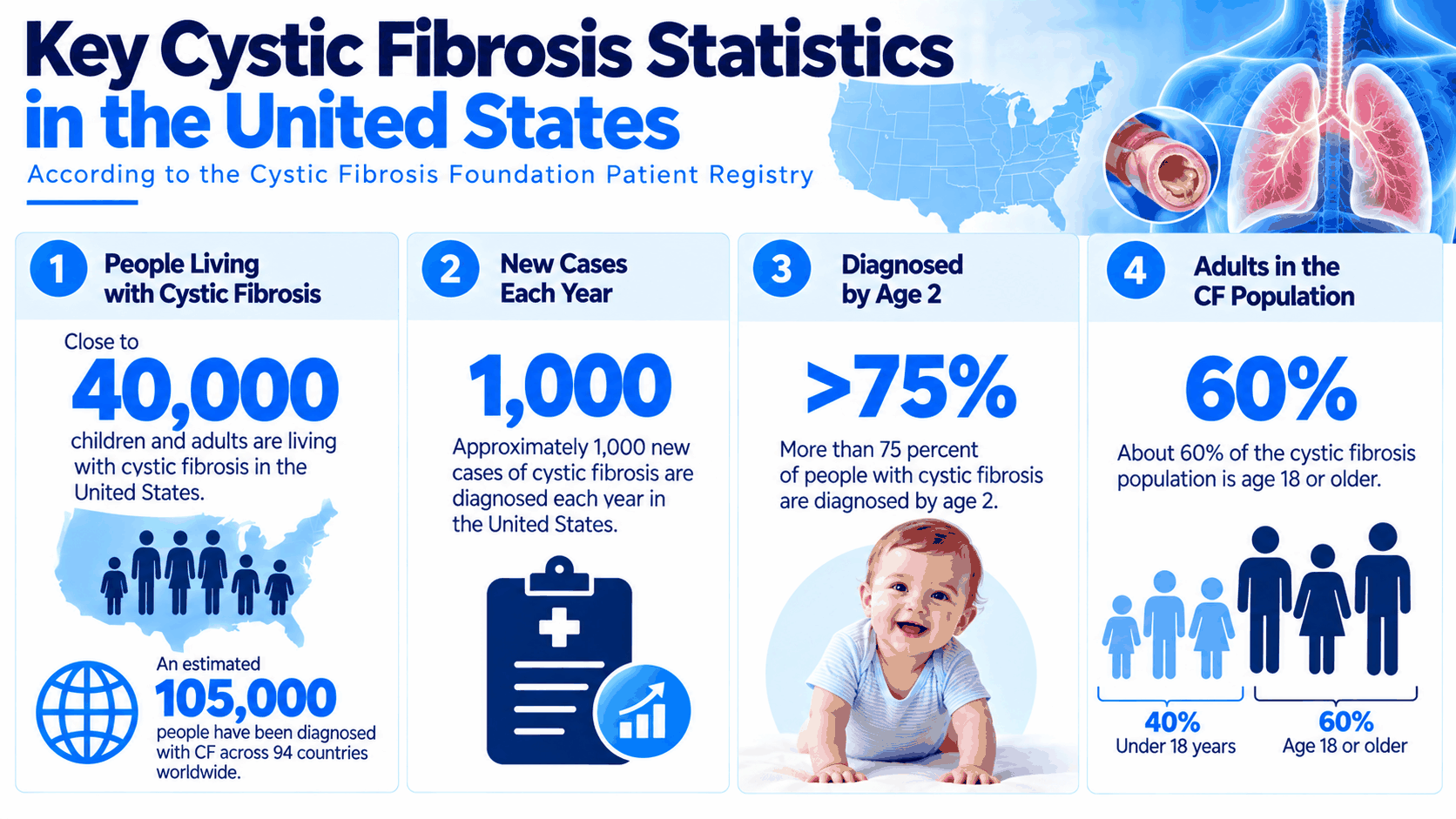
According to the Cystic Fibrosis Foundation Patient Registry, in the United States:
- There are close to 40,000 children and adults living with cystic fibrosis in the United States — and an estimated 105,000 people have been diagnosed with CF across 94 countries.
- Approximately 1,000 new cases of CF are diagnosed each year.
- More than 75 percent of people with CF are diagnosed by age 2.
- About 60% of the CF population is age 18 or older.
Growth Drivers of the Cystic Fibrosis Therapeutics Market
Rising Adoption of CFTR Modulator Therapies
The increasing adoption of CFTR modulator therapies is a major growth driver for the cystic fibrosis therapeutics market because these medicines target the underlying CFTR protein defect rather than only managing symptoms. The treatment landscape has expanded substantially since the first CFTR modulator was approved in 2012. In the U.S. Cystic Fibrosis Foundation Patient Registry, 92.3% of people with cystic fibrosis were eligible by genotype for at least one CFTR modulator in 2024, while 26,277 of 29,314 eligible individuals, or 89.6%, had at least one prescription reported. The growing use of highly effective modulator combinations is improving lung function, reducing disease complications, and supporting longer survival, encouraging continued investment in this therapeutic category. The approval and expansion of newer medicines are also increasing the number of patients who can benefit. For example, FDA actions in December 2024 expanded eligibility for additional responsive CFTR variants and enabled hundreds of previously ineligible patients in the U.S. to access modulator therapy.
Advances in Precision Medicine and Targeted Therapies
Rapid progress in precision medicine and mutation-specific treatment is creating new opportunities in the cystic fibrosis therapeutics market. Cystic fibrosis is caused by mutations in the CFTR gene, and more than 1,700 different mutations have been identified as disease-causing. This genetic diversity creates a strong need for treatments that can address different mutation types and individual patient requirements. CFTR modulators already demonstrate the potential of personalized treatment, with correctors helping defective CFTR proteins reach the cell surface and potentiators improving their function. Approximately 85% of people with CF in the Patient Registry have at least one F508del mutation, making therapies targeting this mutation particularly important. Research is now extending beyond conventional modulators toward mRNA-based therapies, gene therapy, and gene-editing approaches for patients who cannot benefit from existing medicines. For example, ARCT-032 is being studied as an inhaled therapy designed to deliver CFTR mRNA to cells. These developments are expanding the pipeline and addressing significant unmet medical needs.
Improved Diagnosis, Longer Survival, and Expanding Treatment Population
Improved diagnosis and increasing survival among people with cystic fibrosis are supporting long-term demand for therapeutics. Advances in newborn screening, genetic testing, multidisciplinary CF care, infection management, and disease-modifying medicines are helping patients receive treatment earlier and remain in care for longer periods. According to the Cystic Fibrosis Foundation, 61.6% of people with CF in its 2024 Registry were adults, reflecting the substantial improvement in survival and the growing adult patient population. For people born with CF between 2020 and 2024, half are projected to live to 65 years or beyond, although survival varies considerably depending on modulator eligibility and other factors. A larger adult population creates sustained requirements for CFTR modulators, antibiotics, respiratory therapies, nutritional treatments, and medicines addressing CF-related complications. Earlier diagnosis also enables treatment to begin before irreversible organ damage occurs. As healthcare systems improve genetic screening and access to specialized CF centers, more patients can be identified and managed appropriately, supporting continued expansion of the global cystic fibrosis therapeutics market.
Challenges of the Cystic Fibrosis Therapeutics Market
High Treatment Costs and Access Barriers
The high cost of advanced cystic fibrosis therapies remains a significant challenge for market expansion, particularly because many patients require long-term or lifelong treatment. CFTR modulators provide substantial clinical benefits, but their high prices can create financial pressure for patients, insurers, and healthcare systems. The Cystic Fibrosis Foundation reports that approximately 90% of people with CF are eligible for CFTR modulators, but the cost of these therapies has contributed to insurance-coverage challenges, administrative burdens, and delays in obtaining medication. In the U.S. 2024 Registry, 3,037 eligible individuals were not reported as having a CFTR modulator prescription, representing approximately 10.4% of eligible patients. Beyond medication prices, patients may also face expenses related to specialist consultations, diagnostic testing, respiratory therapies, hospitalizations, and management of complications. Access can be particularly challenging in lower-income countries where specialized CF centers and genetic testing infrastructure are limited. Consequently, affordability, reimbursement policies, insurance coverage, and healthcare infrastructure can significantly influence treatment adoption and create disparities in access to advanced cystic fibrosis therapeutics.
Limited Treatment Options for Rare Mutations and Therapeutic Side Effects
Despite major advances in CFTR modulators, a significant unmet need remains for patients whose genetic mutations are not adequately addressed by existing treatments or who cannot tolerate available medicines. In the U.S. 2024 Registry, 7.3% of people with cystic fibrosis were still not eligible for any CFTR modulator because of age or genotype. The Cystic Fibrosis Foundation also estimates that approximately 10–20% of people with CF in the United States cannot benefit from CFTR modulators because they are ineligible or unable to tolerate their side effects. Developing medicines for extremely rare mutations is particularly difficult because patient populations are small, making conventional clinical-trial recruitment and statistical evaluation challenging. More than 1,700 CF-causing mutations further complicate drug development and regulatory evaluation. Researchers are therefore exploring alternative approaches, including theratyping, mRNA therapies, gene therapy, and gene editing. Until these technologies become broadly available and clinically validated, patients with rare or non-responsive mutations will continue to represent a major unmet need and a challenge for the cystic fibrosis therapeutics market.
Cystic Fibrosis Therapeutics Launches Worldwide
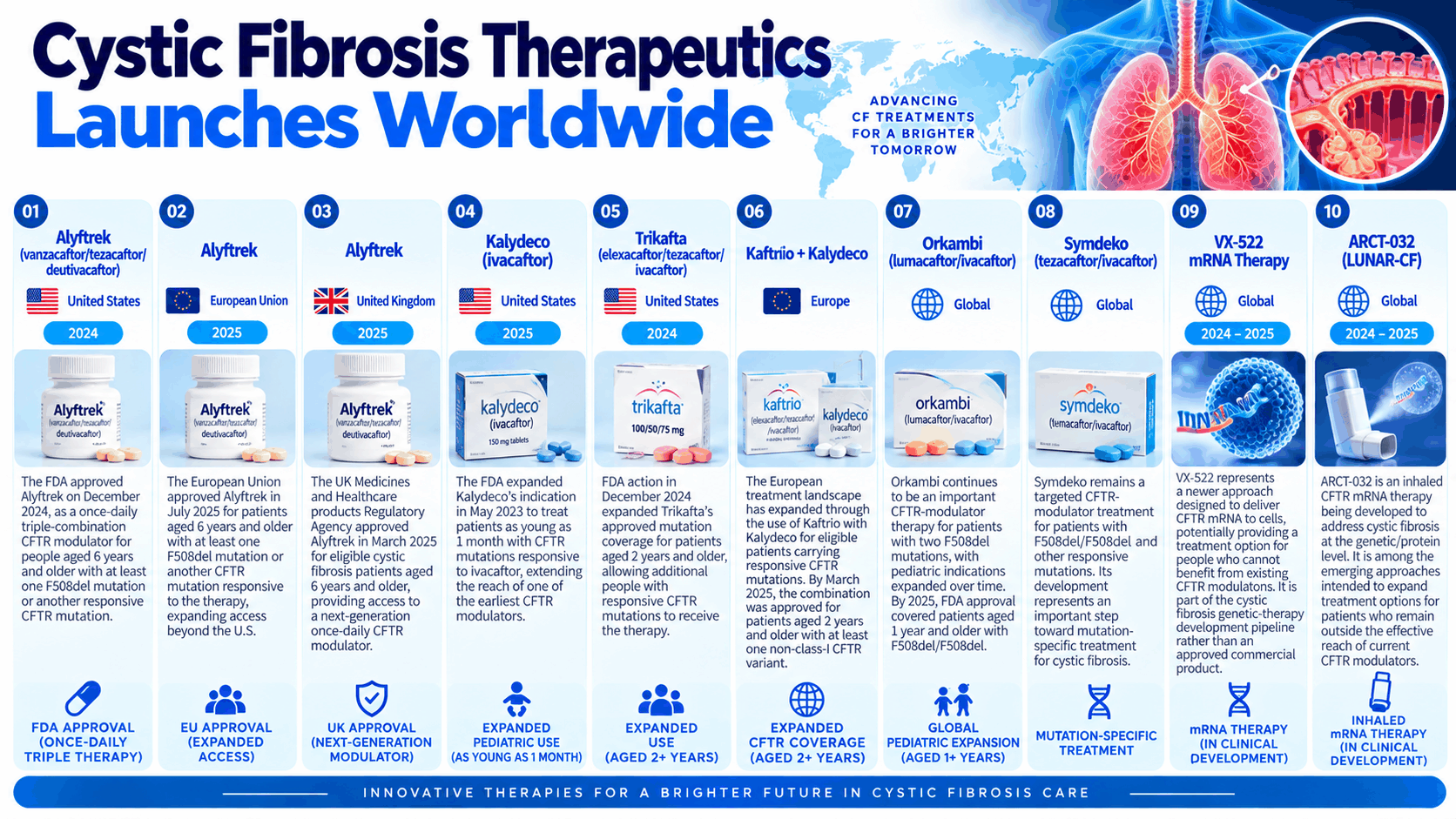
- Alyftrek (vanzacaftor/tezacaftor/deutivacaftor) – United States, 2024: The FDA approved Alyftrek on December 2024, as a once-daily triple-combination CFTR modulator for people aged 6 years and older with at least one F508del mutation or another responsive CFTR mutation.
- Alyftrek – European Union, 2025: The European Union approved Alyftrek in July 2025 for patients aged 6 years and older with at least one F508del mutation or another CFTR mutation responsive to the therapy, expanding access beyond the U.S.
- Alyftrek – United Kingdom, 2025: The UK Medicines and Healthcare products Regulatory Agency approved Alyftrek in March 2025 for eligible cystic fibrosis patients aged 6 years and older, providing access to a next-generation once-daily CFTR modulator.
- Kalydeco (ivacaftor) – United States, Expanded Pediatric Use, 2023: The FDA expanded Kalydeco’s indication in May 2023 to treat patients as young as 1 month with CFTR mutations responsive to ivacaftor, extending the reach of one of the earliest CFTR modulators.
- Trikafta (elexacaftor/tezacaftor/ivacaftor) – United States, Expanded Use, 2024: FDA action in December 2024 expanded Trikafta’s approved mutation coverage for patients aged 2 years and older, allowing additional people with responsive CFTR mutations to receive the therapy.
- Kaftrio + Kalydeco – Europe, Expanded CFTR Coverage: The European treatment landscape has expanded through the use of Kaftrio with Kalydeco for eligible patients carrying responsive CFTR mutations. By March 2025, the combination was approved for patients aged 2 years and older with at least one non-class-I CFTR variant.
- Orkambi (lumacaftor/ivacaftor) – Global Pediatric Expansion: Orkambi continues to be an important CFTR-modulator therapy for patients with two F508del mutations, with pediatric indications expanded over time. By 2025, FDA approval covered patients aged 1 year and older with F508del/F508del.
- Symdeko (tezacaftor/ivacaftor) – Global Expansion: Symdeko remains a targeted CFTR-modulator treatment for patients with F508del/F508del and other responsive mutations. Its development represents an important step toward mutation-specific treatment for cystic fibrosis.
- VX-522 mRNA Therapy – Global Clinical Development, 2024–2025: VX-522 represents a newer approach designed to deliver CFTR mRNA to cells, potentially providing a treatment option for people who cannot benefit from existing CFTR modulators. It is part of the cystic fibrosis genetic-therapy development pipeline rather than an approved commercial product.
- ARCT-032 (LUNAR-CF) – Global Clinical Development, 2024–2025: ARCT-032 is an inhaled CFTR mRNA therapy being developed to address cystic fibrosis at the genetic/protein level. It is among the emerging approaches intended to expand treatment options for patients who remain outside the effective reach of current CFTR modulators.
Supportive Respiratory Therapy for Improved Breathing
Bronchodilators remain an important supportive treatment in cystic fibrosis (CF), particularly for patients experiencing airway narrowing, wheezing, or bronchospasm. These medicines work by relaxing the muscles surrounding the airways, helping improve airflow and making breathing easier. Bronchodilators may be administered before inhaled therapies such as mucolytics or airway-clearance treatments to help open the airways and improve medication delivery. Their role is especially relevant for CF patients who also experience bronchial hyperreactivity or asthma-like symptoms. The Cystic Fibrosis Foundation Patient Registry recorded 61.6% of people with CF as adults in 2024, highlighting the expanding population requiring long-term respiratory management. Although bronchodilators do not correct the underlying CFTR defect, they can contribute to symptom control and pulmonary care. The segment continues to benefit from increasing diagnosis, improved multidisciplinary management, and advances in inhaled drug-delivery technologies. As CF care increasingly focuses on individualized treatment plans, bronchodilators are likely to remain an important complementary therapy alongside CFTR modulators, mucolytics, antibiotics, and airway-clearance techniques.
Mucus Clearance and Airway Management Drive Demand
Mucolytic therapies play an important role in cystic fibrosis management because they help reduce the thickness and stickiness of airway mucus, supporting more effective mucus clearance. In CF, defective CFTR protein function contributes to dehydrated and abnormally thick secretions that can obstruct the airways and create an environment favorable to recurrent respiratory infections. Medicines such as dornase alfa can break down DNA present in thick mucus, helping reduce mucus viscosity and improve airway clearance. Hypertonic saline is another commonly used inhaled therapy that helps draw water into airway secretions. The continuing need for pulmonary care supports demand for these treatments even as CFTR modulators become more widely available. In the United States, approximately 92.3% of people with CF were eligible by genotype for at least one CFTR modulator in 2024, but supportive respiratory therapies remain relevant for many patients. The growing adult CF population, with adults representing 61.6% of the U.S. CF Registry population in 2024, also reinforces the need for long-term airway management. Innovation in inhalation devices and drug formulations is further supporting this segment.
Disease-Modifying Therapies Transforming Cystic Fibrosis Treatment
CFTR modulator market represents one of the most significant developments in cystic fibrosis therapeutics because these medicines target the defective CFTR protein responsible for the disease. Depending on the therapy, CFTR modulators can help the abnormal protein reach the cell surface or improve its ability to transport chloride and water across cells. This can reduce the buildup of thick mucus and improve respiratory function. The importance of this segment is demonstrated by the high proportion of patients eligible for these treatments. According to the U.S. Cystic Fibrosis Foundation’s 2024 Patient Registry, 92.3% of patients were eligible by genotype for at least one CFTR modulator, while 89.6% of eligible individuals had a prescription reported. Continued expansion of approved mutation coverage is creating additional opportunities. Research is also moving toward therapies for patients who cannot benefit from existing modulators, including mRNA, gene therapy, and gene-editing approaches. The development of next-generation treatments is particularly important because more than 1,700 CF-causing mutations have been identified. Disease-modifying benefits, expanding eligibility, and ongoing precision-medicine research are expected to keep CFTR therapies at the center of market innovation.
Convenient Administration and Growing Use of Oral Disease-Modifying Medicines
Oral cystic fibrosis therapeutics market includes medications administered by mouth for disease modification, infection management, inflammation control, and treatment of CF-related complications. Oral administration offers convenience and can simplify long-term treatment routines, an important consideration because cystic fibrosis requires continuous disease management. CFTR modulators have become particularly important within the oral-drug segment, with several widely used therapies administered orally. Their growing adoption has strengthened demand for convenient disease-modifying treatments. In the U.S. 2024 CF Patient Registry, 26,277 of 29,314 CFTR-modulator-eligible individuals had a prescription reported, indicating substantial utilization among eligible patients. Oral antibiotics and other medicines also remain important for managing infections and complications. However, treatment selection depends on the patient’s mutation profile, age, clinical condition, and healthcare-provider recommendations. The growing emphasis on patient-centered care is encouraging pharmaceutical developers to improve dosing convenience, formulation characteristics, and treatment adherence. At the same time, oral therapies do not replace inhaled or intravenous treatments in every situation. Continued development of effective oral medicines, particularly mutation-targeted CFTR modulators, is expected to support the segment’s contribution to the broader cystic fibrosis therapeutics market.
Specialized Multidisciplinary Care Supports Hospital-Based Treatment
Hospitals remain important centers for cystic fibrosis diagnosis, specialized treatment, acute care, and management of severe complications. Patients experiencing pulmonary exacerbations, serious respiratory infections, advanced lung disease, or other complications may require hospital-based treatment, including intravenous antibiotics, intensive respiratory support, and multidisciplinary monitoring. CF care typically involves several healthcare professionals, including pulmonologists, respiratory therapists, nutrition specialists, physiotherapists, nurses, and pharmacists. The expanding adult CF population is increasing the importance of long-term specialist services. In the United States, adults represented 61.6% of the CF Patient Registry population in 2024, demonstrating how improvements in treatment and survival have shifted CF care increasingly toward adult populations. Hospitals also play an important role in administering complex therapies, managing severe exacerbations, conducting diagnostic evaluations, and supporting clinical research. Specialized CF centers can provide coordinated care and access to emerging treatments and clinical trials. At the same time, the increasing effectiveness of CFTR modulators may reduce some hospitalizations and pulmonary complications among eligible patients, potentially changing the pattern of hospital-based care. Nevertheless, hospitals will remain essential for patients with severe disease, treatment complications, and advanced respiratory needs.
Advanced Treatment Infrastructure and Strong CFTR Modulator Adoption in the USA
United States cystic fibrosis therapeutics market is among the most advanced globally, supported by extensive healthcare spending, sophisticated diagnostic capabilities, strong clinical research, and rapid adoption of innovative medicines. The country has well-established newborn screening and specialized cystic fibrosis care networks, enabling earlier diagnosis and long-term disease management. According to the U.S. Cystic Fibrosis Foundation’s 2024 Patient Registry, 92.3% of people with CF were eligible by genotype for at least one CFTR modulator, while 89.6% of eligible individuals had a prescription reported. This high adoption demonstrates the importance of disease-modifying therapies in the U.S. market. In addition, adults represented 61.6% of the U.S. CF Registry population in 2024, reflecting improvements in survival and treatment outcomes. In December 2024, the FDA approved ALYFTREK (vanzacaftor/tezacaftor/deutivacaftor) for people aged 6 years and older with at least one F508del mutation or another responsive CFTR mutation. The approval expanded access to a once-daily next-generation CFTR modulator. Despite strong innovation, high treatment costs, insurance restrictions, and affordability remain important challenges.
NHS Support and Expanding Access to Disease-Modifying Therapies in United Kingdom
United Kingdom cystic fibrosis therapeutics market benefits from a well-established healthcare system, specialized CF centers, newborn screening, and coordinated long-term patient management through the National Health Service (NHS). The UK has developed a strong infrastructure for monitoring disease progression, collecting patient outcomes, and evaluating new treatments. Access to advanced CFTR modulators has expanded as regulatory and reimbursement processes have progressed. In March 2025, the Medicines and Healthcare products Regulatory Agency (MHRA) approved ALYFTREK (deutivacaftor/tezacaftor/vanzacaftor) for people aged 6 years and older with at least one F508del mutation or another mutation responsive to the therapy. The UK’s established clinical research environment and patient registries also support the development and evaluation of emerging therapies. The growing availability of mutation-specific treatment is improving the therapeutic landscape, while continued advances in diagnosis help identify patients earlier. However, healthcare-budget constraints and the high cost of advanced CFTR therapies can influence reimbursement decisions and the speed at which newer medicines reach eligible patients. Overall, the combination of specialist care, public healthcare coverage, research capabilities, and increasing access to disease-modifying treatments supports steady market development.
Improving Diagnosis Creates New Treatment Opportunities in India
India cystic fibrosis therapeutics market remains comparatively underdeveloped but offers considerable long-term potential as awareness, diagnostic capabilities, and specialized healthcare services improve. CF has historically been underrecognized and underdiagnosed in India, partly because symptoms can overlap with more common respiratory and nutritional disorders. Increasing availability of genetic testing, improved clinical awareness, and advances in diagnostic infrastructure are helping healthcare professionals identify more patients. Treatment is still largely focused on supportive and symptomatic therapies, including antibiotics, airway-clearance medicines, nutritional supplementation, and respiratory care, while access to advanced CFTR modulators remains considerably more limited than in developed markets. The country’s large population and expanding private healthcare sector create opportunities for greater diagnosis and treatment access. Increasing awareness of genetic diseases and improvements in specialist care are also supporting market development. In July 2024, Sionna Therapeutics acquired exclusive global development and commercialization rights to several cystic fibrosis compounds from AbbVie, including ABBV-2222 and ABBV-3067, both of which had reached Phase 2 development, and ABBV-2851, a Phase 1 compound. Such pipeline developments demonstrate continued global investment in new CF therapies. However, affordability, limited specialist centers, and unequal access to advanced medicines remain major barriers in India.
Saudi Arabia Healthcare Modernization and Increasing Access to Advanced Therapies
Saudi Arabia cystic fibrosis therapeutics market is developing alongside the Kingdom’s broader healthcare modernization initiatives, increasing investment in specialized medical services, and improving awareness of inherited disorders. Greater recognition of genetic diseases is encouraging earlier diagnosis and more structured long-term management. The development of specialized hospitals and treatment centers is improving access to pulmonologists, genetic specialists, respiratory therapists, and other healthcare professionals involved in CF care. Advanced therapies, including CFTR modulators, are increasingly important as healthcare providers seek treatments that address the underlying cause of cystic fibrosis rather than only managing symptoms. Saudi Arabia’s healthcare transformation is also supporting the adoption of modern diagnostic technologies and specialized treatment services. The country’s relatively smaller patient population compared with major markets can limit the commercial scale of CF therapeutics, while the high cost of advanced medicines may create affordability and reimbursement challenges. Nevertheless, expanding insurance coverage, healthcare investment, and improved access to specialized therapies are strengthening the treatment environment. In September 2025, Tabuk Pharmaceutical Manufacturing Company and Cumberland Pharmaceuticals announced the launch of Vibativ (telavancin) injection in Saudi Arabia, illustrating the continued expansion of specialty pharmaceutical availability in the Kingdom.
Cystic Fibrosis Therapeutics Market Segments
Drug Class
- Cystic Fibrosis Transmembrane Conductance Regulator (CFTR)
- Bronchodilators
- Mucolytic
- Pancreatic Enzyme Supplement
- Others
Route of Administration
- Oral Drugs
- Inhaled Drugs
Distribution Channel
- Hospitals
- Retail Pharmacies
- Others
Countries– Market breakup in 25 Countries:
North America
- United States
- Canada
Europe
- France
- Germany
- Italy
- Spain
- United Kingdom
- Belgium
- Netherlands
- Turkey
Asia Pacific
- China
- Japan
- India
- Australia
- South Korea
- Thailand
- Malaysia
- Indonesia
- New Zealand
Latin America
- Brazil
- Mexico
- Argentina
Middle East & Africa
- South Africa
- Saudi Arabia
- UAE
All the Key players have been covered from 5 Viewpoints:
- Business overview
- Key Persons
- Recent Development & Strategies
- SWOT Analysis
- Revenue Analysis
Key Company Covered
- Vertex Pharmaceuticals
- Abbvie Inc.
- Novartis Ag
- Gilead Sciences
- Viatris INC
- Pfizer
- Astrazeneca
- F. Hoffmann-La Roche Ltd
Report Details:
| Report Features | Details |
| Base Year |
2025 |
| Historical Period |
2022 - 2025 |
| Forecast Period |
2026 - 2034 |
| Market |
US$ Billion |
| Segment Covered |
By Drugs Type, By Route of Administration, By Distribution Channel and By Countries |
| Countries Covered |
|
| Companies Covered |
|
| Customization Scope |
20% Free Customization |
| Post-Sale Analyst Support |
1 Year (52 Weeks) |
| Delivery Format |
PDF and Excel through Email (We can also provide the editable version of the report in PPT/Word format on request) |
Customization Services available
- Analysis of Market Size and Its Segments
- More Company Profiles (Upto 10 without any additional cost):
- Additional Countries (Other than mentioned Countries):
- Region/Country Specific Reports:
- Market Entry Strategy:
- Region-Specific Market Dynamics:
- Regional Market Share Analysis:
- Trade Analysis:
- Production Insights:
- Others Customized Requests:
For more information contact our analysts.
Need More Assistance?
- Talk to our analysts to get more precious information on the current market trends.
- Include more countries and segments and customize the report based on the final requirement.
- Get a competitive advantage in your industry by knowing the report findings and making a positive impact on your revenues and operations.
- Our analysts are always ready to provide more help and pertinent information if you need any additional assistance.