Clinical Trial Supplies Market Size, Share, Growth, Trends, Industry Analysis & Forecast 2026–2034
Buy NowClinical Trial Supplies Market Forecast
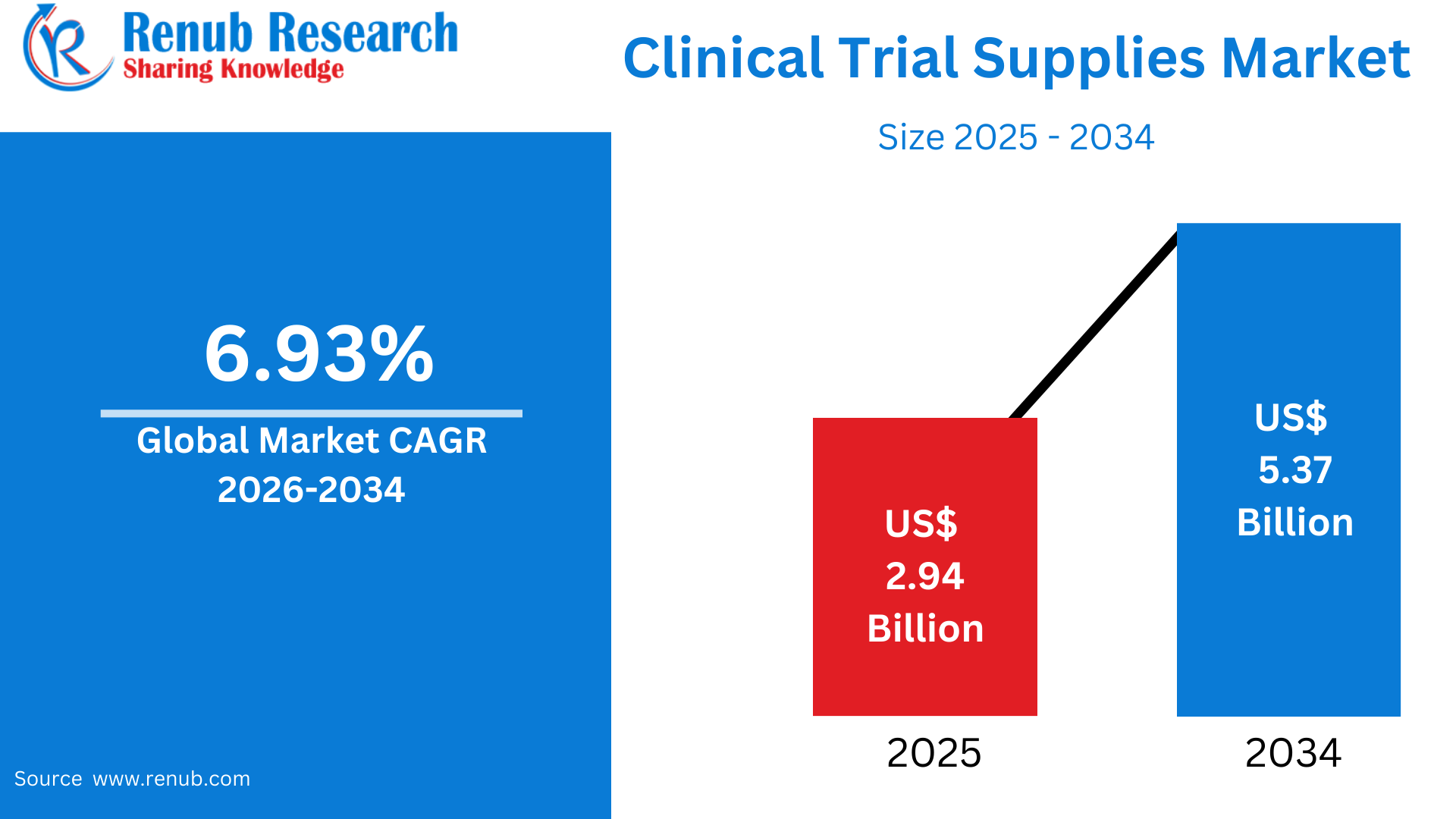
Clinical Trial Supplies Market is projected to expand from US$ 2.94 billion in 2025 to US$ 5.37 billion by 2034, registering a CAGR of 6.93% during 2026–2034. Market growth is fueled by the rising number of clinical trials worldwide, increasingly complex study protocols, the growing adoption of biologics and personalized therapies, and the escalating need for advanced supply chain management, packaging, labeling, storage, and logistics solutions to efficiently support global multicenter clinical research.
What is Clinical Trial Supplies and Its Uses & Popularity Worldwide
Clinical trial supplies refer to the pharmaceutical products, medical devices, packaging materials, labeling, comparator drugs, placebos, and ancillary supplies required to conduct clinical studies safely and efficiently. These supplies ensure that investigational medicines reach research sites and participants under strict regulatory and quality standards while maintaining product integrity throughout the trial process. Clinical trial supply management includes forecasting, manufacturing, packaging, storage, temperature-controlled transportation, inventory management, randomization, and distribution across multiple countries.
The increasing globalization of clinical research has significantly boosted the demand for reliable clinical trial supply solutions. Pharmaceutical and biotechnology companies are conducting more multinational studies to accelerate drug development, particularly for biologics, cell and gene therapies, vaccines, oncology treatments, and rare diseases. Advances in digital supply chain technologies, real-time tracking, and cold chain logistics have further improved the efficiency and accuracy of clinical trial operations. The growing number of clinical trials, rising investments in research and development, expanding personalized medicine, and stricter regulatory requirements continue to increase the popularity of clinical trial supplies worldwide, making them an essential component of successful drug development and global healthcare innovation.
Growth Driver of the Clinical Trial Supplies Market
Rising Number of Global Clinical Trials
The increasing volume of clinical trials worldwide is one of the primary drivers of the Clinical Trial Supplies Market. Pharmaceutical, biotechnology, and medical device companies continue to invest heavily in research and development to accelerate the introduction of innovative therapies. According to the World Health Organization's International Clinical Trials Registry Platform (ICTRP), more than 900,000 clinical studies have been registered globally, with thousands of new trials initiated every year. Oncology accounts for nearly 30% of all active clinical trials, followed by infectious diseases, neurology, and rare diseases. Every clinical study requires investigational drugs, comparators, placebos, packaging, labeling, storage, and distribution services, increasing demand for specialized clinical trial supply providers. Furthermore, multinational studies involving dozens of countries require sophisticated logistics, inventory management, and temperature-controlled transportation. As pharmaceutical companies continue expanding clinical research into emerging markets across Asia-Pacific, Latin America, and Eastern Europe, the demand for efficient clinical trial supply management continues to rise, supporting sustained market growth throughout the forecast period.
Expansion of Biologics, Cell & Gene Therapies, and Personalized Medicine
The rapid growth of biologics, personalized medicine, and advanced therapies is significantly increasing demand for specialized clinical trial supplies. Biologics now account for approximately 40% of the global pharmaceutical development pipeline, while hundreds of cell and gene therapy candidates are currently undergoing clinical evaluation worldwide. Unlike conventional small-molecule drugs, biologics require highly controlled storage environments, often between 2°C and 8°C, while some cell and gene therapies require ultra-low temperatures below −70°C. These specialized requirements create strong demand for advanced cold chain packaging, temperature monitoring devices, validated shipping containers, and real-time logistics tracking systems. Personalized medicine also involves smaller patient populations and decentralized trial models, requiring flexible packaging, patient-specific labeling, and direct-to-patient distribution capabilities. The increasing approval of biologics and precision medicines is encouraging pharmaceutical companies to invest in modern clinical trial supply infrastructure capable of ensuring product quality, regulatory compliance, and timely delivery across multiple global research sites.
Increasing Outsourcing of Clinical Trial Supply Chain Services
Growing outsourcing by pharmaceutical and biotechnology companies is accelerating the Clinical Trial Supplies Market. Drug developers increasingly partner with specialized Contract Research Organizations (CROs), Contract Development and Manufacturing Organizations (CDMOs), and clinical supply service providers to reduce operational complexity and improve trial efficiency. Industry estimates indicate that more than 60% of clinical trials globally involve outsourced clinical research services, reflecting the growing preference for external expertise. Outsourcing enables companies to access specialized packaging, labeling, randomization, comparator sourcing, inventory management, cold chain logistics, and regulatory compliance capabilities without making substantial capital investments. The increasing globalization of clinical research has further strengthened demand for integrated supply chain partners capable of managing complex multinational trials. Digital technologies such as artificial intelligence, predictive demand forecasting, RFID tracking, and cloud-based inventory management systems are further improving supply chain visibility and reducing wastage. These advantages continue driving outsourcing adoption and expanding opportunities for clinical trial supply providers worldwide.
Key Highlights: Number of Clinical Trials by Year and WHO Region (1999–2025)
- The total number of registered clinical trials increased significantly across all WHO regions between 1999 and 2025.
- The Region of the Americas recorded the highest number of clinical trials throughout the period, rising from fewer than 5,000 trials in 1999 to over 30,000 trials by 2024, before a slight decline in 2025.
- The European Region experienced strong and consistent growth, increasing to approximately 23,000 trials in 2025, making it the second-largest contributor.
- The Western Pacific Region showed steady expansion, reaching around 15,000–16,000 trials by 2024 before declining slightly in 2025.
- The South-East Asia Region demonstrated the fastest growth after 2017, rising sharply to approximately 7,000–8,000 trials by 2024.
- The Eastern Mediterranean Region steadily increased its clinical trial activity, reaching around 7,000–8,000 trials by 2024.
- The African Region recorded gradual but consistent growth, surpassing 6,000 trials by 2025.
- Clinical trial registrations accelerated noticeably after 2015, reflecting increased pharmaceutical R&D investments and multinational clinical studies.
- Most WHO regions reached their highest trial volumes during 2023–2024, highlighting expanding global clinical research activity.
- The slight decline observed in some regions in 2025 may reflect ongoing studies, reporting delays, or incomplete annual registration data rather than a reduction in research activity.
Clinical Trial Supplies Launches Worldwide
- Ancillare – Cold Chain Management Services (January 2025)
Ancillare launched an end-to-end Cold Chain Management solution for clinical trial supplies, covering temperature-controlled storage, packaging, transportation, customs clearance, inventory management, and expiry monitoring for global clinical studies.
- Thermo Fisher Scientific – Ultra-Cold Clinical Storage Facility (June 2024)
Thermo Fisher Scientific opened a new cGMP-compliant ultra-cold storage facility in Bleiswijk, Netherlands, supporting biologics, vaccines, and cell & gene therapy clinical trials with advanced biorepository and logistics capabilities.
- FedEx – Life Science Center for Clinical Trial Logistics (February 2024)
FedEx launched its Life Science Center in Mumbai, India, featuring controlled ambient, refrigerated, frozen, and deep-frozen storage for investigational medicinal products (IMPs), along with validated packaging and GCP/GDP-compliant logistics.
- KLIFO – Clinical Trial Supply Facility (December 2024)
KLIFO inaugurated a state-of-the-art clinical trial supply facility near Copenhagen to strengthen packaging, storage, labeling, and global distribution services for pharmaceutical and biotechnology sponsors.
- Thermo Fisher Scientific – Clinical Trial Materials Management Software (January 2024)
Thermo Fisher introduced Clinical Trial Materials Management Software to improve investigational product tracking, inventory visibility, forecasting, and supply chain efficiency across global clinical trials.
- PCI Pharma Services – Singapore Clinical Packaging Facility (February 2024)
PCI Pharma Services opened a US$45 million clinical trial packaging facility in Singapore, expanding its capabilities for packaging, labeling, serialization, and cold-chain distribution across the Asia-Pacific region.
- Catalent – Schorndorf Clinical Supply Expansion (July 2024)
Catalent expanded its clinical supply center in Schorndorf, Germany, enhancing GMP packaging, labeling, storage, and worldwide distribution services for multinational clinical studies.
- Science 37 & Catalent – Direct-to-Patient Clinical Supply Solution (September 2025)
Science 37 partnered with Catalent to launch a Direct-to-Patient (DTP) investigational medicinal product delivery solution, enabling secure home delivery of study medications for decentralized clinical trials.
- IQVIA – Enhanced End-to-End Clinical Trial Supplies Platform
IQVIA expanded its integrated Clinical Trial Supplies solution with enhanced investigational product management, comparator sourcing, supply forecasting, specialist logistics, and Randomization & Trial Supply Management (RTSM) capabilities for global studies.
- Catalent – FlexDirect® Direct-to-Patient Clinical Supply Service
Catalent introduced FlexDirect®, an advanced direct-to-patient clinical supply solution designed to improve patient access, optimize investigational product distribution, and support decentralized and hybrid clinical trials worldwide.
Challenges of the Clinical Trial Supplies Market
Complex Global Regulatory Compliance and Documentation Requirements
One of the biggest challenges facing the Clinical Trial Supplies Market is complying with diverse international regulatory requirements. Clinical trials conducted across multiple countries must satisfy different standards for packaging, labeling, import permits, customs documentation, product serialization, and Good Manufacturing Practice (GMP) compliance. Regulatory authorities such as the U.S. FDA, European Medicines Agency (EMA), MHRA, PMDA, and numerous national agencies maintain distinct regulatory frameworks that increase operational complexity. Industry studies indicate that more than 70 countries actively participate in multinational clinical trials, requiring sponsors to manage numerous country-specific regulations simultaneously. Regulatory changes during ongoing studies often necessitate relabeling, packaging modifications, and documentation updates, increasing both costs and project timelines. Failure to comply with local regulations may delay trial initiation, interrupt patient enrollment, or lead to product recalls. As clinical trials become increasingly global and decentralized, maintaining consistent regulatory compliance remains a major operational challenge for clinical trial supply organizations.
Cold Chain Logistics and Supply Chain Disruptions
Maintaining product integrity throughout the clinical trial supply chain remains a significant challenge, particularly for temperature-sensitive biologics, vaccines, and advanced therapies. Industry estimates suggest that more than 50% of biologic investigational products require temperature-controlled transportation, while many gene and cell therapies require ultra-low-temperature storage. Even minor temperature excursions can compromise product stability, resulting in costly product losses and trial delays. Global supply chain disruptions, transportation bottlenecks, customs delays, and shortages of specialized packaging materials further increase operational risks. Clinical trials conducted across geographically dispersed research sites require continuous monitoring, validated shipping systems, and real-time temperature tracking to maintain product quality. Additionally, decentralized clinical trials involving direct-to-patient delivery increase logistical complexity and distribution costs. Rising fuel prices, labor shortages, and evolving international trade regulations further challenge supply chain efficiency. These factors make cold chain management one of the most critical and expensive aspects of clinical trial supply operations worldwide.
Increasing Demand for Flexible and GMP-Compliant Manufacturing in Clinical Trial
Clinical Trial Product Manufacturing Market plays a critical role in producing investigational medicinal products (IMPs) for Phase I, II, III, and IV clinical studies. Unlike commercial manufacturing, clinical trial production requires smaller batch sizes, rapid process adjustments, stringent quality control, and compliance with Good Manufacturing Practices (GMP). The growing number of biologics, biosimilars, vaccines, and advanced therapies has significantly increased demand for specialized manufacturing capabilities. Globally, more than 9,000 medicines are currently under development, with biologics representing approximately 40% of the pharmaceutical pipeline, creating sustained demand for clinical manufacturing services. Manufacturers are increasingly adopting single-use technologies, continuous manufacturing, and modular production facilities to reduce turnaround times and improve operational flexibility. Additionally, pharmaceutical companies are outsourcing investigational product manufacturing to Contract Development and Manufacturing Organizations (CDMOs) to reduce capital investments and accelerate clinical timelines. As precision medicine and cell and gene therapies continue expanding, the need for highly specialized clinical manufacturing infrastructure is expected to strengthen worldwide.
Expanding Mid-Stage Clinical Research for Drug Efficacy Validation
Clinical Trial Phase II Market is expanding steadily as pharmaceutical and biotechnology companies increase investments in evaluating the efficacy and safety of investigational therapies before entering large-scale Phase III studies. Phase II trials generally involve 100 to 300 patients and are designed to determine optimal dosing, treatment effectiveness, and potential side effects across targeted patient populations. Industry estimates indicate that approximately 35–40% of drugs successfully complete Phase II and advance to Phase III, making this stage one of the most critical decision points in pharmaceutical development. The rapid increase in oncology, rare disease, immunology, and neurological drug development has significantly boosted Phase II clinical activity worldwide. Adaptive trial designs, biomarker-based patient selection, artificial intelligence, and decentralized clinical trial models are improving patient recruitment and trial efficiency. Growing regulatory support for accelerated drug development and orphan drug programs is also encouraging sponsors to expand Phase II studies, thereby increasing demand for clinical trial supplies, packaging, logistics, and patient support services.
Rising Cancer Research Accelerating Demand for Specialized Trial Supplies
Oncology Clinical Trial Supplies Market represents one of the fastest-growing segments within clinical research due to the continuous increase in global cancer incidence and pharmaceutical innovation. According to international health estimates, more than 20 million new cancer cases are diagnosed globally each year, while oncology accounts for nearly 30% of all active clinical trials worldwide. Cancer studies frequently involve personalized medicine, biomarker-driven therapies, immunotherapies, antibody-drug conjugates, and cell-based treatments that require specialized supply chain management. Oncology clinical trial supplies include investigational drugs, comparator medicines, placebo products, temperature-controlled packaging, patient-specific labeling, and real-time inventory management. Many oncology therapies require cold chain storage and precise handling to preserve product stability. In addition, multinational cancer studies often enroll thousands of participants across numerous countries, increasing logistical complexity. Continued investment in precision oncology, immunotherapy research, and targeted therapeutics is driving sustained demand for advanced clinical trial supply solutions across hospitals, cancer research centers, and pharmaceutical companies worldwide.
Growing Cardiovascular Research Supporting Clinical Supply Demand
Cardiovascular Diseases Clinical Trial Supplies Market continues to grow as cardiovascular disorders remain the leading cause of mortality worldwide. Global health statistics indicate that cardiovascular diseases account for approximately 18 million deaths annually, encouraging pharmaceutical companies to develop innovative therapies targeting heart failure, coronary artery disease, hypertension, atrial fibrillation, and stroke prevention. Clinical trials investigating novel anticoagulants, lipid-lowering agents, regenerative therapies, and medical devices require efficient management of investigational medicines, comparator drugs, packaging, labeling, and distribution. Large cardiovascular outcome trials often recruit thousands to tens of thousands of patients across multiple countries, making inventory forecasting and supply chain coordination increasingly important. The growing adoption of digital health technologies, wearable cardiac monitoring devices, and decentralized clinical trial models has further expanded operational complexity. Reliable clinical trial supplies ensure uninterrupted treatment availability, regulatory compliance, and patient safety throughout long-duration cardiovascular studies, supporting continued innovation in one of the world’s largest therapeutic research areas.
Expanding Drug Development Pipeline Driving Pharmaceutical Trial Growth
Clinical Trial Pharmaceuticals Market encompasses investigational drugs, biologics, vaccines, biosimilars, comparator products, and placebo formulations used throughout every phase of clinical development. The market continues to expand as pharmaceutical companies increase research investments to address chronic diseases, infectious diseases, rare disorders, and oncology. Worldwide pharmaceutical research pipelines currently include over 9,000 investigational medicines, reflecting strong innovation across multiple therapeutic areas. Every investigational product requires carefully controlled manufacturing, packaging, labeling, storage, regulatory documentation, and global distribution before reaching clinical research sites. Increasing biologic drug development, which now represents approximately 40% of the global pharmaceutical pipeline, has created greater demand for specialized pharmaceutical handling and cold chain logistics. Furthermore, growing adoption of personalized medicine, advanced biologics, and gene-based therapies requires patient-specific packaging and strict quality assurance throughout the clinical supply chain. Continuous investment in pharmaceutical innovation, combined with increasing multinational clinical studies, is expected to sustain long-term growth in the Clinical Trial Pharmaceuticals Market.
Strong Pharmaceutical Innovation and Large Clinical Research Network in United States
United States represents the world’s largest clinical trial market, supported by its advanced healthcare infrastructure, substantial pharmaceutical research investments, and well-established regulatory framework. The country accounts for nearly 30–35% of all registered clinical trials globally, making it the leading destination for drug development. The U.S. pharmaceutical and biotechnology industry invests more than US$100 billion annually in research and development, driving continuous demand for clinical trial supplies, investigational products, packaging, and logistics services. Thousands of hospitals, academic medical centers, and specialized research institutions participate in Phase I through Phase IV clinical studies across oncology, cardiovascular diseases, neurology, immunology, and rare diseases. The increasing adoption of decentralized clinical trials, electronic patient monitoring, artificial intelligence, and real-world evidence is improving patient recruitment and operational efficiency. Strong collaboration between pharmaceutical companies, Contract Research Organizations (CROs), and Contract Development and Manufacturing Organizations (CDMOs) continues to strengthen the United States’ position as the global leader in clinical research and innovative drug development.
Advanced Research Ecosystem Supporting Global Clinical Studies in United Kingdom
United Kingdom remains one of Europe’s leading clinical trial destinations due to its strong life sciences sector, highly skilled research workforce, and integrated healthcare system. The country hosts over 6,000 active clinical studies annually across a broad range of therapeutic areas, including oncology, cardiovascular diseases, infectious diseases, neuroscience, and rare disorders. The National Health Service (NHS), serving approximately 68 million people, provides an extensive patient population that facilitates efficient participant recruitment and long-term follow-up. The UK also benefits from internationally recognized universities, biotechnology companies, and pharmaceutical manufacturers that actively collaborate on innovative clinical research. Increasing investment in genomics, precision medicine, digital health technologies, and artificial intelligence has improved trial efficiency and data quality. Adaptive trial designs and decentralized clinical trials are becoming more common, allowing faster patient enrollment and remote monitoring. Continued government support for life sciences innovation and streamlined regulatory pathways further enhance the United Kingdom’s competitiveness in the global clinical trial market.
Expanding Patient Pool and Cost-Effective Clinical Research in India
India has emerged as one of the fastest-growing clinical trial markets due to its large patient population, improving healthcare infrastructure, and competitive research costs. With a population exceeding 1.4 billion people, the country offers access to diverse patient groups affected by both communicable and non-communicable diseases, making it attractive for multinational clinical studies. India records more than 5 million new cancer cases and millions of cardiovascular and diabetes patients requiring innovative therapies, creating significant opportunities for clinical research. Clinical trial costs in India are generally 30–60% lower than in many developed countries, encouraging pharmaceutical companies to expand research activities. The country has also strengthened its regulatory framework, Good Clinical Practice (GCP) compliance, and ethics committee oversight to improve trial quality and patient safety. Growing investments in biotechnology, biosimilars, vaccines, and digital healthcare, combined with increasing participation from Contract Research Organizations (CROs), continue to support rapid expansion of India’s clinical trial industry.
Healthcare Transformation Driving Clinical Research Expansion in Saudi Arabia
Saudi Arabia’s clinical trial market is experiencing steady growth as the country modernizes its healthcare system under Vision 2030 and increases investment in medical research and pharmaceutical innovation. The Kingdom has a population of approximately 38 million people, with rising prevalence of diabetes, obesity, cardiovascular diseases, and cancer creating significant demand for clinical research. Non-communicable diseases account for more than 70% of all deaths in the country, encouraging greater investment in new therapeutic development. Government initiatives are strengthening research infrastructure through specialized hospitals, academic institutions, biotechnology centers, and collaborations with international pharmaceutical companies. Increasing regulatory modernization, electronic health records, and digital healthcare platforms are improving patient recruitment and clinical data management. Saudi Arabia is also expanding its biotechnology manufacturing capabilities and encouraging multinational companies to establish regional clinical research operations. These developments, combined with rising healthcare expenditure and growing public-private partnerships, are positioning Saudi Arabia as an emerging clinical trial hub in the Middle East.
Market Segmentation
Service
- Product Manufacturing
- Packaging, Labeling and Storage
- Logistics and Distribution
Phase
- Phase I
- Phase II
- Phase III
- Others
Therapeutic Area
- Oncology
- Cardiovascular Diseases
- CNS and Mental Disorders
- Others
End Use
- Medical Device Industry
- Biopharmaceuticals Industry
- Pharmaceuticals Industry
- Others
Countries
North America
- United States
- Canada
Europe
- France
- Germany
- Italy
- Spain
- United Kingdom
- Belgium
- Netherlands
- Turkey
Asia Pacific
- China
- Japan
- India
- Australia
- South Korea
- Thailand
- Malaysia
- Indonesia
- New Zealand
Latin America
- Brazil
- Mexico
- Argentina
Middle East & Africa
- South Africa
- Saudi Arabia
- United Arab Emirates
All companies have been covered with 5 Viewpoints
- Overview
- Key Persons
- Recent Development & Strategies
- Product Portfolio
- Financial Insights
Company Analysis
- Almac Group Ltd.
- Biocair
- DHL
- Thermo Fisher Scientific Inc.
- Marken
- Paraxel International Corporation
- Sharp Services, LLC
- PCI Pharma Services
Report Details:
| Report Features | Details |
| Base Year |
2025 |
| Historical Period |
2022 - 2026 |
| Forecast Period |
2026 - 2034 |
| Market |
US$ Billion |
| Segment Covered |
Services, Phase, Therapeutic Area, End User and Countries |
| Countries Covered |
|
| Companies Covered |
|
| Customization Scope |
20% Free Customization |
| Post-Sale Analyst Support |
1 Year (52 Weeks) |
| Delivery Format |
PDF and Excel through Email (We can also provide the editable version of the report in PPT/Word format on request) |
Key Questions Answered in Report:
- How big is the Clinical Trial Supplies industry?
- What is the Clinical Trial Supplies growth rate?
- Who are the key players in Clinical Trial Supplies industry?
- What are the factors driving the Clinical Trial Supplies industry?
- Which Region held the largest market share in the Clinical Trial Supplies industry?
- What segments are covered in the Clinical Trial Supplies Market report?
Customization Services available
- Analysis of Market Size and Its Segments
- More Company Profiles (Upto 10 without any additional cost):
- Additional Countries (Other than mentioned Countries):
- Region/Country Specific Reports:
- Market Entry Strategy:
- Region-Specific Market Dynamics:
- Regional Market Share Analysis:
- Trade Analysis:
- Production Insights:
- Others Customized Requests:
For more information contact our analysts.
Need More Assistance?
- Talk to our analysts to get more precious information on the current market trends.
- Include more countries and segments and customize the report based on the final requirement.
- Get a competitive advantage in your industry by knowing the report findings and making a positive impact on your revenues and operations.
- Our analysts are always ready to provide more help and pertinent information if you need any additional assistance.