China Snacks Food Market Report by Product, Distribution Channel, City and Company Analysis 2026-2034
Buy NowChina Snacks Food Market Size & Forecast
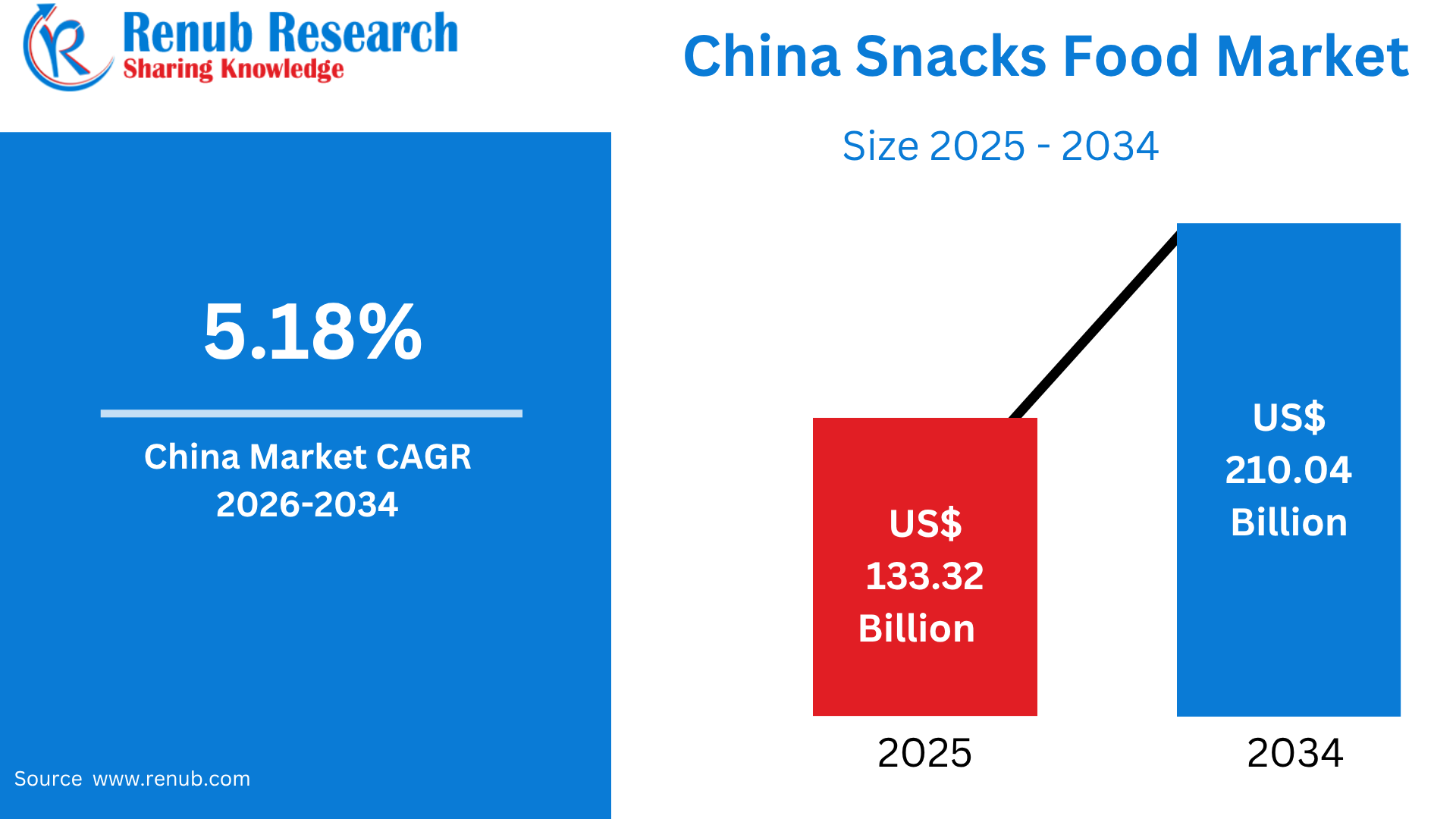
China Snacks Food Market is projected to expand at a CAGR of 5.18% during 2026-2034, increasing from US$ 133.32 billion in 2025 to approximately US$ 210.04 billion by 2034. Market growth is being supported by rapid urbanization, rising disposable incomes, and evolving consumer lifestyles across the country. The increasing preference for convenient, portable, and ready-to-eat food products is further strengthening demand for snacks among busy consumers. In addition, the rapid expansion of e-commerce and online grocery platforms is improving the accessibility and distribution of snack products across China.
What is Snack Food and Its Uses & Popularity Worldwide
Snacks are convenient food products consumed between regular meals to satisfy hunger, provide quick energy, or complement daily eating routines. They include a broad range of products such as chips, nuts, biscuits, popcorn, confectionery, savory snacks, dried fruits, protein bars, and ready-to-eat packaged foods. Snacks are widely used by consumers seeking quick and portable food options during work, travel, leisure activities, and social occasions. Their long shelf life, easy availability, and diverse flavors make them suitable for different age groups and consumption preferences.
The popularity of snacks has increased significantly worldwide due to urbanization, busy lifestyles, rising disposable incomes, and growing demand for convenient food products. Consumers are increasingly looking for snacks that offer convenience while also meeting nutritional preferences, encouraging manufacturers to develop healthier options featuring lower sugar, reduced sodium, high protein, whole grains, and natural ingredients. The expansion of supermarkets, convenience stores, food-delivery platforms, and e-commerce has further improved global accessibility. Product innovation, premiumization, regional flavors, and changing consumer preferences continue to support the growth and widespread popularity of the worldwide snacks food market.
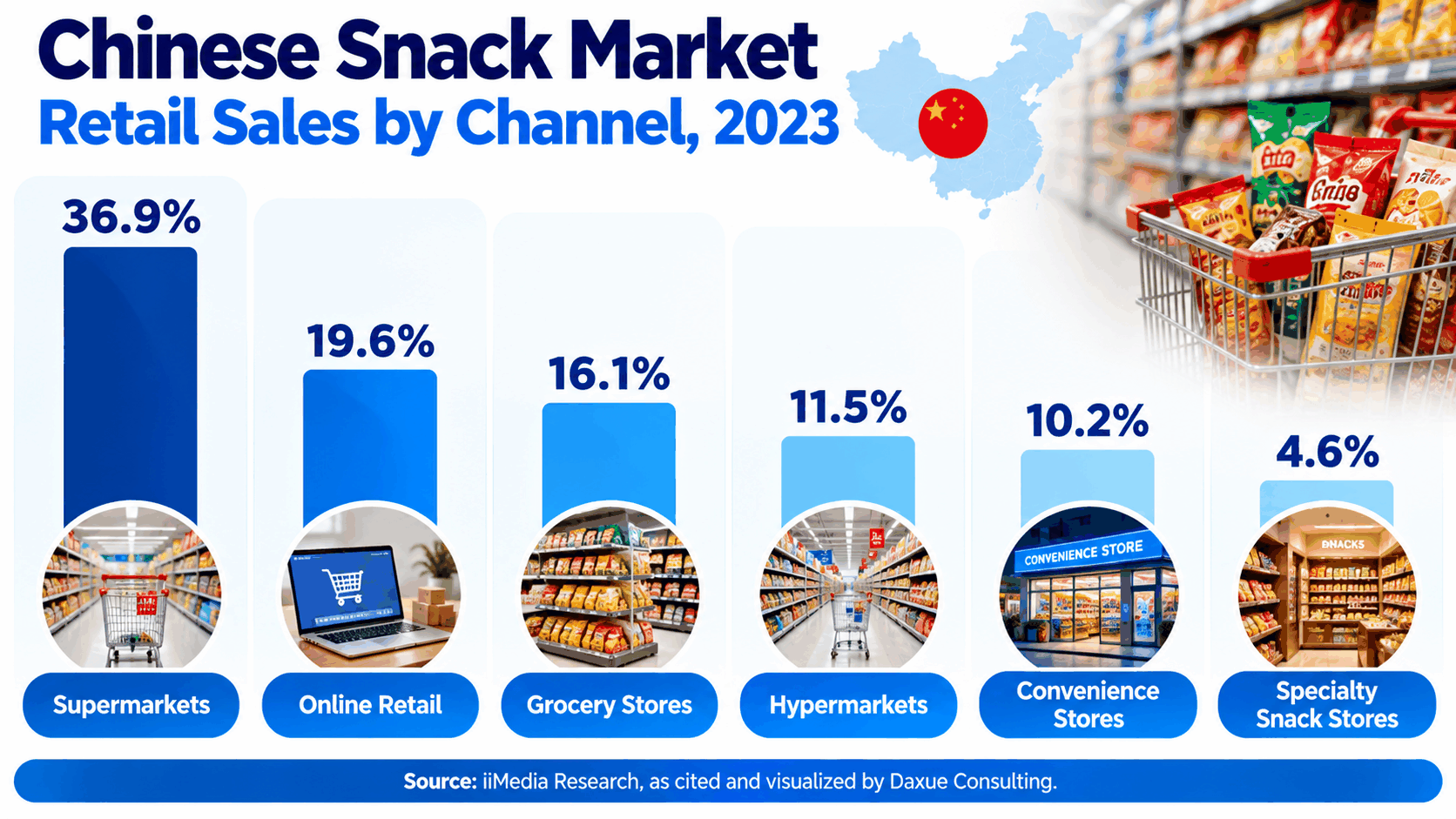
Chinese Snack Market Retail Sales by Channel, 2023
- Supermarkets: 36.9%
- Online Retail: 19.6%
- Grocery Stores: 16.1%
- Hypermarkets: 11.5%
- Convenience Stores: 10.2%
- Specialty Snack Stores: 4.6%
Growth Drivers of the China Snacks Food Market
Rising Disposable Income and Changing Consumer Lifestyles
Increasing household incomes are encouraging Chinese consumers to spend more on convenient and premium food products, including packaged snacks. In 2025, China’s nationwide per capita disposable income reached RMB 43,377, representing a 5.0% year-on-year increase, while per capita consumption expenditure rose 4.4% to RMB 29,476. Urban residents recorded disposable income of RMB 56,502, while rural residents reached RMB 24,456. This improving purchasing power is supporting demand for higher-quality, branded, and innovative snack products. Busy work schedules, urban lifestyles, smaller households, and increasing mobility are also encouraging consumers to choose portable, ready-to-eat foods. At the same time, consumers are increasingly experimenting with premium nuts, baked snacks, protein-rich products, dried fruits, and functional snacks. Manufacturers are responding by introducing healthier formulations, attractive packaging, and locally inspired flavors. These socioeconomic and lifestyle changes are expected to sustain demand and broaden snack consumption across different consumer groups in China.
Rapid Expansion of E-Commerce and Online Food Retail
The rapid development of e-commerce is significantly improving access to packaged snacks throughout China. In 2025, China’s online retail sales reached approximately RMB 15 trillion, increasing 8.63% year over year. Online retail sales of physical goods totaled RMB 13 trillion and represented 26.1% of total retail sales of consumer goods. Particularly relevant to snacks, online sales of food products increased 14.5% during the year. The expansion of digital marketplaces, social commerce, livestream shopping, and food-delivery platforms enables snack manufacturers to reach consumers directly across both major cities and smaller markets. Online channels also allow brands to launch limited-edition flavors, regional specialties, subscription packs, and promotional bundles quickly. Consumer reviews, influencer marketing, and personalized recommendations further encourage product discovery and trial. As digital purchasing becomes increasingly integrated into everyday shopping habits, e-commerce is expected to remain an important distribution and marketing channel for China’s snacks food market.
Product Innovation and Growing Demand for Diverse Snacks
Continuous product innovation is creating new opportunities in China’s snacks food market as consumers increasingly seek variety, convenience, and products aligned with changing dietary preferences. Snack manufacturers are expanding beyond traditional chips, biscuits, and confectionery into nuts, dried fruits, baked products, protein snacks, low-sugar foods, and other differentiated formats. China’s broader food retail environment also demonstrates strong demand momentum: in 2025, retail sales of grain, oil, and food products among designated-size enterprises increased 9.3%, according to the National Bureau of Statistics. Manufacturers are increasingly experimenting with regional Chinese flavors, novel textures, smaller portion sizes, premium ingredients, and functional positioning to attract younger and health-conscious consumers. Packaging innovation is also supporting portability and convenience for consumption at work, during travel, and while studying. The combination of new flavors, healthier formulations, premium products, and culturally relevant offerings is helping brands differentiate themselves in a highly competitive market and encouraging consumers to purchase snacks more frequently.
Challenges of the China Snacks Food Market
Growing Health and Nutritional Concerns
Health concerns associated with frequent consumption of snacks represent an important challenge for the China snacks food market. Traditional processed snacks can contain relatively high levels of sodium, sugar, saturated fat, and calories, creating pressure on manufacturers to improve nutritional profiles. Chinese consumers are becoming increasingly attentive to ingredient quality, sugar content, nutritional value, and product claims, particularly younger and urban consumers. At the same time, household food expenditure continues to grow, but overall consumption growth is moderate. In 2025, national per capita consumption expenditure increased 4.4%, while spending on food, tobacco, and liquor rose 2.6%. This environment makes consumers more selective about purchases and increases the importance of perceived value and health benefits. Manufacturers therefore face the challenge of reformulating products without compromising taste, texture, shelf life, or affordability. Developing low-sugar, low-sodium, high-protein, and clean-label snacks can also increase production costs, potentially affecting retail prices and margins.
Intense Competition and Price Sensitivity
Strong competition among domestic and international snack brands creates significant pressure on pricing, innovation, distribution, and marketing. The market includes established packaged-food manufacturers, regional brands, emerging health-snack companies, private-label products, and numerous online sellers. This crowded environment makes it increasingly difficult for companies to maintain consumer attention and build long-term brand loyalty. Price sensitivity is another challenge, particularly as consumers have access to numerous alternatives through supermarkets, convenience stores, discount retailers, and e-commerce platforms. Although China’s total retail sales of consumer goods increased 3.7% in 2025, the growth rate indicates a relatively competitive consumption environment. Companies must therefore balance competitive pricing with investments in product development, packaging, advertising, logistics, and digital marketing. Frequent promotions and online discounts can further pressure margins. Consequently, snack manufacturers need strong differentiation, efficient supply chains, compelling product positioning, and continuous innovation to remain competitive while maintaining profitability.
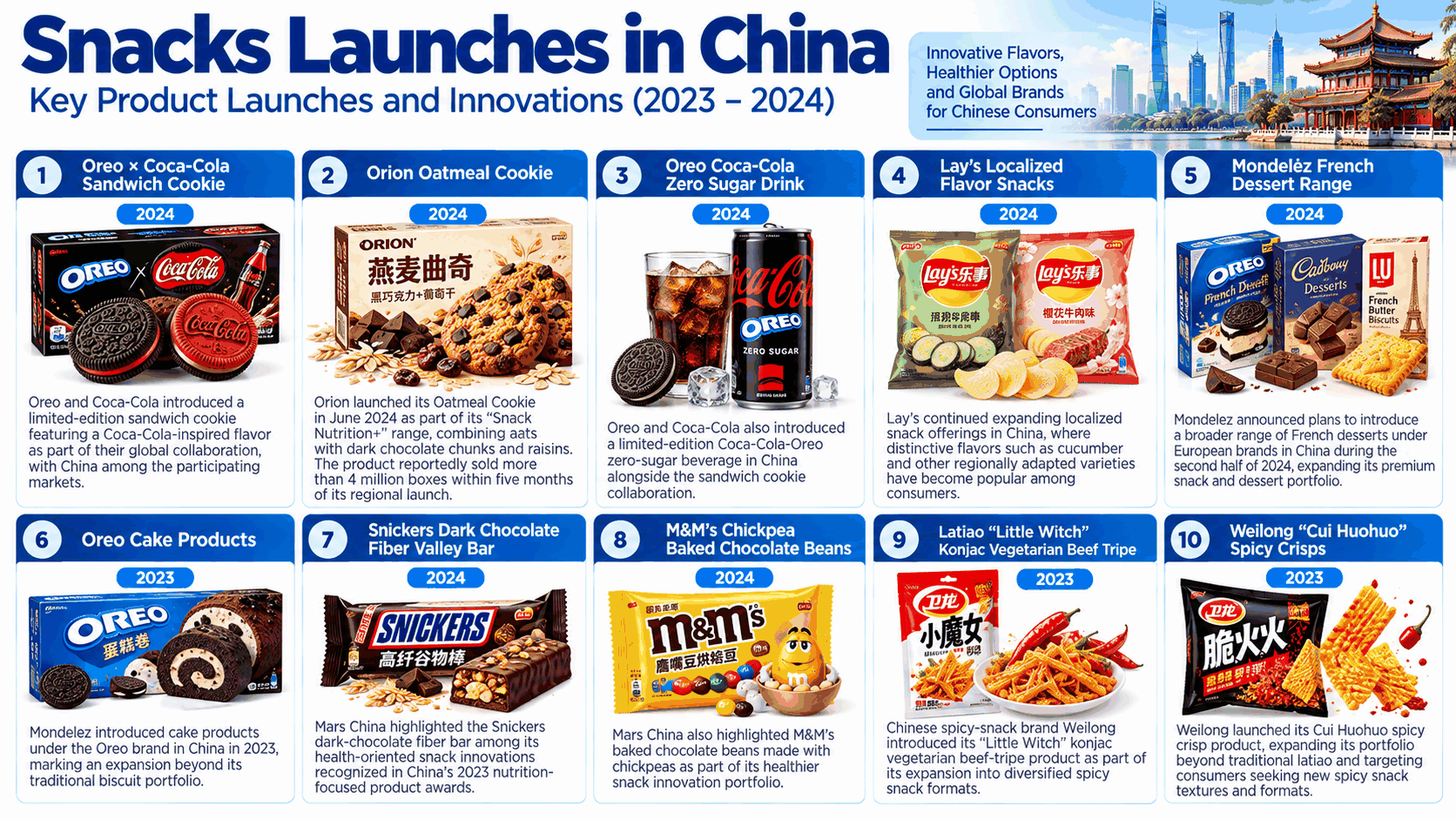
Snacks Launches in China
- Oreo × Coca-Cola Sandwich Cookie – 2024: Oreo and Coca-Cola introduced a limited-edition sandwich cookie featuring a Coca-Cola-inspired flavor as part of their global collaboration, with China among the participating markets.
- Orion Oatmeal Cookie – 2024: Orion launched its Oatmeal Cookie in June 2024 as part of its “Snack Nutrition+” range, combining oats with dark chocolate chunks and raisins. The product reportedly sold more than 4 million boxes within five months of its regional launch.
- Oreo Coca-Cola Zero Sugar Drink – 2024: Oreo and Coca-Cola also introduced a limited-edition Coca-Cola-Oreo zero-sugar beverage in China alongside the sandwich cookie collaboration.
- Lay’s Localized Flavor Snacks – 2024: Lay’s continued expanding localized snack offerings in China, where distinctive flavors such as cucumber and other regionally adapted varieties have become popular among consumers.
- Mondelez French Dessert Range – 2024: Mondelez announced plans to introduce a broader range of French desserts under European brands in China during the second half of 2024, expanding its premium snack and dessert portfolio.
- Oreo Cake Products – 2023: Mondelez introduced cake products under the Oreo brand in China in 2023, marking an expansion beyond its traditional biscuit portfolio.
- Snickers Dark Chocolate Fiber Valley Bar – 2024: Mars China highlighted the Snickers dark-chocolate fiber bar among its health-oriented snack innovations recognized in China’s 2023 nutrition-focused product awards.
- M&M’s Chickpea Baked Chocolate Beans – 2024: Mars China also highlighted M&M’s baked chocolate beans made with chickpeas as part of its healthier snack innovation portfolio.
- Latiao “Little Witch” Konjac Vegetarian Beef Tripe – 2023: Chinese spicy-snack brand Weilong introduced its “Little Witch” konjac vegetarian beef-tripe product as part of its expansion into diversified spicy snack formats.
- Weilong “Cui Huohuo” Spicy Crisps – 2023: Weilong launched its Cui Huohuo spicy crisp product, expanding its portfolio beyond traditional latiao and targeting consumers seeking new spicy snack textures and formats.
China Attractive Molded Cookies Packaging and Product Innovation
China molded cookies market is witnessing steady growth, supported by rising consumer demand for visually attractive, convenient, and distinctive snack products. Molded cookies are gaining attention because of their unique shapes, textures, designs, and flavors, making them particularly appealing to younger consumers and families. China’s expanding packaged food industry is creating a favorable environment for innovative cookie formats, while rising disposable incomes are encouraging consumers to experiment with premium and specialty snacks. According to China’s National Bureau of Statistics, per capita disposable income reached RMB 43,377 in 2025, increasing 5.0% year over year, supporting spending on consumer food products. Eye-catching packaging, creative shapes, seasonal designs, and innovative flavors are helping molded cookies differentiate themselves from conventional biscuits. Manufacturers are increasingly introducing products inspired by local tastes and popular cultural themes. In addition, the expansion of supermarkets, convenience stores, specialty food outlets, and e-commerce platforms is improving product accessibility. Online retail sales of physical goods accounted for 26.1% of China’s total retail sales of consumer goods in 2025, highlighting the importance of digital distribution.
China Rolled Cookies Flavor Variety and Premium Positioning
China rolled cookies market is gaining popularity as consumers increasingly seek light, crispy, premium, and visually appealing snacks. Rolled cookies are commonly enjoyed as standalone snacks or alongside beverages such as tea and coffee, making them suitable for both everyday consumption and social occasions. Their delicate texture and attractive appearance particularly appeal to urban consumers seeking sophisticated packaged food products. Rising consumer purchasing power is supporting demand for premium snack categories, with China’s per capita disposable income increasing 5.0% to RMB 43,377 in 2025. Manufacturers are expanding their product portfolios with flavors such as chocolate, vanilla, matcha, cream, coconut, and other regionally preferred varieties to attract Chinese consumers. Rolled cookies are also increasingly positioned as giftable products, particularly during festivals and family celebrations. The growth of modern retail and e-commerce is further increasing their availability. China’s online retail sales of physical goods reached RMB 13.09 trillion in 2025, accounting for 26.1% of total retail sales of consumer goods. Continued premiumization, product innovation, and broader digital distribution are expected to support market expansion.
Growing Demand for Premium and Health-Oriented Snacks
China organic potato chips market is expanding as consumers become more conscious of food quality, ingredients, and nutritional attributes. Growing awareness of healthy eating is encouraging demand for snack products perceived as more natural and minimally processed. Organic potato chips can benefit from consumer interest in products made without certain artificial additives and from growing demand for premium packaged foods. Rising household purchasing power is also creating opportunities for higher-priced organic and specialty snacks. China’s per capita disposable income reached RMB 43,377 in 2025, representing a 5.0% increase from the previous year, supporting consumer spending on differentiated food products. Organic potato chips are increasingly positioned as premium alternatives to conventional potato chips, appealing particularly to middle- and higher-income consumers. Manufacturers are responding with products featuring organic ingredients, reduced additives, alternative cooking methods, and innovative seasonings. Growing availability through supermarkets, specialty stores, organic food outlets, and online platforms is also improving consumer access. The expansion of online food retail provides additional opportunities for niche organic brands to reach health-conscious customers across major cities and emerging markets. These trends are expected to support continued development of China’s organic potato chips market.
Flavor Localization and Wider Distribution
Salted food flips and pretzels market is gradually expanding as Chinese consumers become increasingly exposed to Western-style snack foods. Pretzels and salted flips offer distinctive crunchy textures and savory flavors that appeal particularly to younger consumers and urban populations. International food trends, social media, travel, and the growing presence of global food brands are introducing consumers to a wider variety of snack formats. China’s growing packaged food consumption environment is further supporting demand for innovative savory snacks. Manufacturers are adapting pretzels and salted snacks to local preferences by introducing flavors such as spicy, barbecue, cheese, seaweed, and other savory seasonings. This localization strategy can help international-style snacks appeal to Chinese consumers with different taste preferences. Distribution is also improving through convenience stores, supermarkets, hypermarkets, specialty retailers, and online marketplaces. China’s online retail sales of physical goods increased substantially in recent years, with food-product online sales growing 14.5% in 2025, demonstrating strong momentum for digital food distribution. Continued Western snack exposure, flavor innovation, and omnichannel availability are expected to support market growth.
Convenience, Accessibility, and Urban Consumption
China snacks food convenience stores market is expanding alongside the development of convenience retail networks, particularly in densely populated urban areas. Convenience stores provide consumers with quick access to packaged snacks, beverages, and ready-to-eat foods, making them particularly attractive to professionals, students, commuters, and younger consumers. Their proximity to residential neighborhoods, offices, schools, transportation hubs, and commercial districts enables consumers to purchase snacks during short shopping trips. Long operating hours, convenient locations, rapid checkout, and a broad assortment of products are major factors supporting snack purchases through convenience stores. The channel also benefits from growing demand for portable and ready-to-eat foods associated with busy urban lifestyles. China’s retail sales of consumer goods increased 3.7% in 2025, while retail sales of grain, oil, and food products among designated-size enterprises increased 9.3%, indicating continued demand within the food retail sector. As convenience store networks expand and retailers strengthen their fresh-food, ready-to-eat, and packaged-snack offerings, the channel is expected to remain an important distribution route for China’s snacks food market.
Traditional and Modern Snack Demand in Beijing
Beijing snacks market is developing through a combination of traditional Chinese food culture, rising purchasing power, and rapidly changing urban lifestyles. As China’s capital and one of its major economic centers, Beijing has a large consumer base with strong demand for diverse packaged and ready-to-eat food products. In 2025, Beijing’s per capita disposable income reached RMB 85,415, providing consumers with considerable purchasing capacity for premium and specialty foods. Traditional products such as roasted nuts, dried fruits, pastries, and local specialty snacks remain popular, while chips, cookies, chocolate, protein snacks, and other modern packaged products are gaining traction among younger consumers. Beijing’s fast-paced work and study environment is also increasing demand for portable, convenient snacks that can be consumed between meals. In addition, health-conscious consumers are showing greater interest in organic, low-sugar, low-calorie, and naturally formulated snacks. The expansion of supermarkets, convenience stores, specialty food retailers, and e-commerce platforms is further improving product availability and supporting the development of Beijing’s snacks market.
Shanghai Premiumization and Digital Influence For Snacks Market
Shanghai snacks market is highly dynamic and trend-oriented, reflecting the city’s position as a major financial, commercial, and cultural center. Consumers have relatively high purchasing power and are receptive to international food trends, innovative flavors, premium ingredients, and sophisticated packaging. Shanghai’s per capita disposable income reached approximately RMB 88,366 in 2025, highlighting the city’s strong consumer spending potential. Urban lifestyles, social gatherings, workplace consumption, and travel are supporting demand for convenient and premium snack products. Consumers are increasingly experimenting with international snack categories while also showing interest in locally inspired flavors and healthier alternatives. Organic, low-sugar, high-protein, and functional snacks are gaining attention as health awareness increases. Shanghai also benefits from a highly developed modern retail and e-commerce ecosystem. China’s online retail sales of physical goods reached RMB 13.09 trillion in 2025, representing 26.1% of total retail sales of consumer goods. Social media, livestream commerce, influencer recommendations, and digital advertising are further accelerating product discovery and consumer engagement, supporting continued growth in the Shanghai snacks market.
Tianjin Retail Development and Changing Preferences for Snacks
Tianjin snacks market is expanding steadily, supported by urban development, improving household purchasing power, and increasing consumer awareness of packaged food products. Tianjin’s location near Beijing and its role as a major northern port and industrial center provide the city with strong commercial and distribution advantages. The city’s large urban consumer base supports demand for both traditional and modern snack products. Traditional snacks, including baked goods, pastries, nuts, and savory products, continue to have strong cultural relevance, while younger consumers are increasingly purchasing chips, biscuits, confectionery, and other packaged snacks. The development of modern supermarkets, convenience stores, shopping centers, and e-commerce platforms is making a wider selection of products accessible to consumers. China’s retail sales of consumer goods increased 3.7% in 2025, while retail sales of grain, oil, and food products among designated-size enterprises rose 9.3%, indicating continued food-retail momentum. Rising middle-class consumption, convenient distribution, and growing demand for innovative and healthier snack products are expected to support the Tianjin market over the coming years.
Innovation, E-Commerce, and Healthier Snacks in Guangdong
The Guangdong snacks market is one of China’s important regional markets, supported by its large population, strong economy, extensive urban centers, and distinctive food culture. Cities such as Guangzhou and Shenzhen serve as major consumption and commercial hubs, creating strong demand for both traditional and contemporary snack products. Guangdong’s economic strength also provides a favorable environment for premium, imported, and innovative food categories. The region’s rich culinary culture encourages manufacturers to develop products incorporating local flavors, spicy seasonings, seafood-inspired tastes, fruit flavors, and other regional preferences. At the same time, younger consumers are increasingly interested in international snack brands and novel product formats. The rapid development of retail chains, convenience stores, supermarkets, and online marketplaces is expanding product availability throughout the region. China’s online food retail environment is particularly important, with online sales of food products increasing by 14.5% in 2025. Health-oriented snacks, including low-sugar, high-protein, organic, and natural-ingredient products, are also gaining consumer attention. Strong purchasing power, digital commerce, retail expansion, and continuous product innovation are expected to maintain Guangdong’s position as a high-growth regional snacks market.
Market Segments
Products
Cookies & Crackers
- Bar Cookies
- Molded Cookies
- Rolled Cookies
- Drop Cookies
- Others
Potato Chips
- Organic
- Conventional
Tortilla Chips, Flips & Pretzels
- Salted
- Unsalted
Distribution Channels
- Supermarket & Hypermarkets
- Convenience Stores
- Online Retails
- Others
City
- Beijing
- Shanghai
- Jiangsu
- Fujian
- Zhejiang
- Tianjin
- Guangdong
- Inner Mongolia
- Hubei
- Chongqing
- Rest of China
All companies have been covered with 5 Viewpoints
- Overviews
- Key Person
- Recent Developments
- SWOT Analysis
- Revenue Analysis
Company Analysis:
- PepsiCo China Limited
- Nestle SA
- General Mills Inc.
- Conagra Brands Inc.
- Unilever
- Mondelez International, Inc.
- Tyson Foods, Inc.
Report Details:
| Report Features | Details |
| Base Year |
2025 |
| Historical Period |
2022 - 2025 |
| Forecast Period |
2026 - 2034 |
| Market |
US$ Billion |
| Segment Covered |
Products and Distribution Channels |
| City Covered |
|
| Companies Covered |
|
| Customization Scope |
20% Free Customization |
| Post-Sale Analyst Support |
1 Year (52 Weeks) |
| Delivery Format |
PDF and Excel through Email (We can also provide the editable version of the report in PPT/Word format on request) |
Customization Services available
- Analysis of Market Size and Its Segments
- More Company Profiles (Upto 10 without any additional cost):
- Additional Countries (Other than mentioned Countries):
- Region/Country Specific Reports:
- Market Entry Strategy:
- Region-Specific Market Dynamics:
- Regional Market Share Analysis:
- Trade Analysis:
- Production Insights:
- Others Customized Requests:
For more information contact our analysts.
Need More Assistance?
- Talk to our analysts to get more precious information on the current market trends.
- Include more countries and segments and customize the report based on the final requirement.
- Get a competitive advantage in your industry by knowing the report findings and making a positive impact on your revenues and operations.
- Our analysts are always ready to provide more help and pertinent information if you need any additional assistance.