China In Vitro Fertilization Market Size, Share, Growth, Trends, Industry Analysis & Forecast 2026–2034
Buy NowChina's In Vitro Fertilization Market Size Forecast
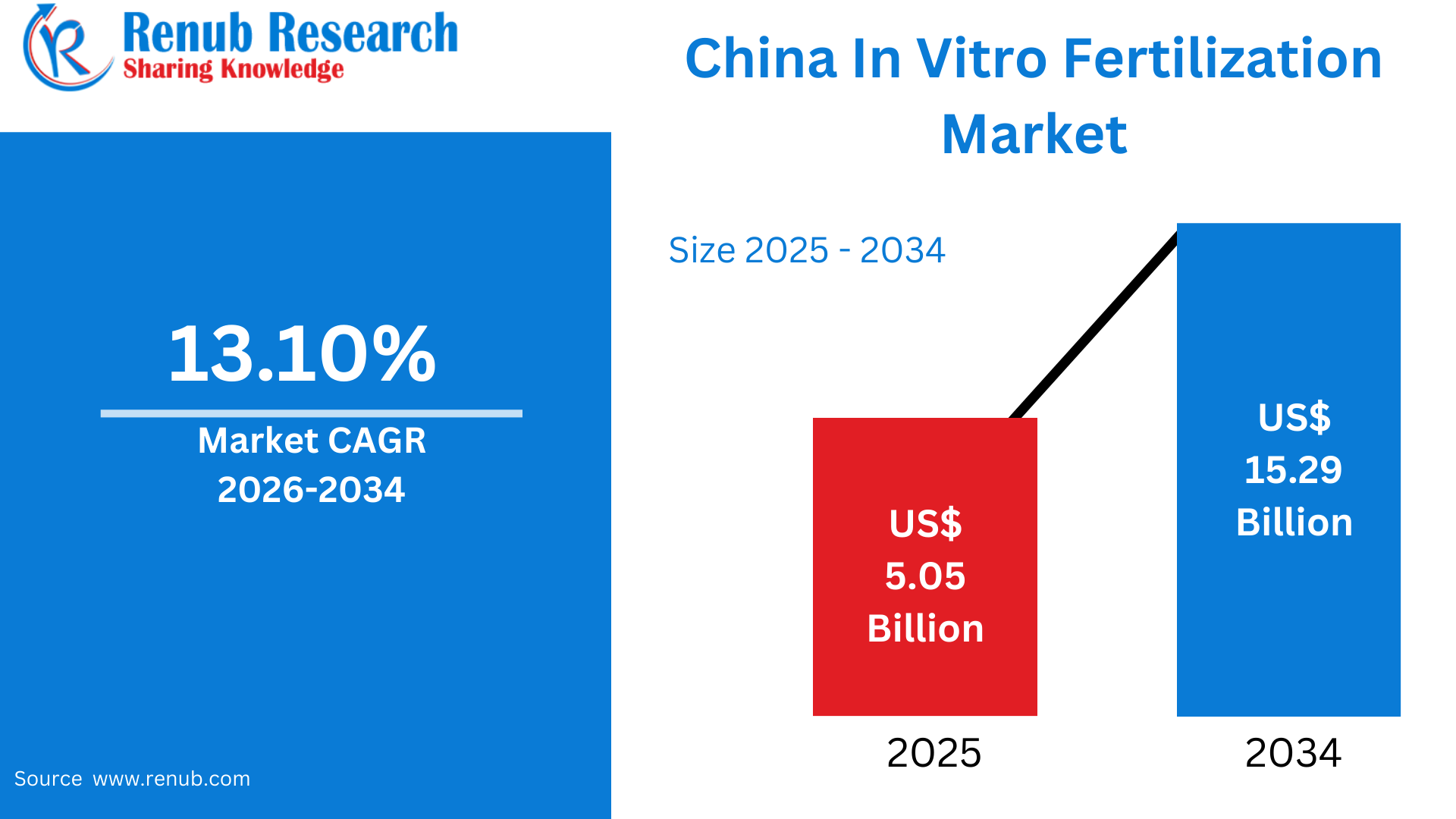
China's In Vitro Fertilization (IVF) Market is projected to grow from US$ 5.05 billion in 2025 to US$ 15.29 billion by 2034, registering a CAGR of 13.1% during the forecast period from 2026 to 2034. Market expansion is primarily driven by increasing infertility prevalence, delayed childbearing, favorable government initiatives aimed at addressing declining birth rates, and growing acceptance of assisted reproductive technologies (ART).
China In Vitro Fertilization Industry Overview
In Vitro Fertilization (IVF) is an assisted reproductive technology in which an egg and sperm are combined outside the body in a laboratory environment. Once fertilization occurs, the developing embryo is transferred into the uterus to achieve pregnancy. IVF is used for various infertility conditions, including blocked fallopian tubes, low sperm count, ovulation disorders, genetic concerns, or unexplained infertility. The procedure may involve ovarian stimulation, egg retrieval, embryo culture, and embryo transfer. Over the years, improvements such as preimplantation genetic testing, frozen embryo transfer, and time-lapse embryo imaging have enhanced IVF success rates and patient outcomes globally.
The IVF market in China is expanding due to increasing infertility rates caused by lifestyle changes, work stress, pollution, and late marriages. Government lifting of the one-child policy and promoting second and third births has boosted demand for fertility treatments. The rising number of specialized reproductive hospitals, adoption of advanced technologies like genetic screening, and increasing medical tourism for IVF services further support market growth. Expanding insurance coverage for infertility treatments in some regions is improving affordability, while growing awareness and cultural acceptance of assisted reproduction continue to strengthen market momentum.
What is In Vitro Fertilization and Its Uses & Popularity in China
In Vitro Fertilization (IVF) is an advanced assisted reproductive technology (ART) in which mature eggs are collected from a woman’s ovaries and fertilized with sperm in a specialized laboratory. The resulting embryo is cultured for several days before being transferred into the uterus to achieve pregnancy. IVF is widely used to treat infertility caused by blocked fallopian tubes, ovulation disorders, endometriosis, male-factor infertility, unexplained infertility, and certain genetic disorders. It also enables preimplantation genetic testing (PGT), allowing clinicians to screen embryos for inherited genetic conditions before implantation.
In China, IVF has gained significant popularity due to rising infertility rates, delayed marriage and parenthood, urban lifestyle changes, and increasing maternal age. Growing awareness of fertility treatments, improved healthcare infrastructure, and the expansion of specialized reproductive medicine centers have made IVF more accessible across major cities. Government measures to address declining birth rates and optimize reproductive healthcare services have further supported market development. Continuous advancements in embryo culture techniques, cryopreservation, and genetic screening have improved treatment success rates, increasing patient confidence. As a result, IVF has become an increasingly preferred solution for couples seeking safe, effective, and technologically advanced fertility treatment in China.
Policy and Financial Support for Fertility Treatments
To address declining birth rates and encourage family formation, China has significantly strengthened policy and financial support for assisted reproductive technologies (ART). One of the most impactful initiatives has been the gradual integration of ART services into the country’s public medical insurance system. Currently, 27 provinces provide insurance reimbursement for fertility treatments, including in vitro fertilization (IVF), embryo cryopreservation, and intrauterine insemination (IUI), making these services more affordable for eligible patients. By early 2024, more than 1.03 million patients had benefited from these reimbursement policies, substantially reducing out-of-pocket treatment expenses. Beijing became one of the first major cities to include ART under its basic medical insurance program in July 2023. During the first nine months of implementation, over 32,000 patients accessed fertility treatments, with public insurance reimbursing approximately RMB 190 million (around US$26 million) out of a total RMB 280 million (approximately US$38.4 million) spent on ART services. Similar reimbursement initiatives have since been introduced in provinces and municipalities such as Shanghai, Gansu, and Shandong, further expanding nationwide access to fertility care and supporting the continued growth of China’s IVF market.
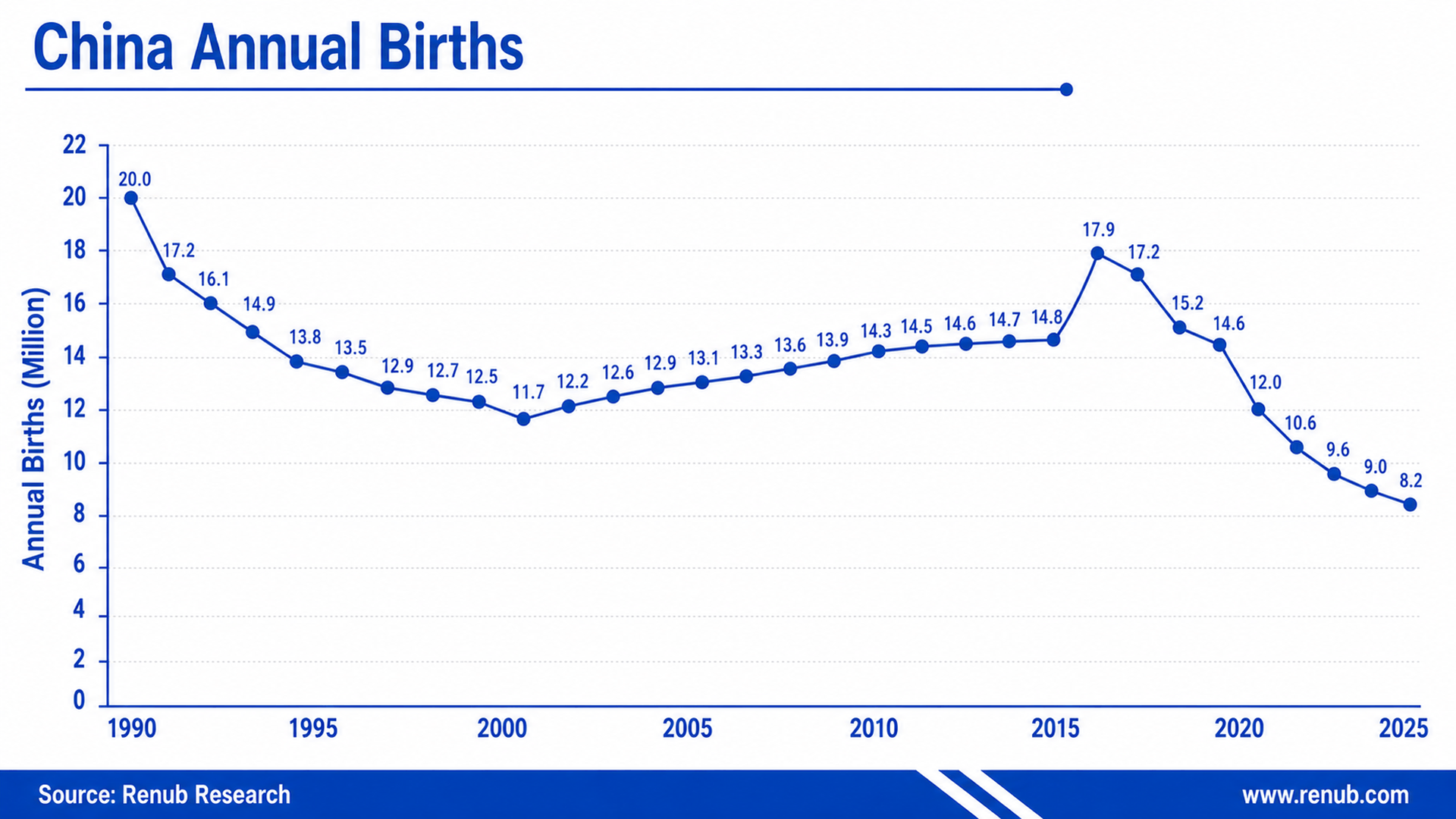
China Annual Births
- 1990: Approximately 20.0 million births, marking one of the highest levels during the early 1990s.
- 1991–1995: Births declined steadily from 17.2 million to around 13.8 million, reflecting the impact of family planning policies.
- 1996–1999: Annual births remained relatively stable between 12.5–13.5 million.
- 2000: Births reached a low of approximately 11.7 million before beginning a gradual recovery.
- 2001–2007: Moderate growth occurred, with annual births increasing from roughly 12.2 million to 13.9 million.
- 2008–2013: Births stabilized at around 14.3–14.8 million per year.
- 2014–2015: Slight increase to approximately 14.6–14.7 million births.
- 2016: Births surged to approximately 17.9 million, the highest level in nearly two decades, following the implementation of the Universal Two-Child Policy.
- 2017: Births declined modestly to around 17.2 million.
- 2018: Births fell further to approximately 15.2 million.
- 2019: Annual births decreased to roughly 14.6 million.
- 2020: Births dropped sharply to approximately 12.0 million, reflecting delayed parenthood, urbanization, and economic uncertainty.
- 2021: Births declined again to about 10.6 million, reaching the lowest level in decades.
- 2022: Births fell below 10 million, at approximately 9.6 million.
- 2023: Births continued downward to around 9.0 million, despite supportive fertility policies.
- 2024: Births were approximately 8.5 million, indicating persistent demographic challenges.
- 2025: The chart indicates annual births of approximately 8.2 million, representing the lowest point in the 1990–2025 period and highlighting the continuing decline in China's birth rate.
Growth Driver of China's In Vitro Fertilization Market
Rising Infertility Rates and Delayed Parenthood Increase Demand for IVF
China's IVF market is experiencing robust growth due to the increasing prevalence of infertility and the trend toward delayed parenthood. Health studies estimate that 15–18% of reproductive-age couples in China experience infertility, equivalent to more than 50 million individuals requiring fertility evaluation or treatment. The average age at first marriage and first childbirth has steadily increased, particularly in major cities such as Beijing, Shanghai, and Shenzhen, where many women postpone pregnancy into their 30s because of higher education and career priorities. Female fertility declines significantly after the age of 35, increasing reliance on assisted reproductive technologies. Lifestyle factors including obesity, smoking, environmental pollution, work-related stress, and reproductive disorders such as polycystic ovary syndrome (PCOS) also contribute to infertility. As awareness of fertility preservation and assisted reproduction grows, more couples are seeking IVF treatment. Improved success rates, advanced laboratory technologies, and expanding fertility clinics continue to strengthen patient confidence, making delayed parenthood one of the strongest long-term drivers of China's IVF market.
Government Policies Supporting Population Growth and Fertility Care
China's declining birth rate has encouraged policymakers to strengthen reproductive healthcare and improve access to fertility services. Following the introduction of the three-child policy, several provincial governments have implemented supportive measures that encourage fertility treatment, maternal healthcare, and family planning assistance. China's annual births have declined from approximately 17.9 million in 2016 to fewer than 10 million births annually in recent years, highlighting the urgency of improving fertility outcomes. Some provinces have expanded reimbursement policies for assisted reproductive services and increased investments in reproductive medicine centers. Public hospitals continue to establish specialized fertility departments equipped with advanced embryology laboratories and genetic testing capabilities. Regulatory improvements have also enhanced quality standards for licensed IVF centers, improving patient safety and treatment consistency. Combined with broader healthcare reforms and increased investment in reproductive technologies, supportive government initiatives are encouraging more couples to pursue IVF treatment, while creating favorable conditions for continued expansion of China's fertility care industry.
Technological Advancements and Expansion of Fertility Clinics
Rapid technological innovation is significantly improving IVF success rates and driving market expansion throughout China. Modern fertility centers increasingly utilize technologies such as time-lapse embryo imaging, blastocyst culture, vitrification (rapid embryo freezing), intracytoplasmic sperm injection (ICSI), and preimplantation genetic testing (PGT) to improve clinical outcomes. China now has more than 600 licensed assisted reproductive institutions, with many large hospitals operating advanced IVF laboratories capable of performing thousands of treatment cycles annually. Automation in embryo monitoring and artificial intelligence-assisted embryo selection are helping embryologists identify embryos with greater implantation potential, improving pregnancy success rates while reducing multiple pregnancies. The adoption of minimally invasive laboratory procedures and improved cryopreservation techniques allows patients greater flexibility in treatment planning. Continuous investment by both public and private healthcare providers in advanced reproductive equipment, laboratory infrastructure, and highly trained fertility specialists is expanding treatment capacity across the country. These technological improvements continue to enhance patient outcomes and strengthen confidence in IVF services.
Challenges of China's In Vitro Fertilization Market
High Treatment Costs and Limited Insurance Coverage
Despite growing demand, the high cost of IVF treatment remains one of the largest barriers to market expansion in China. A single IVF cycle generally costs between RMB 30,000 and RMB 60,000 (approximately US$4,000–8,000) depending on medications, laboratory procedures, genetic testing, and hospital services. Many patients require two or three treatment cycles before achieving pregnancy, substantially increasing the overall financial burden. Although certain provinces have begun including selected fertility procedures within regional medical insurance programs, comprehensive nationwide reimbursement remains limited. Out-of-pocket healthcare expenditure continues to discourage many middle-income and rural households from pursuing IVF treatment. Additional expenses related to fertility medications, embryo freezing, genetic testing, and follow-up care further increase overall treatment costs. Economic disparities between urban and rural populations also contribute to unequal access to high-quality fertility services. Expanding insurance coverage and improving affordability remain essential for increasing treatment accessibility and sustaining long-term growth in China's IVF market.
Uneven Access to Fertility Services and Shortage of Specialized Professionals
China's IVF market also faces challenges related to unequal healthcare access and shortages of highly skilled reproductive medicine professionals. Most advanced IVF centers are concentrated in large metropolitan areas such as Beijing, Shanghai, Guangzhou, and Chengdu, while many smaller cities and rural regions have limited availability of specialized fertility services. Patients often travel long distances to obtain consultations, laboratory procedures, and embryo transfers, increasing treatment costs and inconvenience. The growing number of infertility cases has placed additional pressure on reproductive medicine specialists, embryologists, genetic counselors, and fertility nurses. Maintaining consistently high laboratory quality standards also requires continuous investment in advanced equipment and professional training. Differences in healthcare infrastructure across provinces contribute to variations in treatment quality and waiting times. As demand for assisted reproductive technologies continues to increase, expanding the number of licensed fertility centers and developing a larger workforce of experienced reproductive specialists will be critical to ensuring equitable access and maintaining high-quality IVF services throughout China.
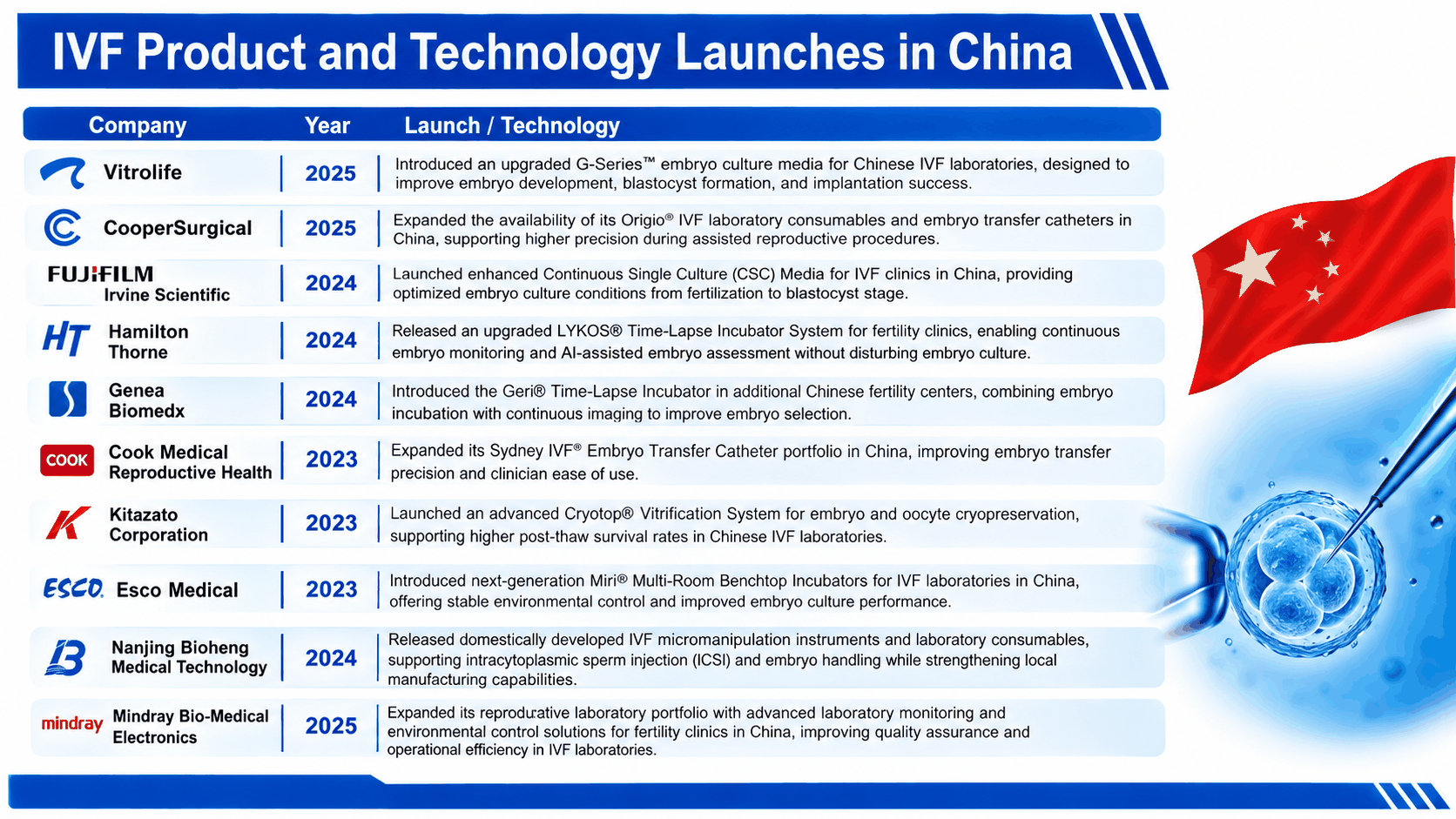
IVF Product and Technology Launches in China
- Vitrolife (2025) – Introduced an upgraded G-Series™ embryo culture media for Chinese IVF laboratories, designed to improve embryo development, blastocyst formation, and implantation success.
- CooperSurgical (2025) – Expanded the availability of its Origio® IVF laboratory consumables and embryo transfer catheters in China, supporting higher precision during assisted reproductive procedures.
- FUJIFILM Irvine Scientific (2024) – Launched enhanced Continuous Single Culture (CSC) Media for IVF clinics in China, providing optimized embryo culture conditions from fertilization to blastocyst stage.
- Hamilton Thorne (2024) – Released an upgraded LYKOS® Time-Lapse Incubator System for fertility clinics, enabling continuous embryo monitoring and AI-assisted embryo assessment without disturbing embryo culture.
- Genea Biomedx (2024) – Introduced the Geri® Time-Lapse Incubator in additional Chinese fertility centers, combining embryo incubation with continuous imaging to improve embryo selection.
- Cook Medical Reproductive Health (2023) – Expanded its Sydney IVF® Embryo Transfer Catheter portfolio in China, improving embryo transfer precision and clinician ease of use.
- Kitazato Corporation (2023) – Launched an advanced Cryotop® Vitrification System for embryo and oocyte cryopreservation, supporting higher post-thaw survival rates in Chinese IVF laboratories.
- Esco Medical (2023) – Introduced next-generation Miri® Multi-Room Benchtop Incubators for IVF laboratories in China, offering stable environmental control and improved embryo culture performance.
- Nanjing Bioheng Medical Technology (2024) – Released domestically developed IVF micromanipulation instruments and laboratory consumables, supporting intracytoplasmic sperm injection (ICSI) and embryo handling while strengthening local manufacturing capabilities.
- Mindray Bio-Medical Electronics (2025) – Expanded its reproductive laboratory portfolio with advanced laboratory monitoring and environmental control solutions for fertility clinics in China, improving quality assurance and operational efficiency in IVF laboratories.
Growing Demand for Immediate Embryo Transfer in IVF Treatments
Fresh embryo transfer remains a significant segment of China’s in vitro fertilization (IVF) market, particularly among first-time IVF patients and women with favorable reproductive health profiles. In this procedure, embryos created during the same IVF cycle are transferred into the uterus without cryopreservation, reducing storage requirements and shortening the treatment timeline. China performs an estimated over 1 million assisted reproductive treatment cycles annually, with fresh embryo transfers continuing to account for a substantial proportion of procedures despite the growing adoption of frozen embryo transfers. Clinical studies indicate that fresh embryo transfer can achieve pregnancy rates of 35–50% per cycle, depending on maternal age, embryo quality, and ovarian response. Improvements in ovarian stimulation protocols, embryo culture systems, and laboratory monitoring have significantly enhanced clinical outcomes. Large fertility hospitals continue investing in advanced embryology laboratories and personalized treatment protocols that optimize fresh transfer success. Rising infertility rates, delayed parenthood, and increasing awareness of assisted reproductive technologies continue to support steady demand for fresh embryo transfer procedures across China’s expanding IVF market.
Expanding Solutions for Women with Reduced Ovarian Reserve
China’s donor egg market is gradually expanding as more women seek fertility treatment for age-related infertility, premature ovarian insufficiency, genetic disorders, and repeated IVF failure. Egg donation enables women with diminished ovarian reserve or poor egg quality to achieve pregnancy using donated oocytes fertilized through IVF. Female fertility declines rapidly after the age of 35, while chromosomal abnormalities increase significantly after 40 years, driving greater demand for donor egg treatments. China’s growing population of women delaying childbirth due to career development and urban lifestyles has increased the number of patients requiring donor-assisted reproduction. Stringent national regulations governing egg donation emphasize ethical practices, donor screening, and medical safety, ensuring high-quality reproductive care. Advanced genetic testing, infectious disease screening, and embryo selection technologies further improve treatment success rates. Increasing public awareness of fertility preservation, expanding reproductive medicine centers, and advancements in embryology continue to strengthen the donor egg market despite regulatory limitations and limited donor availability within the country.
Advanced Embryo Development Supporting Higher Success Rates
Culture media represent one of the most essential components of IVF laboratory procedures, providing embryos with the nutrients, minerals, amino acids, and energy sources required for healthy development before embryo transfer. China’s rapidly expanding IVF industry has increased demand for high-performance embryo culture media capable of supporting blastocyst development and improving implantation outcomes. Modern fertility laboratories increasingly utilize sequential and single-step culture media specifically designed to replicate physiological conditions during early embryonic growth. China now operates more than 600 licensed assisted reproductive institutions, all requiring specialized laboratory consumables including embryo culture media. Continuous improvements in media composition have contributed to higher embryo survival rates and improved clinical pregnancy outcomes. Quality-controlled laboratory environments, automated incubation systems, and time-lapse embryo monitoring technologies further enhance embryo development efficiency. Growing investments in domestic biotechnology manufacturing, increased adoption of international laboratory quality standards, and expanding fertility treatment volumes continue to stimulate demand for advanced embryo culture media throughout China’s reproductive healthcare sector.
Male Infertility Driving Intracytoplasmic Sperm Injection Adoption
Intracytoplasmic Sperm Injection (ICSI) has become one of the fastest-growing IVF procedures in China as male infertility contributes to nearly 40–50% of infertility cases among couples seeking fertility treatment. During ICSI, a single healthy sperm is directly injected into a mature egg using precision micromanipulation equipment, significantly improving fertilization rates in severe male-factor infertility. Conditions including low sperm count, poor sperm motility, abnormal sperm morphology, obstructive azoospermia, and previous IVF fertilization failure have accelerated adoption of ICSI procedures across major fertility centers. Clinical fertilization rates using ICSI frequently exceed 70–80%, depending on sperm quality and laboratory expertise. Modern IVF laboratories increasingly integrate advanced sperm selection technologies, high-resolution imaging systems, and artificial intelligence-assisted embryo evaluation to optimize treatment outcomes. Rising awareness of male reproductive health, delayed parenthood, lifestyle-related fertility decline, and continuous technological innovation are driving increasing demand for ICSI procedures across China’s rapidly growing assisted reproductive technology market.
Expanding Reproductive Healthcare Infrastructure Across the Country
China’s fertility clinics market has experienced substantial expansion as infertility rates rise and demand for assisted reproductive technologies continues to increase. The country currently has more than 600 licensed fertility and assisted reproductive medicine centers, with leading institutions concentrated in Beijing, Shanghai, Guangzhou, Shenzhen, and other major metropolitan regions. These clinics provide comprehensive reproductive services including IVF, ICSI, intrauterine insemination (IUI), fertility preservation, preimplantation genetic testing, donor programs, and reproductive endocrinology consultations. China’s estimated 15–18% infertility prevalence among reproductive-age couples has significantly increased patient volumes across both public hospitals and private fertility centers. Investments in advanced embryology laboratories, robotic laboratory automation, digital patient management systems, and highly trained reproductive specialists have strengthened service quality and treatment capacity. Government efforts to improve reproductive healthcare access, combined with increasing awareness of fertility treatment and technological advancements, continue to encourage clinic expansion into additional provinces, supporting sustained long-term growth of China’s fertility clinic market.
Shenzhen Innovation Hub Driving Advanced Fertility Care
Shenzhen has emerged as one of China’s fastest-growing IVF markets, supported by its young professional population, high disposable incomes, and advanced healthcare infrastructure. Home to more than 18 million residents, Shenzhen attracts a large migrant workforce, many of whom postpone marriage and childbirth because of demanding careers and urban lifestyles. The increasing maternal age has contributed to a growing prevalence of infertility, with national estimates indicating that 15–18% of reproductive-age couples experience fertility challenges. The city hosts several tertiary hospitals and licensed reproductive medicine centers offering IVF, intracytoplasmic sperm injection (ICSI), fertility preservation, and preimplantation genetic testing (PGT). Continuous investments in digital healthcare, artificial intelligence-assisted embryo assessment, and modern embryology laboratories have strengthened treatment quality. Shenzhen’s thriving biotechnology industry also supports innovation in reproductive medicine by facilitating collaboration between healthcare providers and life science companies. Growing awareness of assisted reproductive technologies, expanding fertility counseling services, and increasing demand for personalized reproductive healthcare continue to accelerate the city’s IVF market growth.
Beijing Leading Clinical Expertise and Research Excellence
Beijing represents one of China’s largest and most technologically advanced IVF markets due to its concentration of nationally recognized hospitals, medical universities, and reproductive research institutions. With a population exceeding 22 million, the capital serves as a referral destination for patients from across northern China seeking complex fertility treatments. The city operates numerous licensed reproductive medicine centers equipped with advanced embryo culture laboratories, genetic testing facilities, and fertility preservation programs. National infertility estimates suggest that over 50 million individuals across China may require fertility evaluation or treatment, creating substantial demand within Beijing’s specialized healthcare network. Hospitals increasingly utilize next-generation sequencing, time-lapse embryo imaging, blastocyst culture, and vitrification technologies to improve IVF outcomes. Continuous investment in physician training, embryologist education, and precision reproductive medicine has enhanced clinical success rates. Government-supported medical research, strong academic collaboration, and the adoption of innovative reproductive technologies position Beijing as one of the country’s leading centers for assisted reproductive healthcare and IVF innovation.
Shanghai Premium Fertility Services Supporting Market Expansion
Shanghai is a major center for reproductive medicine, offering highly specialized IVF services through internationally recognized hospitals and private fertility clinics. The municipality has a population of approximately 25 million, with one of China’s highest average maternal ages due to delayed marriage and career-focused lifestyles. Increasing infertility associated with advanced maternal age, work-related stress, and lifestyle factors has significantly expanded demand for assisted reproductive technologies. Shanghai’s fertility centers provide comprehensive services including IVF, ICSI, embryo cryopreservation, donor programs, fertility preservation, and preimplantation genetic testing. Advanced laboratory automation, artificial intelligence-based embryo evaluation, and high-quality embryo culture systems contribute to improved treatment outcomes. The city’s strong biotechnology ecosystem supports rapid adoption of innovative reproductive technologies and laboratory equipment. Medical tourism from neighboring provinces further strengthens patient volumes, while high household incomes enable greater affordability of advanced fertility treatments. Continuous investment in reproductive medicine research and specialized clinical expertise continues to reinforce Shanghai’s position as a leading IVF market in China.
Fujian Regional Healthcare Development Expanding Fertility Services
Fujian Province has become an increasingly important regional IVF market as healthcare infrastructure continues to improve and awareness of fertility treatment expands. With a population of approximately 42 million, Fujian has experienced growing demand for reproductive healthcare due to delayed parenthood, increasing infertility, and rising public awareness of assisted reproductive technologies. Provincial hospitals and licensed reproductive medicine centers now provide IVF, intrauterine insemination (IUI), ICSI, embryo freezing, and fertility counseling services, reducing the need for patients to travel to Beijing or Shanghai for treatment. National estimates indicate that 15–18% of reproductive-age couples experience infertility, supporting steady patient growth across Fujian’s healthcare system. Investments in embryology laboratories, advanced diagnostic equipment, and specialist physician training have improved treatment quality throughout the province. Expanding health insurance reforms, improvements in maternal healthcare services, and growing collaboration with leading reproductive medicine institutions are enhancing patient access. These developments continue to strengthen Fujian’s IVF market while supporting broader regional growth in China’s assisted reproductive technology sector.
Market Segmentation
Treatment Types
- Fresh Embryo
- Frozen Embryo
- Donor Egg
- Others
Instrument
- Culture Media
- Disposable Devices
- Capital Equipment
Procedure
- ICSI IVF
- Non-ICSI IVF
- IUI Canada
End-User
- Fertility Clinics
- Hospitals
- Others
City
- Beijing
- Shanghai
- Jiangsu
- Fujian
- Zhejiang
- Tianjin
- Guangdong
- Inner Mongolia
- Hubei
- Chongqing
- Rest of China
All the Key players have been covered from 5 Viewpoints:
- Overviews
- Key Person
- Recent Developments
- SWOT Analysis
- Revenue Analysis
Company Analysis:
- Vitrolife
- Cloudnine
- Nova IVI Fertility
- Monash IVF
- Maria Fertility Hospital
- Bangkok Fertility Center
- EMD Serono, Inc.
Report Details:
| Report Features | Details |
| Base Year |
2025 |
| Historical Period |
2022 - 2025 |
| Forecast Period |
2026 - 2034 |
| Market |
US$ Billion |
| Segment Covered |
Treatment types, Instrument, Procedure, End-User and Cities |
| Cities Covered |
|
| Companies Covered |
|
| Customization Scope |
20% Free Customization |
| Post-Sale Analyst Support |
1 Year (52 Weeks) |
| Delivery Format |
PDF and Excel through Email (We can also provide the editable version of the report in PPT/Word format on request) |
Customization Services available
- Analysis of Market Size and Its Segments
- More Company Profiles (Upto 10 without any additional cost):
- Additional Countries (Other than mentioned Countries):
- Region/Country Specific Reports:
- Market Entry Strategy:
- Region-Specific Market Dynamics:
- Regional Market Share Analysis:
- Trade Analysis:
- Production Insights:
- Others Customized Requests:
For more information contact our analysts.
Need More Assistance?
- Talk to our analysts to get more precious information on the current market trends.
- Include more countries and segments and customize the report based on the final requirement.
- Get a competitive advantage in your industry by knowing the report findings and making a positive impact on your revenues and operations.
- Our analysts are always ready to provide more help and pertinent information if you need any additional assistance.