Children's Wear Market Size, Share, Growth, Trends, Industry Analysis & Forecast 2026–2034
Buy NowChildren's Wear Market Forecast
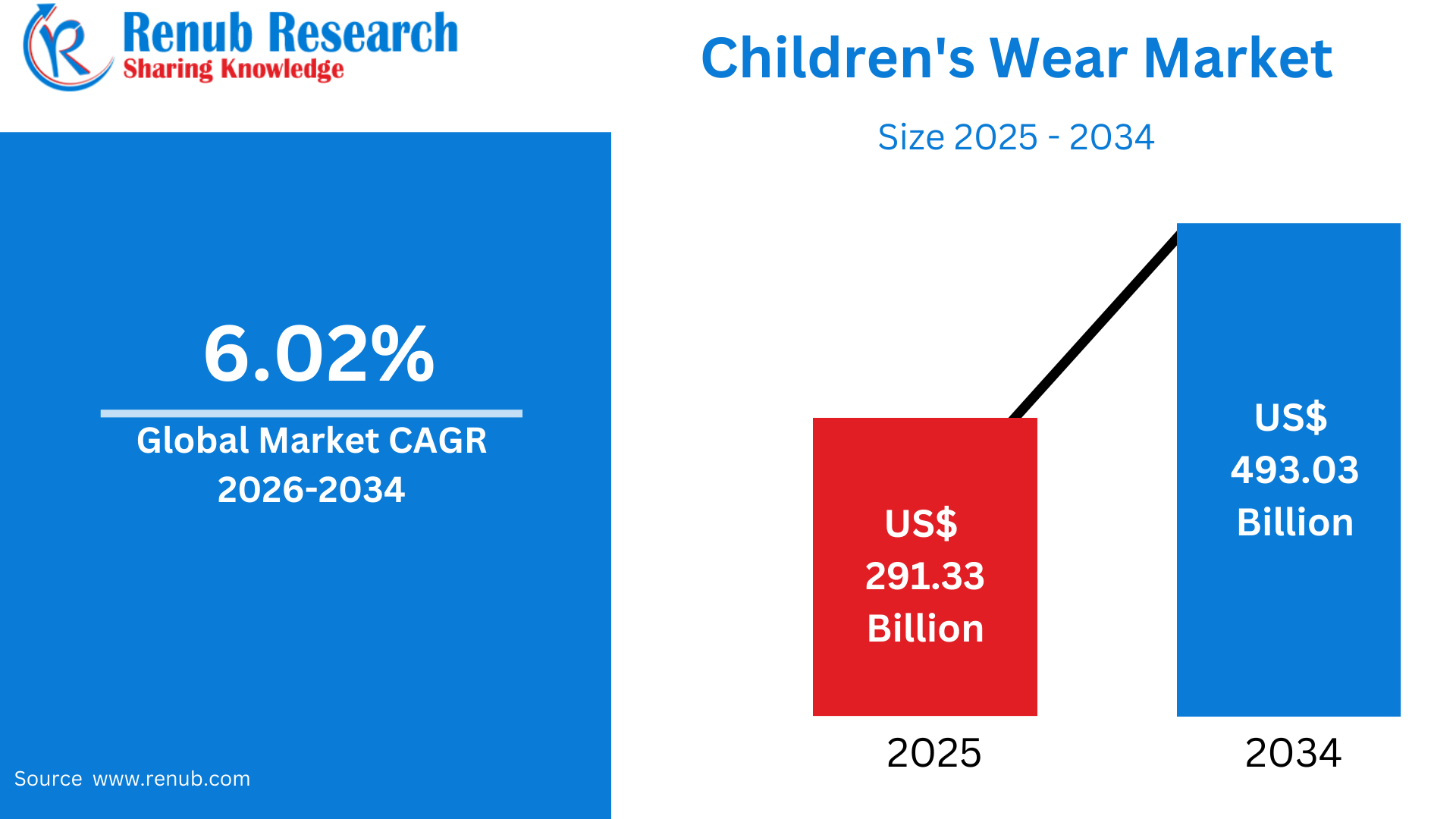
Children's Wear Market is projected to grow from US$ 291.33 billion in 2025 to US$ 493.03 billion by 2034, registering a CAGR of 6.02% during the forecast period from 2026 to 2034. Market growth is driven by rising disposable incomes, increasing awareness of children's fashion, and growing consumer preference for high-quality, comfortable, and sustainable clothing. Social media platforms, celebrity influence, and digital marketing have significantly shaped parents' purchasing decisions, encouraging demand for stylish and trend-focused apparel for infants, toddlers, and older children.
What is Children’s Wear and Its Uses & Popularity Worldwide?
Children’s wear refers to clothing, footwear, and fashion accessories specifically designed for infants, toddlers, and children up to the teenage years. These garments are created with a strong emphasis on comfort, safety, durability, and flexibility to support children’s active lifestyles and changing developmental needs. The category includes everyday casual wear, school uniforms, sportswear, sleepwear, party outfits, outerwear, seasonal clothing, and specialized apparel for different occasions. Manufacturers increasingly use soft, breathable, hypoallergenic, and sustainable fabrics such as organic cotton and recycled materials to ensure comfort while promoting environmental responsibility.
Worldwide, children’s wear has evolved beyond basic functionality to become a dynamic fashion segment influenced by changing consumer preferences, social media, celebrity endorsements, and designer collaborations. Parents are increasingly seeking fashionable, high-quality, and eco-friendly apparel that combines style with practicality. The rapid growth of e-commerce, digital retail platforms, and omnichannel shopping has made premium children’s clothing more accessible across developed and emerging markets. Rising disposable incomes, increasing urbanization, higher spending on child wellness, and continuous product innovation continue to drive the global popularity of children’s wear, making it one of the fastest-growing segments within the apparel industry.
Number of Children Under 5 Worldwide (1950–2100) – Key Highlights
- The global population of children under 5 increased from approximately 340 million in 1950.
- By the late 1950s, the number had grown to around 430–440 million.
- The total exceeded 500 million by the late 1960s, reflecting rapid global population growth.
- During the 1970s, the under-5 population reached approximately 550 million.
- By the early 1990s, the number had climbed to around 650 million.
- Growth slowed in the late 1990s, with the population remaining close to 630–640 million.
- The highest level was reached around 2015–2020, at nearly 700 million children under the age of five.
- Between 2020 and 2030, the global under-5 population began to decline, falling to about 640–650 million.
- Under the UN medium projection, the population is expected to remain relatively stable until the mid-2040s, at around 650–660 million.
- From 2050 onward, the number of children under 5 is projected to decline steadily, reaching approximately 550 million by 2100, primarily due to falling fertility rates and slowing population growth in many regions.
Growth Drivers for the Children’s Wear Market
Rising Disposable Income and Expanding Middle-Class Population
Increasing disposable income and the rapid expansion of the middle-class population are major factors driving the global Children’s Wear Market. As household incomes continue to improve, particularly in emerging economies, parents are allocating larger portions of their budgets to premium-quality clothing for their children. Demand is growing for branded apparel that offers superior comfort, durability, safety, and fashionable designs. Urbanization and the rise of dual-income households have further strengthened purchasing power, enabling families to spend more on seasonal collections, occasion wear, school apparel, sportswear, and everyday clothing. Parents are also increasingly prioritizing organic fabrics, sustainable materials, and skin-friendly garments that promote children’s health and comfort. Premiumization trends and growing awareness of international fashion brands continue to influence buying behavior across both developed and developing markets. As consumers seek high-quality clothing that combines functionality with style, manufacturers are expanding their product portfolios to meet evolving preferences. These factors collectively support sustained growth in the global children’s wear industry.
Growing Influence of Fashion Trends and Digital Media
Fashion trends, social media platforms, and digital marketing have become powerful drivers of the Children’s Wear Market. Parents and children are increasingly exposed to global fashion through Instagram, YouTube, TikTok, celebrity endorsements, parenting influencers, and entertainment franchises. As a result, children’s clothing has evolved beyond functional apparel into an important expression of personal style and identity. Character-themed outfits, designer collaborations, matching family collections, and celebrity-inspired fashion have become increasingly popular worldwide. Children’s own preferences also play a greater role in purchasing decisions as they become more aware of brands and fashion trends from an early age. Retailers and apparel manufacturers continuously introduce new seasonal collections and limited-edition products to maintain consumer interest and encourage repeat purchases. Digital marketing campaigns, influencer collaborations, and targeted advertising further enhance brand visibility and customer engagement. The growing emphasis on fashionable, premium, and personalized children’s apparel continues to create strong global demand and support long-term market expansion.
Expansion of E-Commerce and Omnichannel Retail
The rapid expansion of e-commerce and omnichannel retailing is significantly contributing to the growth of the Children’s Wear Market. Online shopping platforms provide parents with convenient access to a wide range of children’s apparel, footwear, and accessories from domestic and international brands. Consumers benefit from greater product variety, competitive pricing, customer reviews, detailed size guides, and flexible return policies, making online purchasing increasingly attractive. Retailers are integrating physical stores with digital channels to create seamless shopping experiences through click-and-collect services, mobile applications, and personalized recommendations. Artificial intelligence and data analytics enable retailers to offer customized product suggestions based on customer preferences and previous purchases. Social commerce, mobile shopping, and digital payment solutions have further accelerated online sales across both developed and emerging economies. The growing accessibility of internet services and smartphones continues to expand the customer base for children’s apparel. As retailers invest in digital transformation and omnichannel capabilities, the global children’s wear market is expected to experience sustained growth.
Challenges in the Children’s Wear Market
Rapid Fashion Changes and Inventory Management Complexity
Managing rapidly changing fashion trends while maintaining efficient inventory remains one of the biggest challenges facing the Children’s Wear Market. Consumer preferences evolve quickly due to seasonal fashion cycles, social media influence, and changing entertainment trends, requiring retailers to introduce new collections frequently. Children’s rapid physical growth further shortens product life cycles, making inventory management more complex than in adult apparel. Retailers must stock multiple sizes, colors, and designs while accurately forecasting demand across different age groups and geographic markets. Overstocking leads to higher storage costs, heavy discounting, and inventory losses, while understocking results in missed sales opportunities and reduced customer satisfaction. Seasonal demand fluctuations and the growing popularity of limited-edition collections add additional pressure to supply chain operations. To remain competitive, companies are increasingly investing in advanced demand forecasting, inventory optimization, and real-time supply chain visibility. However, implementing these technologies requires significant investment and operational expertise.
Intense Price Competition and Margin Pressure
The Children’s Wear Market faces intense competition from global fashion brands, private-label retailers, local manufacturers, and online marketplaces, creating significant pricing pressure across the industry. Parents seek clothing that offers the right balance of affordability, quality, comfort, and style, making purchasing decisions highly price-sensitive. Frequent promotional campaigns, seasonal discounts, and competitive pricing strategies have become essential for attracting customers, but they often reduce profit margins. At the same time, manufacturers face rising costs for raw materials, labor, transportation, and sustainable production practices. Consumers increasingly expect eco-friendly fabrics, premium quality, and innovative designs without substantial price increases, creating additional pressure on apparel companies. The expansion of e-commerce has also improved price transparency, allowing consumers to compare products instantly across multiple retailers. To maintain profitability, brands must continuously invest in product innovation, efficient supply chain management, sustainable manufacturing, and strong brand differentiation while keeping prices competitive in an increasingly crowded global marketplace.
Children’s Wear Launches Worldwide
- abercrombie kids – Baby & Toddler Collection (2026)
Abercrombie kids expanded beyond its traditional age range by launching a Baby & Toddler Collection (newborn to 5T), featuring everyday essentials, premium basics, and coordinated outfits. - Iris Clothings – DOREME Kids Travel Wear Collection (2025)
Iris Clothings introduced a new Kids Travel Wear Collection under its DOREME brand, offering comfortable, travel-inspired apparel for children aged 2–16 years. - Lacoste × Haddad Brands – Global Kids Collection (2025)
Lacoste partnered with Haddad Brands to launch a worldwide Lacoste Kids Collection, including premium children’s apparel and accessories for global markets. - SHEIN × CoComelon Children’s Collection (2024)
SHEIN launched a CoComelon-inspired children’s apparel collection featuring over 100 products, including pajamas, matching sets, sweatshirts, and everyday wear for young children. - UNIQLO × CoComelon Infant & Toddler Collection (2024)
UNIQLO collaborated with Moonbug Entertainment to introduce a CoComelon-themed infant and toddler T-shirt collection, designed with colorful characters and child-friendly prints. - Zara Kids × Sea New York Capsule Collection (2024)
Zara expanded its children’s fashion portfolio by launching a Sea New York capsule collection, featuring premium kids’ apparel, footwear, and accessories with handcrafted-inspired designs. - G-Star Kids Collection by WHP Global & FFI Global (2025)
WHP Global and FFI Global introduced the G-Star Kids Collection, including denim, jackets, T-shirts, and sustainable children’s apparel for international markets. - Enlightened Generation Children’s Clothing Brand (2025)
Enlightened Generation officially launched its children’s clothing brand, combining educational storytelling with sustainable fashion through multiple themed apparel collections. - Old Navy × Pixar Toy Story Collection (2026)
Old Navy introduced a Toy Story-inspired children’s apparel collection featuring T-shirts, hoodies, dresses, pajamas, backpacks, and accessories for back-to-school and family fashion. - Kidbea Retail & New Kidswear Collections (2025)
Kidbea accelerated its children’s wear expansion by launching new apparel collections alongside its omnichannel retail strategy, focusing on sustainable and comfortable kids’ clothing.
Fashion, Comfort, and Premiumization Driving Children’s Apparel Wear Growth
Children’s Apparel Wear Market is experiencing strong growth as parents increasingly seek clothing that combines comfort, durability, functionality, and modern fashion trends. The market includes casual wear, formal wear, sportswear, school uniforms, sleepwear, outerwear, and seasonal clothing designed for children of different age groups. Rising disposable incomes, growing awareness of premium brands, and increasing demand for sustainable fabrics are encouraging manufacturers to introduce innovative collections made from organic cotton, recycled materials, and skin-friendly textiles. Fashion trends influenced by social media, celebrities, and designer collaborations have also transformed children’s apparel into an important lifestyle category. Retailers are expanding their product portfolios with personalized designs, gender-neutral collections, and smart clothing featuring enhanced comfort and durability. The rapid growth of e-commerce and omnichannel retailing has improved product accessibility and customer convenience. As consumers continue prioritizing quality, sustainability, and fashionable designs, the Children’s Apparel Wear Market is expected to witness sustained global growth throughout the forecast period.
Safety, Comfort, and Sustainable Fabrics Supporting Expansion of Infant Wear Worldwide
Infant Wear Market is expanding steadily due to increasing parental awareness regarding baby comfort, safety, and skin-friendly clothing materials. Infant wear includes bodysuits, rompers, sleepsuits, onesies, bibs, socks, caps, blankets, and seasonal clothing specifically designed for newborns and babies. Parents increasingly prefer garments made from soft, breathable, hypoallergenic, and organic fabrics that protect delicate skin while ensuring maximum comfort. Manufacturers are introducing eco-friendly materials, chemical-free dyes, antimicrobial textiles, and ergonomic designs to improve product quality and safety. Rising birth rates in several developing countries, higher healthcare awareness, and growing expenditure on infant care products continue to support market growth. Premium baby clothing brands are also expanding their product offerings through innovative designs and sustainable manufacturing practices. The increasing popularity of online shopping, subscription baby products, and personalized infant clothing further enhances market opportunities. Continuous innovation in fabric technology and baby apparel design is expected to drive long-term growth in the Infant Wear Market.
Active Lifestyle and Practical Fashion Driving Demand of Preschool Wear Industry
Preschool Wear Market is growing rapidly as parents seek comfortable, durable, and stylish clothing that supports the active lifestyles of young children. Preschool wear includes everyday clothing, school apparel, sportswear, sleepwear, jackets, footwear, and accessories designed for children between approximately three and five years of age. At this developmental stage, children require clothing that offers flexibility, easy movement, and long-lasting durability to withstand daily activities. Manufacturers increasingly focus on wrinkle-resistant fabrics, stretchable materials, stain-resistant finishes, and easy-to-maintain garments that simplify everyday use for parents. Bright colors, cartoon characters, educational themes, and interactive designs remain highly popular among preschool consumers. Growing enrollment in preschools and early childhood education centers has also increased demand for uniforms and activity-based clothing. The expansion of organized retail, digital commerce, and premium children’s fashion brands provides parents with a wider selection of high-quality apparel. These trends continue to support steady growth in the global Preschool Wear Market.
Digital Commerce Transforming Children’s Fashion Retail
Online Children’s Wear Market is witnessing significant expansion as consumers increasingly prefer digital shopping platforms for convenience, product variety, and competitive pricing. E-commerce platforms offer extensive collections of children’s clothing, footwear, and accessories across multiple brands, styles, sizes, and price ranges. Parents benefit from detailed product descriptions, customer reviews, virtual size guides, personalized recommendations, secure payment systems, and flexible return policies that simplify purchasing decisions. Artificial intelligence and data analytics enable online retailers to provide customized shopping experiences based on customer preferences and previous purchases. Mobile commerce, social media marketing, influencer promotions, and live shopping events further strengthen customer engagement and brand visibility. Subscription services and loyalty programs also encourage repeat purchases among families. Continuous improvements in logistics, faster delivery services, and omnichannel retail strategies are making children’s apparel more accessible to consumers worldwide. As internet penetration and smartphone usage continue to rise, the Online Children’s Wear Market is expected to maintain strong long-term growth.
Premium Fashion and Digital Retail Driving the Children’s Wear Growth in the United States
United States Children’s Wear Market is one of the largest globally, supported by high consumer spending, strong brand presence, and continuous innovation in children’s fashion. Parents increasingly prioritize premium-quality apparel that combines comfort, durability, safety, and modern designs for infants, toddlers, and teenagers. Demand for organic cotton, sustainable fabrics, and ethically manufactured clothing continues to grow as environmental awareness increases. Fashion trends influenced by celebrities, social media, and designer collaborations have transformed children’s apparel into a lifestyle category rather than a basic necessity. The rapid expansion of e-commerce, mobile shopping, and omnichannel retailing has made branded children’s clothing more accessible nationwide. Retailers are also utilizing artificial intelligence, personalized recommendations, and data analytics to enhance customer experiences and improve inventory management. Growing demand for school apparel, sportswear, occasion wear, and seasonal collections further supports market expansion. Continuous product innovation and digital retail transformation are expected to sustain long-term growth in the United States Children’s Wear Market.
Sustainable Children’s Wear Fashion and Premium Brands Supporting Expansion in the United Kingdom
United Kingdom Children’s Wear Market is experiencing steady growth as consumers increasingly seek fashionable, high-quality, and sustainable clothing for children. Parents place strong emphasis on comfort, durability, and environmentally friendly materials, encouraging apparel manufacturers to introduce collections made from organic cotton, recycled fibers, and responsibly sourced fabrics. The country’s well-developed retail infrastructure and rapidly expanding online shopping ecosystem provide consumers with access to a wide range of domestic and international children’s fashion brands. Seasonal collections, school uniforms, occasion wear, and sportswear continue to generate consistent demand across different age groups. Digital marketing, influencer collaborations, and social media platforms significantly influence purchasing decisions among modern parents. Retailers are investing in omnichannel strategies, personalized shopping experiences, and efficient logistics to improve customer satisfaction. Growing awareness of ethical fashion, premium children’s clothing, and innovative textile technologies is expected to support continued expansion of the United Kingdom Children’s Wear Market over the forecast period.
Rising Incomes and Organized Retail Accelerating Indian Children’s Wear Industry Growth
India Children’s Wear Market is witnessing rapid growth due to rising disposable incomes, increasing urbanization, and the expansion of organized retail and e-commerce platforms. Growing awareness of branded apparel and changing consumer lifestyles have encouraged parents to spend more on fashionable, comfortable, and high-quality clothing for children. Demand is increasing across casual wear, festive apparel, school uniforms, sportswear, and premium fashion collections. The rapid adoption of smartphones, digital payments, and online shopping has significantly expanded access to children’s apparel across metropolitan as well as smaller cities. Domestic and international brands are introducing affordable product ranges that cater to diverse consumer preferences and income levels. Manufacturers are also focusing on breathable fabrics, sustainable materials, and innovative designs that improve comfort and durability. Government support for digital commerce, expanding retail infrastructure, and increasing participation of organized brands continue to strengthen the market. These factors position India as one of the fastest-growing children’s wear markets globally.
Growing Retail Modernization and Premium Fashion Demand in Saudi Arabia
Saudi Arabia Children’s Wear Market is expanding steadily, driven by rising household incomes, a young population, and increasing consumer spending on premium children’s apparel. Parents are showing greater interest in branded clothing that offers superior quality, comfort, modest fashion, and modern designs suitable for various occasions. The expansion of shopping malls, luxury retail outlets, and international fashion brands has significantly improved product availability across the Kingdom. Rapid growth in e-commerce and mobile commerce has further strengthened consumer access to both domestic and global children’s wear brands. Retailers are introducing collections featuring sustainable fabrics, breathable materials, and culturally appropriate designs that meet local consumer preferences. Seasonal festivals, school apparel, and special occasion clothing continue to generate strong demand throughout the year. Ongoing investments in retail modernization, digital transformation, and diversified consumer markets are creating new opportunities for apparel manufacturers. These trends are expected to support sustained growth in the Saudi Arabia Children’s Wear Market during the forecast period.
Recent Developments in Children's Wear Market
- July 2025: FreshFeet, a new line of kids' shoes with Paragon's own Dual Fit Tech technology, was unveiled by the well-known Indian shoe shop. Through changeable fit mechanics, this technology is made to accommodate children's growing feet. The invention solves a major problem in the children's footwear industry by producing shoes that can grow quickly, lower the frequency of replacements, and provide better value and sustainability
- In April 2025, Rag & Bon introduced their Miramar brand of sweatpants for children that went viral. These sweatpants are comprised of ultra-soft, breathable cotton terry fabric with hyper-realistic denim designs that resemble real jeans but feel more like sweatpants. The brand claims that these kid-friendly styles, including as joggers and wide-leg pants, are perfect for playdates and family activities since they combine the comfort of loungewear with the appearance of denim.
- In In March 2025, Vogue Williams introduced the Gen kidswear brand on M&S and Next internet platforms. It features a unisex line for children ages 2 to 8 that highlights durability, adaptability, and classic style with vibrant colors and playful designs.
- March 2025: With five distinct models inspired by well-known characters including Elmo, Cookie Monster, Abby Cadabby, and Big Bird, Reebok has introduced a fun Sesame Street sneaker collection for children, with prices ranging from USD 50 to USD 60. The business claims that the collection features colorful patterns like the Club C Revenge and Classic Nylon Elmo, combining coziness, educational components, and quirky accents like themed sock liners and character badges.
Market Segmentation
Product Category
-
Apparel
-
Footwear
- Others
Consumer Group
- Infant (0-12 Months)
- Toddler (1-3yrs)
- Preschool (3-5yrs)
- Gradeschooler (5-12yrs)
Distribution Channel
- Offline
- Online
Countries
North America
- United States
- Canada
Europe
- France
- Germany
- Italy
- Spain
- United Kingdom
- Belgium
- Netherlands
- Turkey
Asia Pacific
- China
- Japan
- India
- Australia
- South Korea
- Thailand
- Malaysia
- Indonesia
- New Zealand
Latin America
- Brazil
- Mexico
- Argentina
Middle East & Africa
- South Africa
- Saudi Arabia
- United Arab Emirates
All companies have been covered with 5 Viewpoints
- Overview
- Key Persons
- Recent Development
- SWOT Analysis
- Financial Insights
Company Analysis
- Adidas AG
- Benetton Group Srl
- Carter’s, Inc.
- Cotton On Clothing Pty Ltd
- DIESEL USA Inc.
- Dolce & Gabbana S.r.l.
- Kimberly-Clark Corporation
- Levi Strauss & Co.
- NIKE, Inc.
- Gap Inc.
Report Details:
| Report Features | Details |
| Base Year |
2025 |
| Historical Period |
2022 - 2025 |
| Forecast Period |
2026 - 2034 |
| Market |
US$ Billion |
| Segment Covered |
Product Category, Consumer Group, Distribution Channel, Countries |
| Countries Covered |
|
| Companies Covered |
|
| Customization Scope |
20% Free Customization |
| Post-Sale Analyst Support |
1 Year (52 Weeks) |
| Delivery Format |
PDF and Excel through Email (We can also provide the editable version of the report in PPT/Word format on request) |
Key Questions Answered in Report:
- How big is the Children's Wear industry?
- What is the Children's Wear growth rate?
- Who are the key players in Children's Wear industry?
- What are the factors driving the Children's Wear industry?
- Which Region held the largest market share in the Children's Wear industry?
- What segments are covered in the Children's Wear Market report?
Customization Services available
- Analysis of Market Size and Its Segments
- More Company Profiles (Upto 10 without any additional cost):
- Additional Countries (Other than mentioned Countries):
- Region/Country Specific Reports:
- Market Entry Strategy:
- Region-Specific Market Dynamics:
- Regional Market Share Analysis:
- Trade Analysis:
- Production Insights:
- Others Customized Requests:
For more information contact our analysts.
Need More Assistance?
- Talk to our analysts to get more precious information on the current market trends.
- Include more countries and segments and customize the report based on the final requirement.
- Get a competitive advantage in your industry by knowing the report findings and making a positive impact on your revenues and operations.
- Our analysts are always ready to provide more help and pertinent information if you need any additional assistance.