Cabernet Sauvignon Market Size, Share, Growth, Trends, Industry Analysis & Forecast 2026–2034
Buy NowCabernet Sauvignon Market Size
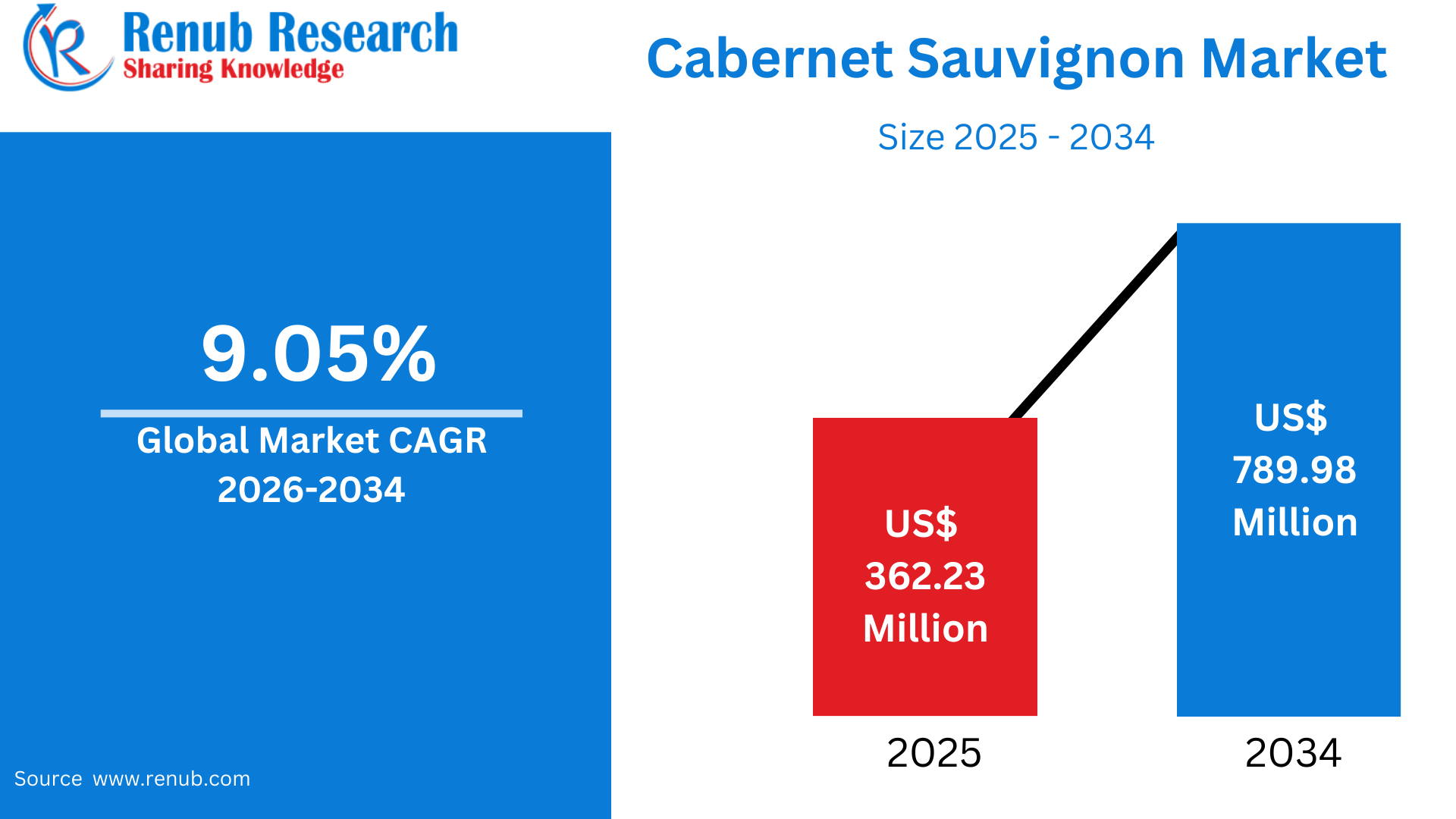
Cabernet Sauvignon Market is projected to grow from US$ 362.23 million in 2025 to US$ 789.98 million by 2034, registering a CAGR of 9.05% during the forecast period from 2026 to 2034. Market growth is primarily driven by rising consumer preference for premium and high-quality wines, increasing wine consumption during social gatherings, celebrations, and fine dining occasions, and expanding global appreciation for red wine varieties. Cabernet Sauvignon remains one of the world's most popular wine varietals due to its rich flavor profile, aging potential, and versatility in food pairing. The growing popularity of wine tourism, expanding disposable incomes, and increasing awareness of wine culture are further supporting demand across both developed and emerging markets.
What is Cabernet Sauvignon? Its Uses & Popularity Worldwide
Cabernet Sauvignon is one of the world’s most renowned and widely cultivated red wine grape varieties, recognized for producing full-bodied wines with rich flavors, firm tannins, and excellent aging potential. Originally developed in the Bordeaux region of France through a natural cross between Cabernet Franc and Sauvignon Blanc, it is now grown in nearly every major wine-producing country, including the United States, France, Italy, Chile, Australia, Argentina, Spain, and South Africa. Cabernet Sauvignon wines typically exhibit flavors of blackcurrant, blackberry, plum, cherry, cedar, tobacco, vanilla, and dark chocolate, with complexity increasing as the wine matures. Owing to its balanced acidity and robust structure, it is frequently enjoyed alongside grilled meats, steaks, lamb, roasted vegetables, hard cheeses, and gourmet cuisine.
Globally, Cabernet Sauvignon enjoys immense popularity among both casual wine drinkers and connoisseurs because of its consistent quality, versatility, and premium image. It is commonly served during social gatherings, celebrations, business dinners, weddings, and fine dining experiences, making it one of the most consumed red wines worldwide. The growing appreciation for wine culture, increasing disposable incomes, expanding wine tourism, and rising consumer interest in premium alcoholic beverages have significantly strengthened its global demand. Wineries continue to introduce reserve editions, organic wines, sustainable vineyard practices, and limited-release vintages to attract evolving consumer preferences. The rapid expansion of online wine retailing, specialty wine stores, and international distribution networks has further enhanced accessibility, ensuring Cabernet Sauvignon remains one of the leading premium wine varieties in the global wine industry.
Growth Drivers for the Cabernet Sauvignon Market
Rising Global Wine Consumption and Premium Wine Preference
One of the major factors driving the Cabernet Sauvignon market is the steady increase in global wine consumption, particularly the growing consumer preference for premium and high-quality wines. Cabernet Sauvignon is widely recognized for its rich flavor, full-bodied character, and excellent aging potential, making it one of the most sought-after red wine varieties worldwide. Consumers are increasingly willing to spend more on premium wines that offer superior taste, authenticity, and heritage, especially during celebrations, social gatherings, fine dining, and gifting occasions. Rising disposable incomes, expanding middle-class populations, and changing lifestyles in both developed and emerging economies are encouraging greater spending on premium alcoholic beverages. In addition, wineries continue investing in advanced vineyard management, sustainable cultivation practices, reserve collections, and limited-edition vintages to enhance product quality and strengthen brand positioning. The growing appreciation of wine culture and luxury consumption continues to reinforce Cabernet Sauvignon’s premium image, supporting sustained market expansion across global markets.
Expansion of Wine Tourism and Consumer Experiences
The rapid growth of wine tourism has become an important driver of the Cabernet Sauvignon market by creating stronger consumer engagement and enhancing brand loyalty. Leading wine-producing regions attract millions of visitors each year through vineyard tours, winery visits, wine tasting sessions, gourmet dining experiences, and educational programs that showcase grape cultivation and winemaking techniques. These immersive experiences allow consumers to better understand Cabernet Sauvignon’s origin, production process, and unique flavor characteristics, encouraging long-term brand affinity and repeat purchases. Wineries also benefit from direct-to-consumer sales, exclusive reserve releases, wine club memberships, and personalized tasting experiences that generate additional revenue streams. Social media platforms, digital storytelling, influencer marketing, and travel content further amplify the popularity of wine tourism by introducing new consumers to premium wine destinations. As experiential tourism continues to gain popularity among younger and affluent consumers, wine tourism remains a significant contributor to the global growth of the Cabernet Sauvignon market.
Growing Demand Across Emerging Markets
Emerging economies are becoming increasingly important contributors to the growth of the Cabernet Sauvignon market due to rapid urbanization, rising disposable incomes, and expanding middle-class populations. Consumers in countries across Asia-Pacific, Latin America, and other developing regions are becoming more familiar with international wine culture and are increasingly choosing premium wines for celebrations, business events, fine dining, and personal consumption. Cabernet Sauvignon enjoys strong recognition because of its global reputation, making it one of the preferred red wine varieties among new wine consumers. The expansion of organized retail, specialty wine stores, hospitality establishments, and e-commerce platforms has significantly improved product availability in these regions. International wineries are also strengthening their presence through strategic partnerships, localized marketing campaigns, and premium product launches designed to appeal to regional tastes. As awareness of wine appreciation continues to increase and consumer purchasing power improves, emerging markets are expected to become major growth engines for the global Cabernet Sauvignon industry.
Challenges in the Cabernet Sauvignon Market
Climate Change and Vineyard Production Risks
Climate change remains one of the most significant challenges facing the Cabernet Sauvignon market because grape quality is highly dependent on stable environmental conditions. Rising global temperatures, changing rainfall patterns, prolonged droughts, wildfires, frost events, and other extreme weather conditions can significantly affect vineyard productivity and grape composition. Variations in climate influence sugar concentration, acidity, tannin development, and overall flavor characteristics that define premium Cabernet Sauvignon wines. In addition, warmer conditions increase the risk of pests, fungal diseases, and water shortages, requiring greater investment in vineyard management, irrigation systems, and crop protection measures. These factors increase production costs while creating uncertainty regarding harvest quality and supply consistency. Smaller wineries may face greater financial pressure when adapting to changing environmental conditions. Consequently, wine producers are increasingly investing in sustainable viticulture, climate-resilient cultivation techniques, precision agriculture, and water conservation practices to protect long-term production and maintain wine quality.
Regulatory Requirements and Intense Market Competition
The Cabernet Sauvignon market also faces challenges arising from strict alcohol regulations and growing competition within the global beverage industry. Governments impose comprehensive regulations covering alcohol production, labeling, advertising, taxation, distribution, and international trade, increasing compliance requirements for wine producers. Import duties, trade barriers, and varying national alcohol policies can limit international market access and affect export competitiveness. At the same time, Cabernet Sauvignon competes with numerous other premium red wine varieties, including Merlot, Pinot Noir, Syrah, and Malbec, as well as alternative alcoholic beverages such as craft beer, premium spirits, ready-to-drink cocktails, and low- or non-alcoholic drinks. Changing consumer preferences, particularly among younger generations seeking new beverage experiences, continue to intensify competition. In addition, counterfeit wines and unauthorized labeling can damage consumer confidence and brand reputation. To remain competitive, wineries must continually invest in product innovation, brand differentiation, quality assurance, sustainable production, and effective marketing strategies while adapting to evolving global consumer trends.
Cabernet Sauvignon Product Launches Worldwide
- Grover Zampa – Essence De Cabernet Sauvignon (2025) – Grover Zampa Vineyards launched Grover Essence De Cabernet Sauvignon, a limited-edition, single-vineyard premium wine from Nandi Hills, India, aged in oak barrels for over 36 months.
- Viña Vik – Cabernet Nouveau 2024 (2025) – Chile’s Viña Vik introduced Cabernet Nouveau 2024, a fresh and fruit-forward 100% Cabernet Sauvignon designed for a lighter, more approachable drinking experience.
- La Crema – Sonoma County Cabernet Sauvignon (2024) – La Crema expanded its portfolio with its inaugural Sonoma County Cabernet Sauvignon, showcasing premium fruit sourced from California’s Sonoma County.
- Penfolds – Bin 180 Coonawarra Cabernet Shiraz (2024) – Penfolds celebrated its 180th anniversary by launching the Bin 180 Coonawarra Cabernet Shiraz, highlighting premium Cabernet Sauvignon from the exceptional 2021 vintage.
- Far Niente – 40th Vintage Cabernet Sauvignon (2024) – Far Niente released the 40th vintage of its flagship Napa Valley Cabernet Sauvignon, marking four decades of continuous production.
- Shafer Vineyards – Hillside Select Cabernet Sauvignon Packaging Refresh (2024) – Shafer Vineyards unveiled redesigned packaging and updated labels for its iconic Hillside Select Cabernet Sauvignon, reinforcing its premium positioning.
- Scheid Family Wines – VDR “The Notorious C.A.B.” Cabernet Sauvignon (2024) – Scheid Family Wines introduced The Notorious C.A.B., expanding its VDR (Very Dark Red) portfolio with a bold California Cabernet Sauvignon.
- Brassfield Estate Winery – KENDRA Cabernet Sauvignon (2025) – Brassfield Estate Winery launched KENDRA, a limited-release Cabernet Sauvignon created to celebrate the winery’s 25th anniversary and showcase High Valley AVA vineyards.
- Decoy Wines – Featherweight Cabernet Sauvignon (2025) – Decoy expanded into the better-for-you wine category with Featherweight Cabernet Sauvignon, featuring lower calories and lower alcohol while maintaining premium quality.
- Duckhorn Vineyards – Decoy Limited Napa Valley Cabernet Sauvignon (2025 Collection) – Duckhorn expanded its Decoy Limited portfolio with a premium Napa Valley Cabernet Sauvignon, featured as part of its latest tasting collection and premium wine offerings.
Premium Bordeaux Blends Supporting Cabernet Franc Sauvignon Market Growth
Cabernet Franc Sauvignon Market is expanding steadily as demand for premium blended red wines continues to increase worldwide. Cabernet Franc is frequently blended with Cabernet Sauvignon to create balanced wines that combine Cabernet Sauvignon’s rich structure and tannins with Cabernet Franc’s aromatic complexity, herbal notes, and smooth finish. These blends are highly valued by wineries for producing elegant wines suitable for aging while appealing to both experienced wine enthusiasts and new consumers. Increasing popularity of premium Bordeaux-style blends, growing wine consumption during fine dining and social occasions, and rising appreciation for artisanal winemaking are supporting market expansion. Wineries continue investing in sustainable vineyard management, precision viticulture, and innovative fermentation techniques to enhance product quality. Expanding international distribution networks, specialty wine retailers, and online wine platforms have improved accessibility across global markets. Rising disposable incomes and increasing consumer preference for premium wine experiences are expected to further strengthen long-term demand for Cabernet Franc and Cabernet Sauvignon blends worldwide.
Fresh Fruit Profiles Attracting New Wine Consumers Engaging Young Cabernet Sauvignon
Young Cabernet Sauvignon Market is witnessing growing popularity among consumers seeking approachable, fruit-forward red wines that can be enjoyed without extended aging. Young Cabernet Sauvignon wines are typically released shortly after production and emphasize vibrant flavors of blackberry, cherry, plum, and fresh blackcurrant while maintaining moderate tannin levels and balanced acidity. These wines appeal particularly to younger consumers and casual wine drinkers looking for affordable premium wines with immediate drinkability. Restaurants, wine bars, retail stores, and supermarkets increasingly feature young Cabernet Sauvignon as an everyday dining option because of its versatility with a wide range of cuisines. Wine producers continue developing modern winemaking techniques that preserve fresh fruit characteristics while enhancing consistency and quality. Attractive packaging, digital marketing campaigns, and expanding e-commerce platforms further strengthen market visibility. Growing wine culture, increasing urbanization, and rising participation in casual social gatherings continue to support demand for young Cabernet Sauvignon across both developed and emerging markets.
Rich Fruit Flavors Enhancing Consumer Appeal for Blackcurrant Cabernet Sauvignon
Blackcurrant Cabernet Sauvignon Market is growing steadily as consumers increasingly appreciate Cabernet Sauvignon wines characterized by pronounced blackcurrant aromas and rich fruit-forward flavor profiles. Blackcurrant notes are considered one of the signature characteristics of premium Cabernet Sauvignon wines and contribute significantly to their distinctive taste and global popularity. Depending on vineyard conditions and winemaking techniques, these wines may also exhibit complementary flavors of blackberry, cassis, cedar, tobacco, and subtle spice. Consumers often select blackcurrant-forward Cabernet Sauvignon for fine dining, celebrations, gifting, and premium wine collections because of its balanced structure and excellent food-pairing versatility. Wineries continue adopting advanced vineyard management, selective harvesting, and controlled fermentation techniques to enhance fruit expression while maintaining consistency across vintages. Premium branding, reserve collections, and growing international demand for high-quality red wines further support market expansion. Rising appreciation of wine education and tasting experiences continues to strengthen consumer demand for fruit-rich Cabernet Sauvignon varieties worldwide.
Chocolate Cabernet Sauvignon Market: Complex Flavor Profiles Driving Premium Wine Demand
The Chocolate Cabernet Sauvignon Market represents a premium segment of the global wine industry, appealing to consumers who appreciate complex wines with rich chocolate, cocoa, mocha, and vanilla undertones developed through oak barrel aging and careful winemaking techniques. These flavor characteristics are naturally created during maturation and complement the wine’s primary fruit flavors of blackberry, blackcurrant, and plum, resulting in a sophisticated tasting experience. Chocolate-accented Cabernet Sauvignon wines are highly favored for pairing with grilled meats, aged cheeses, chocolate desserts, and gourmet cuisine, making them popular choices in fine dining and luxury hospitality establishments. Premium wineries continue investing in advanced barrel-aging programs, high-quality oak selection, and precision blending to produce wines with enhanced complexity and aging potential. Growing consumer interest in luxury wines, expanding wine tourism, and increasing participation in guided wine tastings are further supporting demand. As consumers increasingly seek premium sensory experiences, the chocolate Cabernet Sauvignon segment continues to gain popularity worldwide.
Cabernet Sauvignon Premium Retail Experience Supporting Sales Growth
The Cabernet Sauvignon Specialty Stores Market plays an essential role in the distribution of premium wines by offering consumers access to carefully curated selections, expert recommendations, and personalized shopping experiences. Specialty wine stores typically stock a broad range of Cabernet Sauvignon labels, including domestic wines, imported brands, reserve collections, limited-edition releases, organic wines, and rare vintages that are often unavailable through general retail outlets. Knowledgeable staff provide wine education, tasting guidance, food pairing recommendations, and vintage information, helping consumers make informed purchasing decisions. Many specialty retailers also organize wine tasting events, educational seminars, winery collaborations, and exclusive membership programs that strengthen customer loyalty and encourage repeat purchases. Increasing consumer preference for premium wines, expanding wine culture, and rising interest in collectible vintages continue to support the growth of specialty retail channels. The integration of online ordering, home delivery services, and omnichannel retail strategies further enhances accessibility, making specialty stores a key distribution channel for Cabernet Sauvignon worldwide.
Premium Wine Culture Driving Strong Demand for Cabernet Sauvignon in the United States
United States Cabernet Sauvignon Market is one of the largest globally, supported by a mature wine industry, high consumer spending, and a strong culture of premium wine consumption. Cabernet Sauvignon remains the country’s most popular red wine variety, with significant production concentrated in California, particularly Napa Valley, Sonoma County, and Paso Robles. Consumers increasingly prefer premium, reserve, and estate-grown Cabernet Sauvignon wines for fine dining, celebrations, gifting, and wine collecting. Growing wine tourism, vineyard experiences, and direct-to-consumer winery sales further stimulate market demand. The expansion of specialty wine retailers, supermarkets, restaurants, and e-commerce platforms has significantly improved product accessibility nationwide. Wineries continue investing in sustainable viticulture, organic production, precision winemaking, and premium branding to differentiate their offerings. Although climate-related challenges, changing consumer preferences, and increasing competition from other alcoholic beverages present hurdles, the United States continues to dominate the global Cabernet Sauvignon market through continuous innovation, high-quality production, and strong domestic and export demand.
United Kingdom Premium Imports Supporting Cabernet Sauvignon Market Expansion
United Kingdom Cabernet Sauvignon Market is experiencing steady growth as consumers increasingly embrace premium imported wines and a sophisticated wine-drinking culture. Since domestic Cabernet Sauvignon production remains limited, the UK relies heavily on imports from leading wine-producing countries such as France, Italy, Chile, Australia, South Africa, the United States, and Argentina. Cabernet Sauvignon enjoys widespread popularity due to its bold flavor profile, versatility with food, and premium image. Consumers frequently purchase the wine for home consumption, restaurants, celebrations, corporate events, and gifting occasions. The rapid growth of online wine retailers, subscription wine clubs, supermarkets, and specialty wine stores has expanded product availability across the country. Younger consumers are also showing growing interest in wine education, tasting experiences, and sustainable wine production, encouraging wineries to introduce organic and environmentally responsible products. Despite inflationary pressures and alcohol taxation affecting purchasing decisions, premium wine demand remains resilient, supporting continued expansion of the United Kingdom Cabernet Sauvignon market.
Growing Wine Awareness Creating New Opportunities in India
India Cabernet Sauvignon Market is expanding steadily as wine consumption becomes increasingly popular among urban consumers, young professionals, and affluent households. Rising disposable incomes, changing lifestyles, international travel, and growing exposure to global food and beverage culture have significantly increased demand for premium wines, including Cabernet Sauvignon. The variety is widely appreciated for its rich taste, food-pairing versatility, and premium positioning, making it popular during celebrations, social gatherings, weddings, fine dining, and corporate events. Domestic wineries are expanding Cabernet Sauvignon production while imported premium labels continue gaining popularity among consumers seeking international wine experiences. Organized retail stores, luxury hotels, restaurants, specialty wine shops, and online delivery platforms have improved product accessibility across major metropolitan cities. Wine tourism, tasting events, and educational initiatives are further enhancing consumer awareness and appreciation of premium wines. Although high taxation, state-specific alcohol regulations, and limited awareness outside urban markets remain challenges, India’s expanding middle class and evolving consumer preferences are expected to support long-term market growth.
Premium Non-Alcoholic Alternatives and Hospitality Driving Interest in Saudi Arabia Cabernet Sauvignon
The Saudi Arabia Cabernet Sauvignon Market remains relatively limited due to national regulations governing alcoholic beverages. However, increasing international tourism, luxury hospitality development, and the growing demand for premium non-alcoholic grape beverages inspired by Cabernet Sauvignon flavor profiles are creating new market opportunities. Hotels, upscale restaurants, and international hospitality brands are introducing premium alcohol-free alternatives that replicate the rich taste characteristics associated with Cabernet Sauvignon while complying with local regulations. Rising disposable incomes, expanding tourism infrastructure, and the country’s focus on developing world-class hospitality experiences are encouraging greater demand for premium imported beverage products. International beverage companies are also investing in non-alcoholic premium offerings designed specifically for Middle Eastern consumers. In addition, luxury retail outlets and specialty gourmet stores continue expanding their premium beverage selections. Although regulatory restrictions limit traditional wine sales, growing interest in sophisticated dining experiences, premium grape-based beverages, and luxury hospitality services is expected to support gradual growth in related Cabernet Sauvignon-inspired beverage segments within Saudi Arabia.
Recent Developments in Cabernet Sauvignon Market
- The Sonoma Coast Chardonnay, Juggernaut Wines' most recent addition to their line of intensely expressive wines, was unveiled in March 2024.
- Bota Box's inaugural limited-edition wine, "Summer Release Chenin Blanc and Viognier," was introduced in April 2023.
Market Segmentation
Grape Type
- Cabernet Franc
- Sauvignon Franc
Basis of Kind
- Young Cabernet
- Old Cabernet
Flavors
- Eco-Friendly Bell Pepper
- Blackcurrant
- Mint
- Cheddar
- Chocolate
- Vanilla
- Others
Distribution Channel
- Direct
- Hypermarkets
- Specialty Stores
- Online Retail
- Others
Countries
North America
- United States
- Canada
Europe
- France
- Germany
- Italy
- Spain
- United Kingdom
- Belgium
- Netherlands
- Turkey
Asia Pacific
- China
- Japan
- India
- Australia
- South Korea
- Thailand
- Malaysia
- Indonesia
- New Zealand
Latin America
- Brazil
- Mexico
- Argentina
Middle East & Africa
- South Africa
- Saudi Arabia
- United Arab Emirates
All companies have been covered with 5 Viewpoints
- Overview
- Key Persons
- Recent Development
- SWOT Analysis
- Financial Insights
Company Analysis
- 19 Crimes GBL
- Aberdeen Wine Company Pty Ltd.
- Amapola Creek Vineyards & Winery
- Anakota Winery
- Arietta Wine
- Bota Box Vineyards
- Decoy Co. Ltd.
- Disruption Wine Company
- Josh Cellars Co. Ltd.
- Juggernaut Wine Company
Report Details:
| Report Features | Details |
| Base Year |
2025 |
| Historical Period |
2022 - 2025 |
| Forecast Period |
2026 - 2034 |
| Market |
US$ Billion |
| Segment Covered |
Grape Type, Basis of Kind, Flavors, Distribution Channel and Countries |
| Countries Covered |
|
| Companies Covered |
|
| Customization Scope |
20% Free Customization |
| Post-Sale Analyst Support |
1 Year (52 Weeks) |
| Delivery Format |
PDF and Excel through Email (We can also provide the editable version of the report in PPT/Word format on request) |
Key Questions Answered in Report:
- How big is the Cabernet Sauvignon industry?
- What is the Cabernet Sauvignon growth rate?
- Who are the key players in Cabernet Sauvignon industry?
- What are the factors driving the Cabernet Sauvignon industry?
- Which Region held the largest market share in the Cabernet Sauvignon industry?
- What segments are covered in the Cabernet Sauvignon Market report?
Customization Services available
- Analysis of Market Size and Its Segments
- More Company Profiles (Upto 10 without any additional cost):
- Additional Countries (Other than mentioned Countries):
- Region/Country Specific Reports:
- Market Entry Strategy:
- Region-Specific Market Dynamics:
- Regional Market Share Analysis:
- Trade Analysis:
- Production Insights:
- Others Customized Requests:
For more information contact our analysts.
Need More Assistance?
- Talk to our analysts to get more precious information on the current market trends.
- Include more countries and segments and customize the report based on the final requirement.
- Get a competitive advantage in your industry by knowing the report findings and making a positive impact on your revenues and operations.
- Our analysts are always ready to provide more help and pertinent information if you need any additional assistance.