Bionic Devices Market Size, Share, Growth, Trends, Industry Analysis & Forecast 2026–2034
Buy NowBionic Devices Market Size
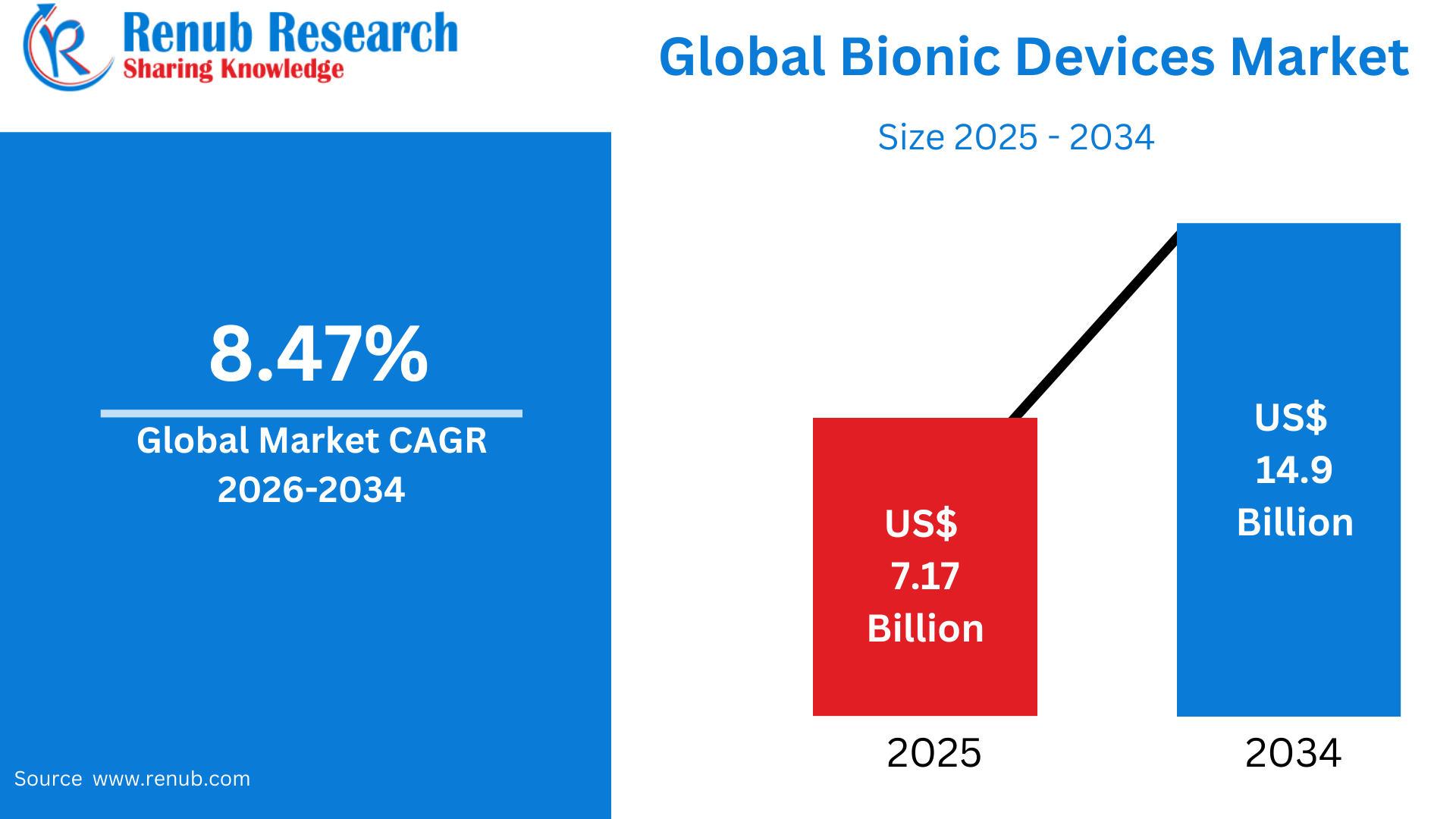
Bionic Devices Market is projected to grow from US$ 7.17 Billion in 2025 to US$ 14.9 Billion by 2034, registering a Compound Annual Growth Rate (CAGR) of 8.47% during 2026–2034. Market growth is driven by the rising prevalence of disabilities and chronic diseases, increasing demand for advanced prosthetic and implantable devices, continuous innovations in neurotechnology and robotics, and expanding healthcare investments. Growing adoption of cochlear implants, bionic limbs, retinal implants, and brain-computer interface technologies is expected to further accelerate global market expansion.
Bionic Devices Industry Overview
Bionic devices are advanced artificial systems designed to restore, replace, or enhance biological functions that the human body can no longer perform naturally. These devices combine mechanical components, electronics, and bio-compatible materials to mimic or surpass natural physiology. Examples include bionic limbs, cochlear implants, retinal implants, artificial organs, and neural-controlled prosthetics. Many bionic systems interact directly with the nervous system, enabling users to control them through muscle signals or brain–machine interfaces. By merging human biology with robotics and digital technology, bionic devices significantly improve mobility, sensory perception, and quality of life for individuals with disabilities, injuries, or chronic disorders.
The bionic devices market is expanding rapidly due to advancements in robotics, AI integration, and materials science that improve device functionality and user comfort. Rising rates of limb loss, hearing impairments, cardiovascular disorders, and neurological injuries increase the demand for bionic solutions. Healthcare spending is growing globally, and governments are supporting prosthetic innovation through reimbursement programs and research investments. Miniaturization, enhanced battery life, and wireless connectivity are making bionic devices more practical and accessible. Additionally, increased acceptance of assistive technologies and the shift toward personalized, patient-specific implants are accelerating commercial adoption and long-term market growth.
What are Bionic Devices and their uses & popularity worldwide?
Bionic devices are advanced biomedical technologies designed to replace, restore, or enhance the function of damaged or missing body parts by integrating engineering, electronics, robotics, and medical science. These devices interact with the human body to improve mobility, hearing, vision, or organ function, significantly enhancing the quality of life for individuals with disabilities or chronic medical conditions. Common types of bionic devices include prosthetic limbs, cochlear implants, retinal implants, bionic eyes, pacemakers, artificial hearts, neurostimulators, exoskeletons, and brain-computer interface (BCI) systems.
Modern bionic devices often incorporate sensors, artificial intelligence (AI), microprocessors, wireless connectivity, and advanced biomaterials to deliver precise, real-time performance and personalized patient care. They are widely used in orthopedics, cardiology, neurology, audiology, ophthalmology, and rehabilitation medicine. Worldwide, the popularity of bionic devices is increasing due to the growing prevalence of limb loss, hearing impairment, cardiovascular diseases, neurological disorders, and an aging population.
Continuous technological advancements, expanding healthcare infrastructure, rising investments in medical robotics, and supportive reimbursement programs have accelerated adoption across developed and emerging economies. Increasing research into AI-powered prosthetics, smart implants, and neuroprosthetic technologies is expected to further drive global demand, making bionic devices a rapidly evolving segment of modern healthcare and medical innovation.
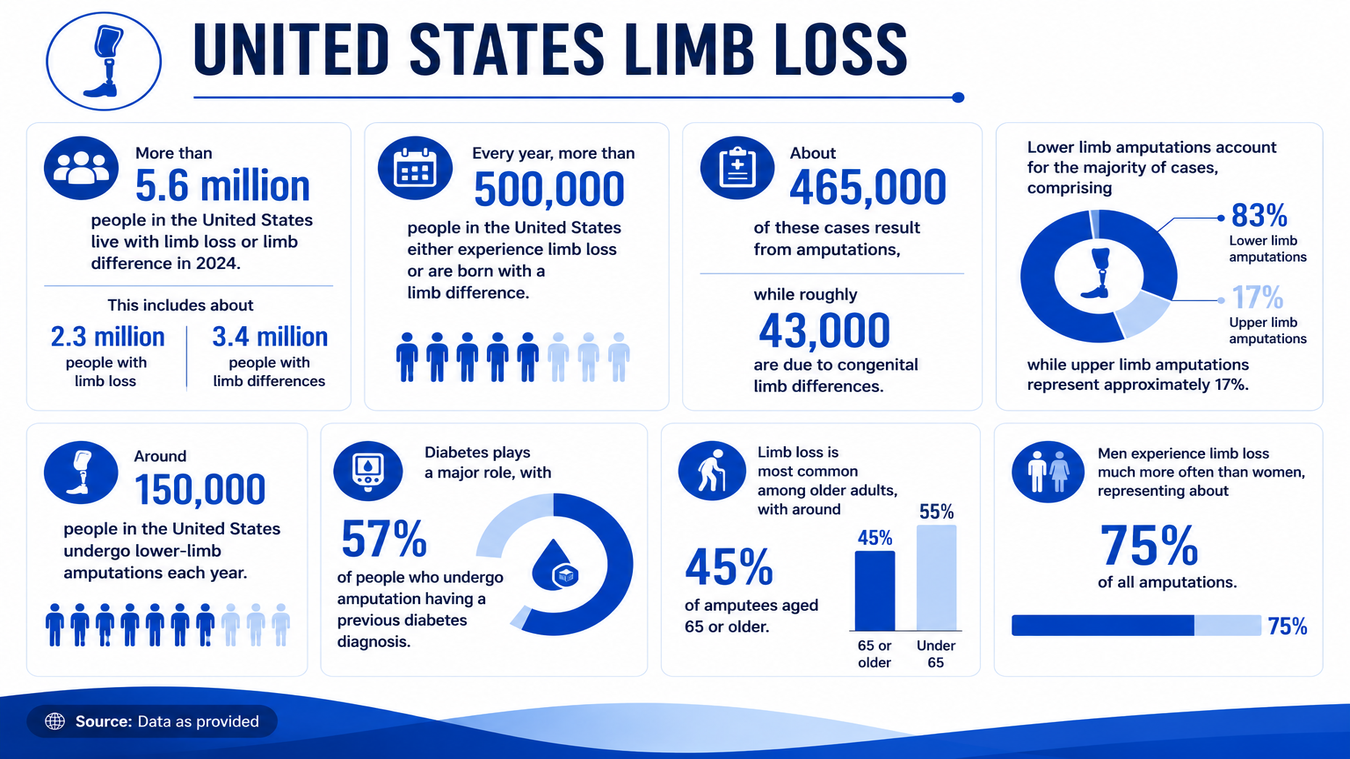
United States Limb Loss
- More than 5.6 million people in the United States live with limb loss or limb difference in 2024. This includes about 2.3 million people with limb loss and 3.4 million people with limb differences.
- Every year, more than 500,000 people in the United States either experience limb loss or are born with a limb difference.
- About 465,000 of these cases result from amputations, while roughly 43,000 are due to congenital limb differences.
- Lower limb amputations account for the majority of cases, comprising 83% of all amputations, while upper limb amputations represent approximately 17%.
- Around 150,000 people in the United States undergo lower-limb amputations each year.
- Diabetes plays a major role, with 57% of people who undergo amputation having a previous diabetes diagnosis.
- Limb loss is most common among older adults, with around 45% of amputees aged 65 or older.
- Men experience limb loss much more often than women, representing about 75% of all amputations.
Market Catalysts
Rising Prevalence of Disabilities, Limb Loss, and Chronic Diseases
The increasing incidence of limb amputations, sensory impairments, and chronic diseases is one of the strongest growth drivers of the global bionic devices market. According to healthcare estimates, more than 2 million people worldwide live with limb loss, while millions more experience amputations each year due to diabetes, trauma, vascular diseases, and cancer. Hearing impairment affects over 430 million people globally, creating significant demand for cochlear implants and advanced hearing prostheses. Cardiovascular diseases continue to drive adoption of implantable bionic devices such as pacemakers and ventricular assist devices, while neurological disorders increase demand for neurostimulators and brain-computer interface technologies. Aging populations further contribute to market expansion as age-related mobility limitations, vision loss, and hearing decline become increasingly common. Healthcare providers are investing in advanced rehabilitation technologies that improve patient independence and quality of life. Government disability support programs, expanding rehabilitation centers, and increasing awareness regarding technologically advanced prosthetic solutions continue accelerating global adoption of bionic devices across multiple therapeutic applications.
Rapid Technological Advancements in Robotics, Artificial Intelligence, and Neurotechnology
Continuous innovation in robotics, artificial intelligence (AI), sensors, and neurotechnology has significantly enhanced the performance and functionality of modern bionic devices. Advanced prosthetic limbs now incorporate multiple motion sensors, microprocessors, and AI-driven control systems, allowing users to perform natural movements with greater precision and responsiveness. Modern myoelectric prostheses can interpret electrical signals generated by muscles, enabling intuitive control of artificial limbs. Brain-computer interface (BCI) research has also advanced considerably, enabling direct communication between neural signals and external devices. Improved battery technologies, lightweight composite materials, wireless connectivity, and cloud-based software updates have further enhanced device durability and usability. Robotic exoskeletons are increasingly being adopted in rehabilitation centers to assist patients recovering from spinal cord injuries and strokes. Three-dimensional (3D) printing has also reduced production time and enabled greater customization of prosthetic components. Continuous investments in medical engineering and digital healthcare technologies are expected to accelerate innovation, improve patient outcomes, and expand commercial opportunities across the global bionic devices market.
Growing Healthcare Investments and Expanding Rehabilitation Infrastructure
Increasing healthcare expenditure and expanding rehabilitation services are major factors supporting growth in the bionic devices market. Global healthcare spending now exceeds US$9 trillion annually, with governments and private healthcare providers investing heavily in advanced medical technologies and patient rehabilitation. Specialized rehabilitation hospitals, prosthetic clinics, hearing centers, and neurological treatment facilities are expanding their adoption of sophisticated bionic devices to improve long-term patient outcomes. Developed countries continue strengthening reimbursement policies for prosthetic limbs, cochlear implants, cardiac implants, and neurostimulation devices, improving patient affordability. Emerging economies are also increasing investments in rehabilitation infrastructure, trauma care, and disability support programs as healthcare accessibility improves. Military rehabilitation programs and occupational injury compensation systems further contribute to demand for advanced prosthetic technologies. Collaborations among hospitals, research institutions, and medical device manufacturers continue accelerating product development and clinical adoption. Growing public awareness regarding advanced rehabilitation options and improving healthcare accessibility are expected to support sustained long-term expansion of the global bionic devices market.
Bionic Devices Product Launches Worldwide
- Cochlear Limited – Launched the Cochlear™ Nucleus® Nexa™ Smart Cochlear Implant System in July 2025, featuring upgradeable implant firmware, internal memory, and AI-enabled hearing optimization.
- Cochlear Limited – Introduced the Kanso® 3 Nexa Sound Processor in 2025, an off-the-ear cochlear sound processor designed for the Nucleus Nexa platform with wireless connectivity and improved comfort.
- Cochlear Limited – Released the Nucleus® 8 Nexa Sound Processor in 2025, offering a smaller and lighter design with all-day rechargeable battery life and smart hearing features.
- Cochlear Limited – Launched the Baha® 7 Sound Processor in June 2025, featuring enhanced digital sound processing, Bluetooth connectivity, and improved speech understanding for bone conduction hearing users.
- Cochlear Limited – Introduced the Baha SoundBand™ in 2025, expanding non-surgical bone-conduction hearing solutions for pediatric and adult patients.
- Ottobock SUITX – Launched the IX BACK VOLTON Powered Exoskeleton in 2025, providing motor-assisted lifting support with IoT connectivity for industrial and rehabilitation applications.
- Össur – Expanded its portfolio with the Power Knee® next-generation microprocessor-controlled bionic knee system in 2025, designed to improve mobility, balance, and stair navigation for above-knee amputees.
- Advanced Bionics – Expanded its cochlear implant portfolio in 2025 with upgraded Marvel CI sound processing solutions, improving wireless streaming, speech clarity, and smartphone integration.
- Medtronic – Introduced next-generation Percept™ RC Deep Brain Stimulation (DBS) System in 2024, featuring rechargeable technology and brain-sensing capabilities for patients with Parkinson’s disease and other neurological disorders.
- Abiomed (Johnson & Johnson MedTech) – Expanded its Impella® heart pump platform in 2025, introducing advanced minimally invasive mechanical circulatory support technology for patients with severe cardiac conditions.
Challenge
High Cost of Advanced Bionic Devices and Limited Patient Affordability
One of the biggest challenges facing the bionic devices market is the high cost of advanced prosthetic and implantable technologies. Modern robotic prosthetic limbs equipped with AI, microprocessors, and myoelectric sensors can cost between US$20,000 and US$100,000, while sophisticated implantable devices such as cochlear implants and neurostimulators also require substantial financial investment. In many developing countries, limited insurance coverage and inadequate reimbursement policies restrict patient access to these advanced medical technologies. Additional expenses related to surgical implantation, rehabilitation therapy, device maintenance, software upgrades, and replacement components further increase total treatment costs. Pediatric patients may require multiple device replacements as they grow, creating additional long-term financial burdens. Smaller healthcare facilities often lack the financial resources to acquire advanced rehabilitation technologies. These affordability challenges slow market penetration, particularly in low- and middle-income countries, limiting access despite growing clinical demand and technological progress.
Technical Complexity, Regulatory Requirements, and Long Development Cycles
The development and commercialization of bionic devices involve complex engineering, extensive clinical testing, and strict regulatory approval processes. Manufacturers must demonstrate long-term safety, reliability, durability, and clinical effectiveness before products receive approval for commercial use. Implantable bionic devices often require years of laboratory research, preclinical studies, human clinical trials, and post-market surveillance before reaching healthcare providers. Integrating electronics, biomaterials, wireless communication, artificial intelligence, and human physiology presents significant engineering challenges. Device failures, cybersecurity risks, battery limitations, software compatibility, and long-term implant performance require continuous monitoring and product improvements. Manufacturers must also comply with evolving international quality standards, medical device regulations, and cybersecurity requirements, increasing research and compliance costs. Product recalls or delayed approvals can significantly impact commercial success and investor confidence. These lengthy development timelines and regulatory complexities increase barriers to market entry, particularly for smaller medical technology companies with limited financial and research resources.
Rising Demand for Cochlear and Advanced Hearing Implant Technologies
The auditory bionic devices market is one of the most established segments within the global bionic devices industry, primarily driven by increasing cases of hearing impairment and continuous advancements in implant technology. According to global health estimates, more than 430 million people worldwide experience disabling hearing loss, while this figure is expected to exceed 700 million by 2050, creating substantial long-term demand for auditory implants. Cochlear implants account for the majority of market revenue, followed by bone conduction hearing implants and auditory brainstem implants. Industry estimates indicate that over one million cochlear implants have been performed globally, reflecting increasing adoption among both pediatric and adult patients. Modern auditory bionic devices feature digital sound processors, wireless Bluetooth connectivity, rechargeable batteries, AI-assisted sound optimization, and smartphone compatibility, significantly improving hearing performance and user convenience. Expanding newborn hearing screening programs, favorable reimbursement policies, and increasing awareness regarding early intervention continue supporting market growth. Continuous innovations in speech recognition technology and minimally invasive implantation procedures are expected to further strengthen the global auditory bionic devices market.
Advanced Prosthetics and Robotic Rehabilitation Driving Growth
The orthopedic bionic devices market is expanding rapidly due to increasing demand for technologically advanced prosthetic limbs, robotic exoskeletons, and mobility-assistive systems. Healthcare estimates indicate that over 2 million people worldwide live with limb loss, while several hundred thousand new amputations occur annually due to diabetes, trauma, vascular diseases, congenital disorders, and cancer. Modern orthopedic bionic devices incorporate myoelectric sensors, artificial intelligence, microprocessors, lightweight carbon-fiber materials, and multi-joint robotic control systems that closely replicate natural human movement. Industry estimates suggest that more than 60% of premium prosthetic limbs now utilize electronic or microprocessor-controlled components to improve gait, stability, and balance. Robotic exoskeletons are increasingly adopted for spinal cord injury rehabilitation, stroke recovery, and mobility assistance in specialized rehabilitation centers. Three-dimensional (3D) printing technology has also enabled greater prosthetic customization while reducing manufacturing time and costs. Growing healthcare investments, expanding rehabilitation services, and increasing demand for personalized mobility solutions continue driving long-term growth in the global orthopedic bionic devices market.
Largest Segment Supported by Cardiac and Neurological Applications
Implantable bionic devices represent the largest segment of the global bionic devices market due to their widespread use in cardiology, neurology, audiology, and ophthalmology. These devices include pacemakers, implantable cardioverter defibrillators (ICDs), cochlear implants, retinal implants, deep brain stimulators, spinal cord stimulators, and ventricular assist devices. Industry estimates indicate that implantable products contribute over 55% of total global bionic device revenues, reflecting their extensive clinical applications. More than one million cardiac pacemakers are implanted worldwide each year, while neurological implants continue gaining acceptance for Parkinson’s disease, epilepsy, chronic pain, and movement disorders. Technological advancements including wireless monitoring, MRI-compatible implants, rechargeable batteries, remote programming, and AI-assisted diagnostics have significantly improved patient outcomes. Increasing prevalence of cardiovascular diseases, neurological disorders, sensory impairments, and aging populations continues driving clinical demand. Strong regulatory approvals, expanding reimbursement coverage, and continuous innovation in implant miniaturization and long-term durability are expected to sustain robust growth in the implantable bionic devices market.
Smart Electronics Transforming Medical Rehabilitation
Electronic bionic devices have become the technological foundation of modern prosthetic and implantable medical systems by integrating sensors, microprocessors, artificial intelligence, wireless communication, and embedded electronics. Industry estimates indicate that over 70% of newly developed advanced bionic devices now incorporate intelligent electronic control systems to improve functionality and patient interaction. These electronic systems enable myoelectric prosthetic control, adaptive movement, real-time feedback, wireless software updates, and smartphone-based device management. Modern electronic bionic devices utilize lithium-ion rechargeable batteries, Bluetooth connectivity, cloud-based diagnostics, and advanced motion sensors to optimize clinical performance. The rapid advancement of semiconductor technology, miniaturized electronics, and machine learning algorithms has significantly improved device responsiveness and reliability. Demand continues increasing across orthopedic prosthetics, cochlear implants, neurostimulators, retinal implants, and robotic rehabilitation systems. Expanding investments in digital healthcare, wearable electronics, and medical robotics continue accelerating innovation. As electronic components become smaller, more energy-efficient, and increasingly intelligent, they are expected to play an even greater role in future generations of bionic medical technologies.
Bionic Devices Hospitals & Clinics End-User Segment Supporting Clinical Adoption
Hospitals and specialty clinics remain the largest end-user segment within the global bionic devices market due to their comprehensive diagnostic, surgical, rehabilitation, and long-term patient management capabilities. Industry estimates indicate that more than 65% of bionic device procedures are performed in hospitals and specialized medical centers equipped with multidisciplinary surgical teams and advanced imaging technologies. These facilities conduct implantation of cochlear implants, pacemakers, deep brain stimulators, robotic prosthetic fittings, retinal implants, and complex rehabilitation therapies. Hospitals also provide post-operative monitoring, software programming, device calibration, physiotherapy, occupational therapy, and long-term clinical follow-up that are essential for maximizing patient outcomes. Increasing investments in robotic surgery, digital rehabilitation platforms, AI-assisted diagnostics, and telemedicine have further enhanced the quality of bionic device care. Growing numbers of specialized orthopedic, neurological, cardiovascular, and rehabilitation clinics continue expanding patient access to advanced bionic technologies. As healthcare infrastructure improves globally and demand for personalized rehabilitation increases, hospitals and clinics are expected to remain the dominant end-user segment in the worldwide bionic devices market.
United States Bionic Devices Global Leader in Innovation and Advanced Healthcare Adoption
United States represents the largest bionic devices market globally, supported by advanced healthcare infrastructure, high healthcare expenditure, and strong investments in medical technology innovation. Annual healthcare spending exceeds US$4.5 trillion, creating favorable conditions for the adoption of premium bionic devices such as robotic prosthetic limbs, cochlear implants, pacemakers, neurostimulators, retinal implants, and robotic exoskeletons. The country performs over one million cardiac implant procedures annually, while demand for cochlear implants and AI-powered prosthetics continues to increase due to the growing prevalence of hearing loss, diabetes, trauma, and neurological disorders. The presence of leading medical device manufacturers, research universities, and biotechnology companies accelerates product development and commercialization. Hospitals increasingly adopt robotic rehabilitation systems, brain-computer interface technologies, and smart implantable devices featuring wireless monitoring and AI-assisted diagnostics. Favorable reimbursement programs, expanding veteran rehabilitation services, and increasing investments in digital healthcare continue strengthening market growth. Continuous innovation in neuroprosthetics, personalized prosthetic systems, and minimally invasive implant technologies positions the United States as the leading global market for bionic devices.
United Kingdom Strong Public Healthcare System Supporting Technology Adoption
United Kingdom bionic devices market is growing steadily due to its well-developed healthcare infrastructure, increasing aging population, and expanding adoption of advanced rehabilitation technologies. The country has a population of approximately 69 million, with around 19–20% of residents aged 65 years or older, increasing demand for implantable cardiac devices, hearing implants, and orthopedic prosthetics. The National Health Service (NHS) plays a central role in providing access to cochlear implants, pacemakers, neurostimulators, and prosthetic rehabilitation services through specialized treatment centers. Technological advancements in myoelectric prosthetic limbs, robotic rehabilitation, and digital hearing implants continue improving patient outcomes. Universities, biomedical engineering institutes, and medical device companies actively contribute to research in artificial intelligence, robotics, and neurotechnology. Growing adoption of minimally invasive implantation procedures, telehealth monitoring, and personalized rehabilitation programs further supports market expansion. Continued government investment in healthcare modernization and digital medical technologies is expected to sustain long-term growth of the United Kingdom bionic devices market.
India Expanding Healthcare Access and Rising Rehabilitation Demand
India is emerging as a rapidly growing market for bionic devices due to increasing healthcare investments, expanding medical infrastructure, and rising awareness of advanced rehabilitation technologies. With a population exceeding 1.4 billion, the country has a significant patient base affected by diabetes, traumatic injuries, hearing impairment, congenital disabilities, and cardiovascular diseases. Diabetes-related complications and road traffic accidents contribute substantially to demand for advanced prosthetic limbs and orthopedic rehabilitation. Healthcare expenditure continues to increase as both government and private hospitals expand access to specialized medical treatments and implant procedures. Domestic manufacturers are introducing cost-effective prosthetic devices and implantable technologies to improve affordability for a broader patient population. Growing availability of robotic rehabilitation centers, cochlear implant programs, and AI-assisted prosthetic solutions is further supporting market growth. Medical tourism also contributes to increasing adoption of advanced implant technologies. Rising government support for disability rehabilitation, expanding insurance coverage, and continued investments in healthcare infrastructure are expected to accelerate long-term growth in India’s bionic devices market.
Saudi Arabia Vision 2030 Accelerating Medical Technology Adoption
Saudi Arabia is becoming an important regional market for bionic devices as the country modernizes its healthcare system under Vision 2030. Healthcare expenditure continues to rise alongside investments in advanced hospitals, rehabilitation centers, and digital health technologies. With a population of approximately 38 million, the increasing prevalence of diabetes, cardiovascular diseases, hearing impairment, and age-related disabilities is driving demand for implantable cardiac devices, cochlear implants, neurostimulators, and advanced prosthetic limbs. Government initiatives encourage the adoption of robotic surgery, artificial intelligence, and smart medical devices across major healthcare facilities. Specialized rehabilitation centers are expanding access to robotic exoskeletons, myoelectric prosthetic limbs, and neurological rehabilitation technologies for patients recovering from trauma and chronic diseases. The growing number of public-private healthcare partnerships is improving access to advanced implantable devices and rehabilitation services. Rising medical technology imports, increasing physician training, and continuous investment in healthcare innovation are expected to strengthen Saudi Arabia’s position as one of the fastest-growing bionic devices markets in the Middle East.
Recent Developments in Bionic Devices Market
- In July 2025, Cochlear Limited received U.S. FDA approval for its Cochlear® Nucleus® Nexa™ System, the world’s first smart cochlear implant. The device features upgradeable implant firmware, allowing users to access future sound-processing innovations without replacing hardware, improving long-term hearing performance.
- In March 2023, Pixium Vision SA announced that the FDA granted Breakthrough Device Designation to its Prima System, a photovoltaic retinal implant designed to work alongside patients’ remaining natural peripheral vision. The system aims to partially restore central vision in individuals with atrophic dry AMD, advancing next-generation bionic vision technology.
Market Segmentation
Product
- Auditory Bionic/Cochlear Implants
- Heart Transplant
- Orthopedic Bionics
- Neural Bionics
Fixation
- Implantable
- Wearable/Externally Worn
Technology
- Electronics
- Mechanical
End-User
- Hospitals & Clinics
- Ambulatory Surgical Centers
- Healthcare Facilities
Countries
North America
- United States
- Canada
Europe
- France
- Germany
- Italy
- Spain
- United Kingdom
- Belgium
- Netherlands
- Turkey
Asia Pacific
- China
- Japan
- India
- South Korea
- Thailand
- Malaysia
- Indonesia
- Australia
- New Zealand
Latin America
- Brazil
- Mexico
- Argentina
Middle East & Africa
- Saudi Arabia
- UAE
- South Africa
All the Key players have been covered from 5 Viewpoints:
- Overviews
- Key Person
- Recent Developments
- SWOT Analysis
- Revenue Analysis
Company Analysis:
- Abbott Laboratories
- Abiomed
- Edward Lifesciences Corp.
- Rewalk Robotics Ltd.
- Boston Scientific Corp.
- Baxter International Inc.
- Cochlear Ltd.
- Medtronic Plc,
- William Demant Holdings A/S
- EKSO Bionics Holdings Inc.
Report Details:
| Report Features | Details |
| Base Year |
2025 |
| Historical Period |
2022 - 2025 |
| Forecast Period |
2026 - 2034 |
| Market |
US$ Billion |
| Segment Covered |
Product, Fixation, Technology, End-Users and Countries |
| Countries Covered |
|
| Companies Covered |
|
| Customization Scope |
20% Free Customization |
| Post-Sale Analyst Support |
1 Year (52 Weeks) |
| Delivery Format |
PDF and Excel through Email (We can also provide the editable version of the report in PPT/Word format on request) |
Customization Services available
- Analysis of Market Size and Its Segments
- More Company Profiles (Upto 10 without any additional cost):
- Additional Countries (Other than mentioned Countries):
- Region/Country Specific Reports:
- Market Entry Strategy:
- Region-Specific Market Dynamics:
- Regional Market Share Analysis:
- Trade Analysis:
- Production Insights:
- Others Customized Requests:
For more information contact our analysts.
Need More Assistance?
- Talk to our analysts to get more precious information on the current market trends.
- Include more countries and segments and customize the report based on the final requirement.
- Get a competitive advantage in your industry by knowing the report findings and making a positive impact on your revenues and operations.
- Our analysts are always ready to provide more help and pertinent information if you need any additional assistance.