Bakery Products Market Report by Product, Distribution Channel, Country and Company Analysis 2026-2034
Buy NowBakery Products Market Size and Growth Outlook
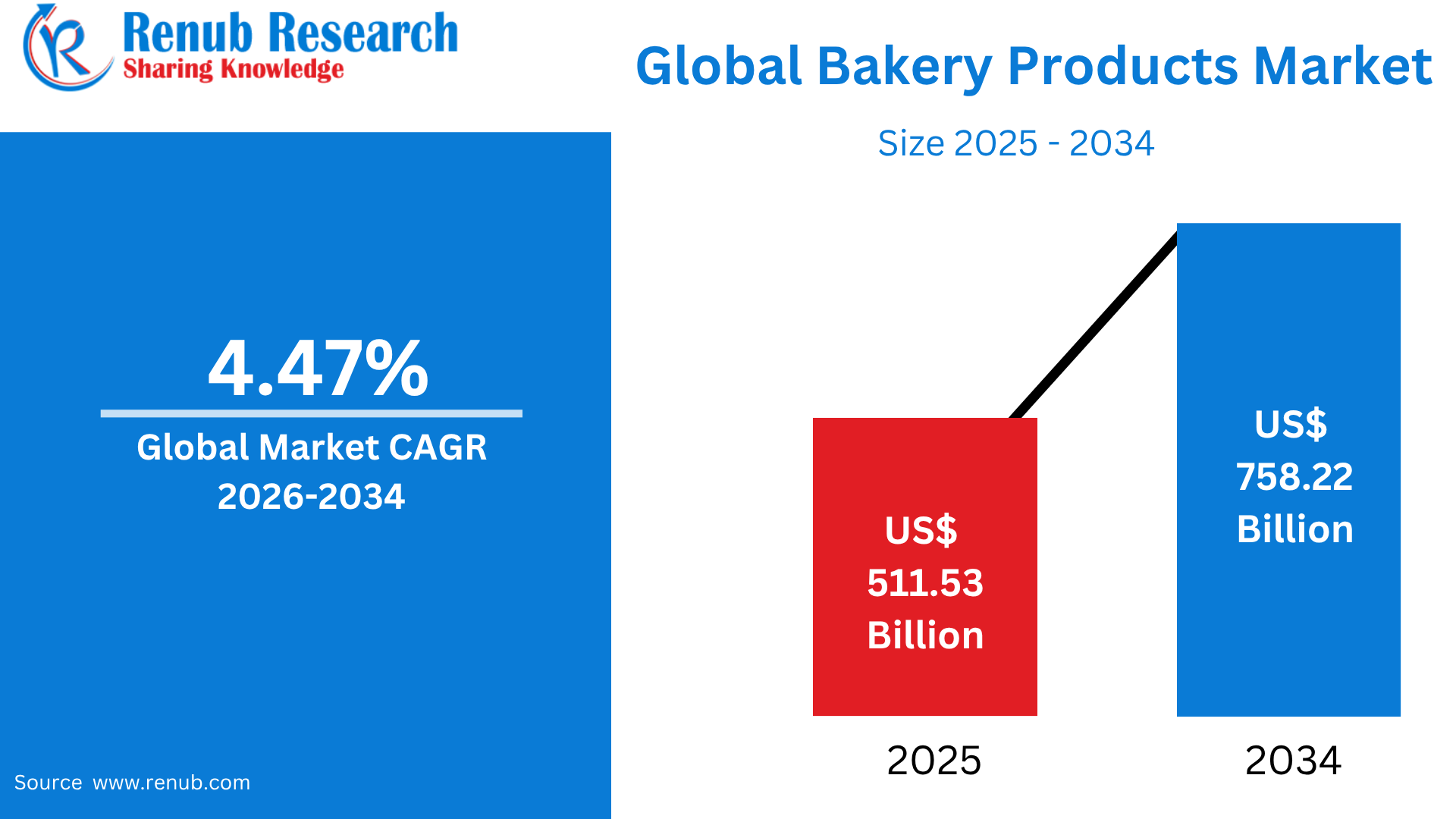
The Bakery Products Market is projected to expand from approximately US$511.53 billion in 2025 to US$758.22 billion by 2034, registering a CAGR of 4.47% during 2026–2034. Market growth is supported by increasing consumer demand for convenient and ready-to-eat foods, changing dietary preferences, rapid product innovation, and continued urbanization. The growing popularity of packaged bread, cakes, pastries, biscuits, cookies, and other baked products is further strengthening market demand. Rising disposable incomes and busy lifestyles are encouraging consumers to choose convenient bakery products for everyday consumption and on-the-go eating.
What Are Bakery Products and Their Uses & Popularity Worldwide?
Bakery products are food items primarily prepared by baking ingredients such as flour, cereals, water, yeast, sugar, fats, eggs, and other functional ingredients. The category includes bread, rolls, cakes, pastries, biscuits, cookies, muffins, pies, doughnuts, and other baked snacks. Bakery products are consumed worldwide as breakfast foods, snacks, desserts, meal accompaniments, and convenient on-the-go foods. Bread and other staple bakery products provide carbohydrates and calories, while newer formulations increasingly incorporate protein, fiber, whole grains, seeds, and fortified ingredients to meet changing nutritional preferences. Their popularity is supported by urbanization, busy lifestyles, rising disposable incomes, expanding foodservice sectors, and demand for convenient ready-to-eat foods.
Bakeries, supermarkets, convenience stores, cafés, restaurants, and e-commerce platforms provide consumers with broad access to bakery products. Product innovation is also expanding the market through gluten-free, organic, vegan, low-sugar, high-protein, whole-grain, and clean-label products. In emerging markets, growing urban populations and westernization of diets are encouraging greater consumption of packaged bread, biscuits, cakes, and pastries. Meanwhile, developed markets are witnessing demand for premium, artisanal, functional, and healthier bakery products, making bakery products an important component of the global food industry.
Growth Drivers of the Global Bakery Products Market
Rising Demand for Convenient and Ready-to-Eat Foods
The growing preference for convenient, ready-to-eat, and on-the-go foods is a major driver of the global bakery products market. Urbanization, longer working hours, and changing household structures are encouraging consumers to choose bakery products that require little or no preparation. Bread, packaged rolls, biscuits, cookies, cakes, pastries, and ready-to-eat snacks are increasingly integrated into daily meals and snacking occasions. More than half of the global population now lives in urban areas, and the United Nations projects that the urban population could reach approximately 68% by 2050, creating a larger consumer base for convenient food products. Bakery products benefit from their portability, accessibility, and relatively long shelf life, particularly packaged products. Manufacturers are also expanding individual portions, resealable packs, frozen bakery products, and grab-and-go formats to meet changing lifestyles. The rapid expansion of supermarkets, convenience stores, cafés, quick-service restaurants, and online grocery platforms is further improving accessibility. As consumers increasingly prioritize convenience without sacrificing taste and variety, demand for packaged and ready-to-consume bakery products is expected to remain strong worldwide.
Product Innovation and Growing Demand for Healthier Bakery Products
Continuous product innovation and changing consumer preferences toward healthier foods are creating significant growth opportunities for the bakery products market. Consumers are increasingly looking for bakery products with improved nutritional profiles, encouraging manufacturers to introduce whole-grain, high-fiber, high-protein, reduced-sugar, gluten-free, organic, vegan, and clean-label products. The global demand for dietary fiber is particularly relevant because the World Health Organization recommends that adults consume at least 25 grams of naturally occurring dietary fiber per day. This is encouraging the incorporation of whole grains, seeds, oats, nuts, and other fiber-rich ingredients into bread, biscuits, cereals, and baked snacks. Manufacturers are also developing products with alternative sweeteners and functional ingredients to address concerns about sugar consumption. In addition, plant-based diets are expanding the market for vegan bread, pastries, cakes, and cookies made without eggs or dairy ingredients. Premium and artisanal bakery products are also gaining popularity as consumers seek differentiated flavors and higher-quality ingredients. Such innovation allows manufacturers to target health-conscious consumers while maintaining the convenience and familiarity associated with bakery products.
Urbanization, Rising Incomes, and Expansion of Modern Retail
Urbanization, rising disposable incomes, and expanding modern retail networks are supporting bakery product consumption across developed and emerging economies. As households move toward urban lifestyles, consumers gain greater access to supermarkets, hypermarkets, convenience stores, bakeries, cafés, restaurants, and digital grocery platforms. The global middle class is also expanding, increasing consumer spending on packaged foods, premium bakery products, and foodservice offerings. According to World Bank data, global GDP per capita has increased substantially over the long term, supporting greater purchasing capacity for processed and convenience foods. In emerging markets across Asia, the Middle East, Africa, and Latin America, western-style bread, cakes, biscuits, pastries, and packaged snacks are becoming increasingly common alongside traditional baked foods. Modern retail is particularly important because supermarkets and hypermarkets provide consumers with numerous brands, flavors, pack sizes, and price points. E-commerce is further expanding market reach by enabling consumers to purchase fresh, packaged, frozen, and specialty bakery products from home. As urban populations and household incomes continue to increase, bakery products are expected to benefit from greater retail penetration, premiumization, and higher consumption frequency.
Challenges of the Global Bakery Products Market
Rising Raw Material and Production Costs
Volatility in the prices of key raw materials is one of the major challenges facing the global bakery products market. Flour, wheat, sugar, edible oils, eggs, dairy ingredients, cocoa, yeast, and packaging materials account for significant portions of bakery production costs. Global wheat production is substantial, but prices can fluctuate because of weather conditions, geopolitical disruptions, transportation costs, export restrictions, and changes in agricultural input prices. Sugar prices have also experienced periods of significant volatility, creating additional pressure on manufacturers of cakes, pastries, biscuits, and sweet bakery products. Energy costs are another concern because commercial bakeries require substantial electricity and fuel for ovens, refrigeration, mixing, packaging, and storage. Rising labor and logistics costs can further reduce margins. The challenge is particularly significant for small and medium-sized bakeries that have less purchasing power than large multinational manufacturers. Companies are responding by optimizing recipes, improving production efficiency, securing long-term supplier contracts, reducing food waste, and investing in energy-efficient equipment. Nevertheless, continued commodity and operating-cost volatility can lead to higher retail prices, potentially affecting consumer purchasing frequency and limiting market growth in price-sensitive economies.
Growing Health Concerns Related to Sugar, Salt, and Refined Ingredients
Increasing consumer awareness of sugar, sodium, saturated fat, and refined carbohydrate consumption presents another challenge for the bakery products market. Traditional cakes, pastries, cookies, doughnuts, and certain packaged baked goods can contain relatively high levels of added sugars, fats, and calories. The World Health Organization recommends that adults and children reduce free sugar intake to less than 10% of total daily energy intake, with further benefits associated with reducing it below 5%. This has encouraged consumers and regulators to scrutinize the nutritional composition of bakery products more closely. Governments in several countries are implementing nutrition-labeling requirements, reformulation initiatives, advertising restrictions, and measures aimed at reducing excessive sugar and sodium consumption. Manufacturers therefore face the challenge of reformulating products while preserving taste, texture, shelf life, and affordability. Demand for healthier alternatives is creating opportunities for whole-grain, low-sugar, high-fiber, and functional bakery products, but reformulation can increase ingredient and production costs. Balancing health, taste, price, and product quality will remain essential for bakery manufacturers seeking to maintain consumer loyalty while responding to evolving nutritional expectations.
Bakery Product Launches Worldwide
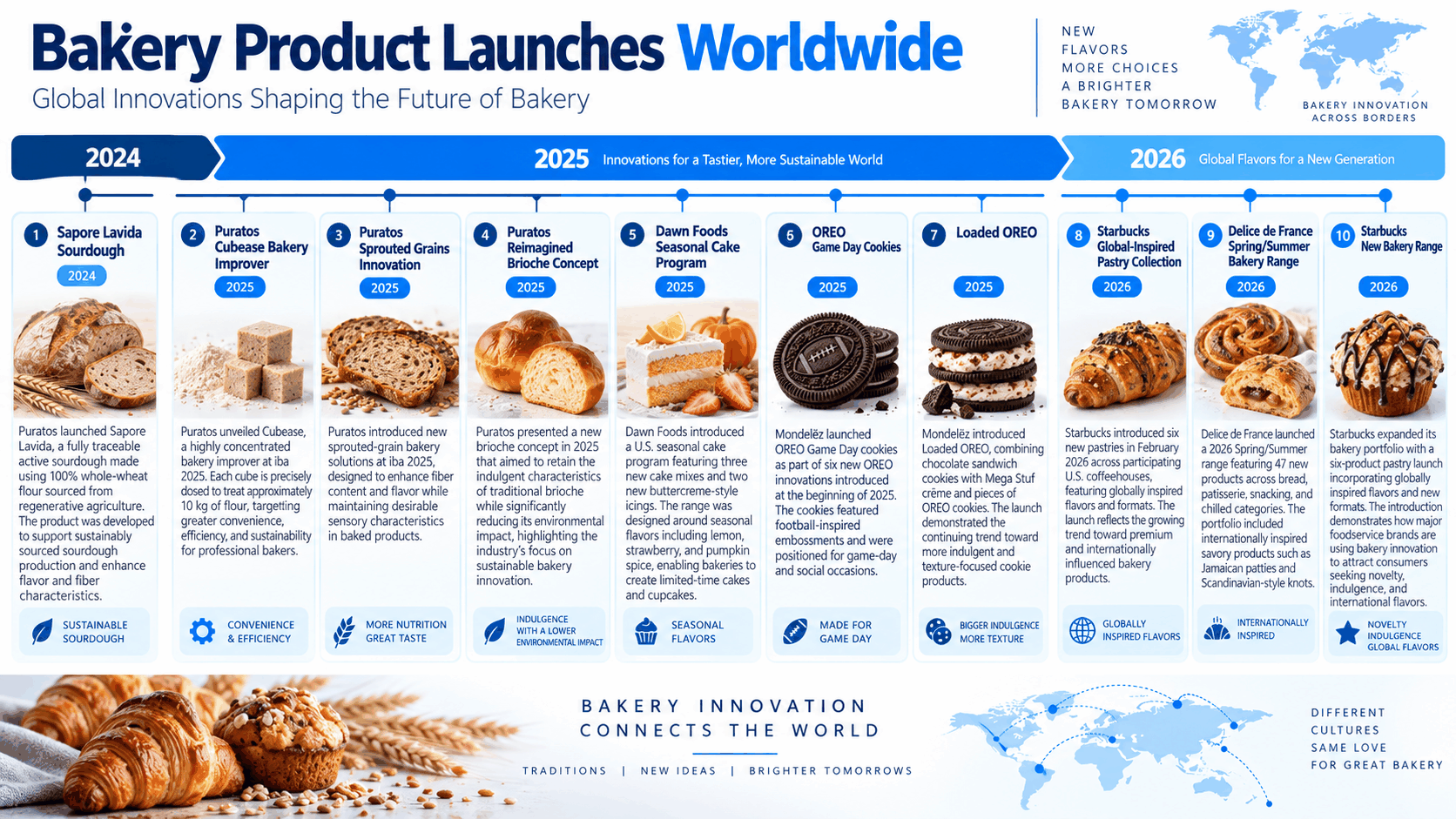
- 1. Starbucks Global-Inspired Pastry Collection – 2026: Starbucks introduced six new pastries in February 2026 across participating U.S. coffeehouses, featuring globally inspired flavors and formats. The launch reflects the growing trend toward premium and internationally influenced bakery products.
- 2. Delice de France Spring/Summer Bakery Range – 2026: Delice de France launched a 2026 Spring/Summer range featuring 47 new products across bread, patisserie, snacking, and chilled categories. The portfolio included internationally inspired savory products such as Jamaican patties and Scandinavian-style knots.
- 3. Puratos Cubease Bakery Improver – 2025: Puratos unveiled Cubease, a highly concentrated bakery improver at iba 2025. Each cube is precisely dosed to treat approximately 10 kg of flour, targeting greater convenience, efficiency, and sustainability for professional bakers.
- 4. Puratos Sprouted Grains Innovation – 2025: Puratos introduced new sprouted-grain bakery solutions at iba 2025, designed to enhance fiber content and flavor while maintaining desirable sensory characteristics in baked products.
- 5. Puratos Reimagined Brioche Concept – 2025: Puratos presented a new brioche concept in 2025 that aimed to retain the indulgent characteristics of traditional brioche while significantly reducing its environmental impact, highlighting the industry’s focus on sustainable bakery innovation.
- 6. Dawn Foods Seasonal Cake Program – 2025: Dawn Foods introduced a U.S. seasonal cake program featuring three new cake mixes and two new buttercreme-style icings. The range was designed around seasonal flavors including lemon, strawberry, and pumpkin spice, enabling bakeries to create limited-time cakes and cupcakes.
- 7. OREO Game Day Cookies – 2025: Mondelēz launched OREO Game Day cookies as part of six new OREO innovations introduced at the beginning of 2025. The cookies featured football-inspired embossments and were positioned for game-day and social occasions.
- 8. Loaded OREO – 2025: Mondelēz introduced Loaded OREO, combining chocolate sandwich cookies with Mega Stuf crème and pieces of OREO cookies. The launch demonstrated the continuing trend toward more indulgent and texture-focused cookie products.
- 9. Sapore Lavida Sourdough – 2024: Puratos launched Sapore Lavida, a fully traceable active sourdough made using 100% whole-wheat flour sourced from regenerative agriculture. The product was developed to support sustainably sourced sourdough production and enhance flavor and fiber characteristics.
- 10. Starbucks New Bakery Range – 2026: Starbucks expanded its bakery portfolio with a six-product pastry launch incorporating globally inspired flavors and new formats. The introduction demonstrates how major foodservice brands are using bakery innovation to attract consumers seeking novelty, indulgence, and international flavors.
Premiumization and Indulgence Support Cakes and Pastries Growth
The global Cakes and Pastries Market is expanding as consumers increasingly seek indulgent, convenient, and visually appealing bakery products. Demand is supported by birthdays, weddings, festivals, celebrations, and everyday snacking occasions. Consumers are also showing greater interest in premium cakes, artisanal pastries, customized designs, international flavors, and portion-controlled formats. Bakeries and manufacturers are responding with products featuring chocolate, fruit, nuts, cream, caramel, and specialty fillings, alongside vegan, gluten-free, reduced-sugar, and clean-label alternatives. E-commerce and online food-delivery platforms are making customized cakes and premium pastries more accessible, particularly in large urban markets. Foodservice establishments, cafés, hotels, and restaurants are also expanding their dessert menus, creating additional demand. In emerging economies, rising disposable incomes and westernization of food preferences are encouraging greater consumption of cakes and pastries. Although health concerns surrounding sugar and calories remain a challenge, continued product innovation, premiumization, and growing celebration-based consumption are expected to support the segment’s long-term development.
Staple Consumption and Product Diversification Drive Bread Market Demand
The global Bread Market remains one of the largest segments of the bakery industry because bread is a dietary staple across numerous countries and income groups. Global bread and bakery consumption is estimated in the hundreds of billions of dollars annually, with bread representing a significant share of overall bakery consumption. Demand is supported by its affordability, convenience, versatility, and widespread availability. Traditional white bread continues to maintain substantial consumption, while whole-wheat, multigrain, sourdough, rye, high-fiber, high-protein, gluten-free, and fortified varieties are gaining attention among health-conscious consumers. The World Health Organization recommends that adults consume at least 25 grams of dietary fiber per day, supporting opportunities for manufacturers developing fiber-rich bread products. Packaged bread is particularly popular in urban markets because of its convenience and longer shelf life. Supermarkets, hypermarkets, convenience stores, bakeries, and online grocery platforms provide extensive distribution networks. Emerging economies are also witnessing increasing demand for packaged bread as urbanization and modern retail expand. Manufacturers are investing in healthier formulations, improved packaging, longer shelf life, and convenient formats to meet evolving consumer expectations.
Morning Breakfast Convenience Creates New Opportunities
Morning Goods Bakery Products Market includes products such as croissants, muffins, Danish pastries, buns, rolls, bagels, breakfast pastries, and other baked goods commonly consumed during breakfast or morning snacking occasions. This segment is benefiting from changing lifestyles, increasing urbanization, and consumer demand for convenient breakfast options. With more consumers facing time constraints during mornings, ready-to-eat bakery products provide a practical alternative to traditional home-prepared breakfasts. In many developed markets, breakfast bakery products are widely available through cafés, bakeries, supermarkets, convenience stores, and quick-service restaurants. The global bakery industry is valued at more than US$500 billion, providing a large commercial base for morning goods manufacturers. Product innovation is increasingly focused on high-protein, whole-grain, reduced-sugar, vegan, and portion-controlled products. Premium formats such as filled croissants, artisan rolls, and specialty muffins are also supporting higher-value sales. Foodservice expansion is another important driver, particularly through cafés and coffee chains where bakery products are frequently purchased alongside beverages. Growing demand for portable breakfast foods and premium snacking options is expected to sustain the morning goods segment worldwide.
Extensive Product Variety Strengthens Distribution
Bakery Products Supermarkets/Hypermarkets Market plays a critical role in distributing packaged and fresh bakery products to mass consumers. Supermarkets and hypermarkets provide manufacturers with extensive shelf space and allow consumers to compare numerous brands, product categories, pack sizes, flavors, and price points in one location. The global supermarket and hypermarket sector generates trillions of dollars in annual retail sales, making these channels particularly important for high-volume bakery categories such as bread, biscuits, cakes, pastries, and packaged snacks. Supermarkets increasingly operate dedicated bakery sections offering fresh bread, cakes, pastries, muffins, and other products prepared either in-store or supplied by commercial bakeries. Private-label bakery products are also expanding because retailers can offer competitive prices while maintaining control over product positioning. Promotions, loyalty programs, discounts, and multi-pack offers encourage consumers to purchase bakery products more frequently. In addition, retailers are integrating online grocery platforms, click-and-collect services, and home delivery, allowing consumers to purchase bakery products through digital channels. Expanding modern retail infrastructure in developing countries is expected to create additional opportunities for bakery manufacturers and suppliers.
Artisanal Quality and Premium Products Attract Consumers
Bakery Products Specialty Stores Market is gaining momentum as consumers increasingly seek fresh, premium, artisanal, and customized bakery products. Specialty stores include independent bakeries, patisseries, artisan bread shops, cake boutiques, and specialized dessert outlets. Unlike mass retail channels, these stores typically compete through product freshness, craftsmanship, customization, premium ingredients, and distinctive flavors. The global bakery industry is valued at more than US$500 billion, creating significant opportunities for specialty retailers to capture premium consumer spending. Demand for sourdough bread, artisan pastries, customized cakes, premium chocolates, organic ingredients, and traditional baking techniques is particularly strong among consumers seeking differentiated experiences. Specialty bakeries also benefit from growing café culture, where consumers combine bakery purchases with coffee and other beverages. Social media platforms have further supported the segment by enabling bakeries to promote visually appealing cakes, pastries, and customized products directly to consumers. Online ordering and delivery services are also helping smaller specialty stores expand beyond their immediate neighborhoods. However, higher labor, ingredient, rental, and operating costs can pressure margins. Continued premiumization, personalization, and consumer interest in authentic bakery experiences are expected to support specialty-store growth.
United States Convenience, Premiumization, and Product Innovation Drive Growth
United States Bakery Products Market is a mature and highly diversified market supported by strong consumption of bread, cookies, cakes, pastries, and packaged baked goods. The U.S. population exceeds 340 million, providing a substantial consumer base, while the country’s highly developed retail and foodservice infrastructure ensures broad product availability. Demand for convenient and ready-to-eat foods continues to influence purchasing patterns, particularly among urban and working consumers. Health and wellness trends are also encouraging manufacturers to introduce whole-grain, organic, gluten-free, high-protein, reduced-sugar, and clean-label bakery products. The U.S. retail plant-based food market alone generated approximately US$7.9 billion in 2025, demonstrating strong consumer interest in alternative and health-oriented food categories that increasingly overlap with bakery applications. Supermarkets, hypermarkets, convenience stores, specialty bakeries, restaurants, and e-commerce platforms provide extensive distribution opportunities. At the premium end, demand for artisanal bread, customized cakes, sourdough products, and specialty pastries is supporting higher-value sales. Meanwhile, private-label products and online grocery delivery are expanding consumer access. Continued innovation in ingredients, flavors, packaging, portion sizes, and nutritional profiles is expected to sustain market development.
United Kingdom Tradition and Health-Oriented Innovation Support Expansion
United Kingdom Bakery Products Market benefits from a strong cultural preference for bread, biscuits, cakes, pastries, and other baked foods. With a population of approximately 69 million, the UK provides a large and established consumer base for bakery manufacturers and retailers. Convenience remains an important purchasing factor as consumers increasingly choose packaged and ready-to-eat bakery products that fit busy lifestyles. At the same time, health awareness is reshaping product demand, encouraging manufacturers to develop whole-grain, high-fiber, reduced-sugar, organic, gluten-free, and clean-label products. The UK’s established supermarket sector, including large grocery chains and convenience stores, provides extensive distribution coverage, while online grocery shopping and home delivery have further improved accessibility. Private-label bakery products represent an important component of the retail landscape, allowing consumers to access products across different price ranges. Café culture and demand for premium products are also supporting artisan bread, pastries, cakes, and specialty baked goods. Sustainability is increasingly influencing purchasing decisions, particularly through recyclable packaging, responsible sourcing, and food-waste reduction. Product innovation, premiumization, and changing dietary preferences are therefore expected to remain key contributors to market growth.
China Urbanization, Rising Incomes, and Western Food Trends Accelerate Growth
China Bakery Products Market is expanding rapidly as urbanization, rising disposable incomes, and changing consumer lifestyles increase demand for bread, cakes, pastries, biscuits, and other baked foods. China has a population of approximately 1.4 billion, representing one of the world’s largest potential consumer markets. Growing urban populations and the expansion of modern retail have increased consumer exposure to packaged and premium bakery products. Western-style bakery foods have become increasingly popular, particularly among younger urban consumers, while manufacturers are adapting products to local preferences through flavors such as fruit, tea, sesame, red bean, and other regional ingredients. China’s e-commerce ecosystem is another major market driver, with online grocery platforms and food-delivery applications providing convenient access to fresh and packaged bakery products. Rising disposable incomes are also encouraging premiumization, including demand for artisanal bread, specialty cakes, and innovative desserts. Health consciousness is increasing simultaneously, creating opportunities for whole-grain, low-sugar, high-protein, and functional bakery products. Investment in automated production, cold-chain logistics, and modern retail infrastructure is improving product availability and consistency. These developments are expected to support continued expansion of China’s bakery industry.
Saudi Arabia Young Consumers, Retail Expansion, and Café Culture Drive Demand
Saudi Arabia Bakery Products Market is growing steadily as urbanization, rising incomes, changing lifestyles, and a young population strengthen demand for convenient and premium baked foods. Saudi Arabia has a population of more than 35 million, with a large proportion of consumers concentrated in urban centers such as Riyadh, Jeddah, and Dammam. Bread remains a staple product, while cakes, pastries, cookies, and specialty bakery products are increasingly popular among younger consumers. The expansion of supermarkets, hypermarkets, convenience stores, specialty bakeries, and online food-delivery platforms has significantly improved access to both domestic and imported bakery products. The country’s growing café culture and hospitality sector are also creating opportunities for premium pastries, desserts, artisan breads, and customized cakes. Health and wellness trends are encouraging manufacturers to introduce reduced-sugar, whole-grain, fortified, and functional bakery products. At the same time, Saudi Arabia’s food-security and localization initiatives are encouraging greater domestic food production and investment in food-processing capabilities. International food trends are also influencing consumer preferences, particularly for premium and innovative bakery formats. Continued retail modernization, population growth, foodservice expansion, and product innovation are expected to support the Saudi bakery products market in the coming years.
Recent Developments in Bakery Products Market
- In With an expected combined turnover of €2.4 billion, Vandemoortele and Délifrance announced in April 2025 that they will merge to form a new global leader in the frozen bakery business, expanding their product range and speeding up sustainability activities throughout Europe and Asia.
- In April 2025, Commercial Bakeries Corp. successfully acquired Hollandia Bakeries Ltd. and the Good Food Company Inc., strengthening its network of bakeries and increasing its competitiveness in the North American private label cookie market.
- May 2024: To strengthen its position in the North American private label market, Commercial Bakeries Corp. announced the strategic purchase of Imagine Baking, a producer of specialty and healthier baked goods with an emphasis on gluten-free and organic products.
Bakery Products Market Segments
Products
-
Cakes and Pastries
-
Biscuits
-
Bread
-
Morning Goods
-
Other
Distribution Channel
-
Supermarkets/Hypermarkets
-
Convenience/Grocery Stores
-
Speciality Stores
-
Online Retail Stores
-
Other
Countries
North America
-
United States
-
Canada
Europe
-
France
-
Germany
-
Italy
-
Spain
-
United Kingdom
-
Belgium
-
Netherlands
-
Turkey
Asia Pacific
-
China
-
Japan
-
India
-
Australia
-
South Korea
-
Thailand
-
Malaysia
-
Indonesia
-
New Zealand
Latin America
-
Brazil
-
Mexico
-
Argentina
Middle East & Africa
-
South Africa
-
Saudi Arabia
-
UAE
All the Key players have been covered from 4 Viewpoints:
-
Overview
-
Key Person
-
Recent Development
-
Revenue
Key Players Analysis
-
Finsbury Food Group Plc.
-
Grupo Bimbo SAB de CV
-
Associated British Foods Plc.
-
Mondelēz International Inc.
-
General Mills Inc.
-
Kellogg Company
-
Britannia Industries Ltd.
-
Walker's Shortbread Ltd.
-
Yıldız Holding
-
McKee Foods Corporation
Report Details:
| Report Features | Details |
| Base Year |
2024 |
| Historical Period |
2020 - 2024 |
| Forecast Period |
2025 - 2033 |
| Market |
US$ Billion |
| Segment Covered |
By Products, By Distribution Cannel and By Countries |
| Countries Covered |
|
| Companies Covered |
|
| Customization Scope |
20% Free Customization |
| Post-Sale Analyst Support |
1 Year (52 Weeks) |
| Delivery Format |
PDF and Excel through Email (We can also provide the editable version of the report in PPT/Word format on request) |
Customization Services available
- Analysis of Market Size and Its Segments
- More Company Profiles (Upto 10 without any additional cost):
- Additional Countries (Other than mentioned Countries):
- Region/Country Specific Reports:
- Market Entry Strategy:
- Region-Specific Market Dynamics:
- Regional Market Share Analysis:
- Trade Analysis:
- Production Insights:
- Others Customized Requests:
For more information contact our analysts.
Need More Assistance?
- Talk to our analysts to get more precious information on the current market trends.
- Include more countries and segments and customize the report based on the final requirement.
- Get a competitive advantage in your industry by knowing the report findings and making a positive impact on your revenues and operations.
- Our analysts are always ready to provide more help and pertinent information if you need any additional assistance.