Asia Pacific Viscosupplementation Market Report by Product, Application, End User, Countries and Companies Analysis 2026-2034
Buy NowAsia Pacific Viscosupplementation Market Size and Forecast
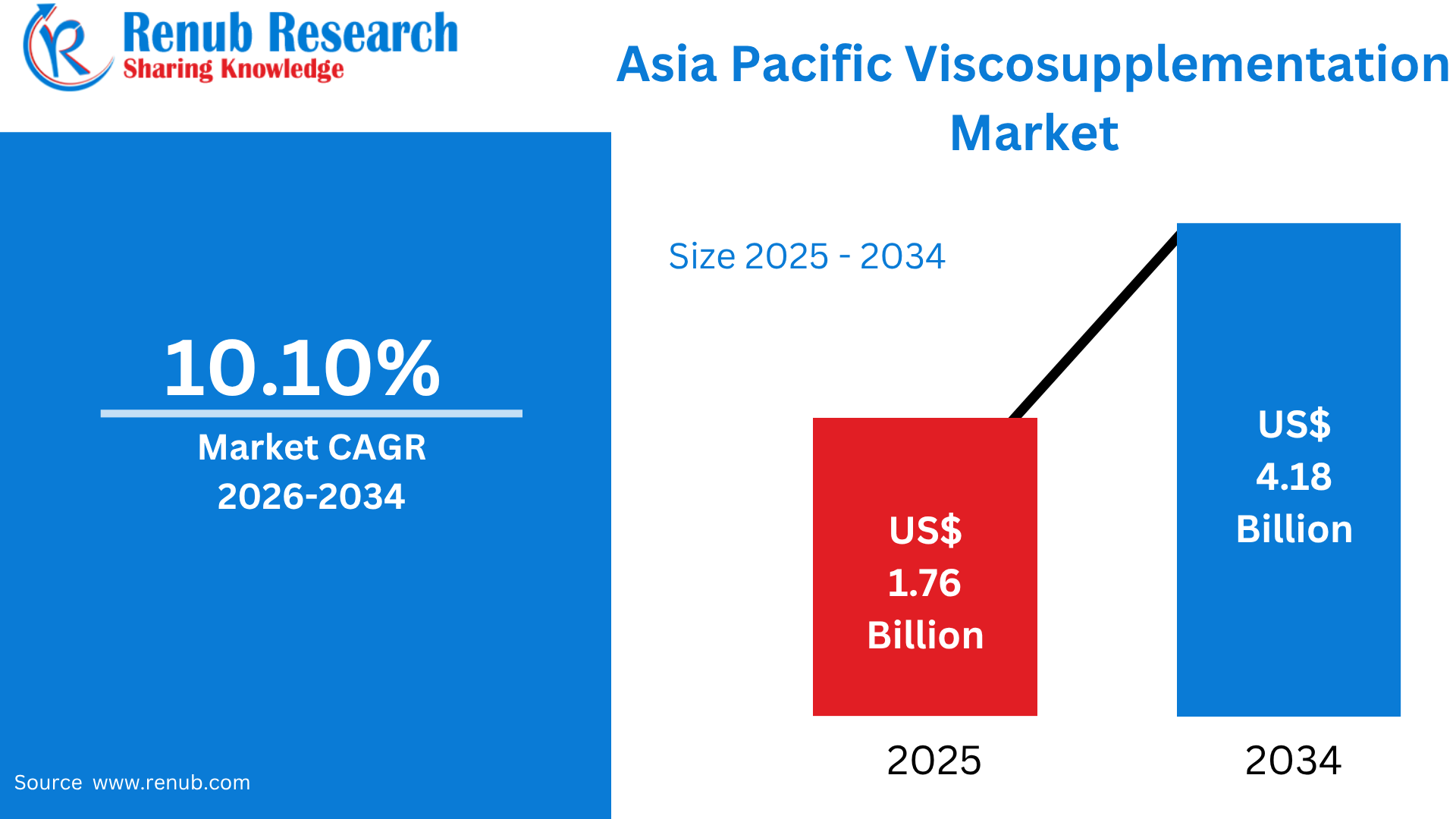
Asia Pacific Viscosupplementation Market is projected to grow from US$ 1.76 billion in 2025 to US$ 4.18 billion by 2034, expanding at a CAGR of 10.1% during 2026–2034. Market growth is being supported by the increasing prevalence of osteoarthritis, rapid population aging, rising demand for minimally invasive therapies, improvements in healthcare infrastructure, and greater awareness of non-surgical pain management solutions. In addition, viscosupplementation is gaining attention as a treatment option for managing joint pain and improving mobility, while potentially helping patients postpone or reduce the need for joint replacement surgery.
What is Viscosupplementation and Its Uses & Popularity in Asia Pacific
Viscosupplementation is a minimally invasive treatment in which hyaluronic acid (HA) is injected directly into a joint to improve lubrication, reduce friction, and relieve pain associated with osteoarthritis (OA), particularly knee osteoarthritis. Hyaluronic acid is naturally present in synovial fluid, where it helps cushion and lubricate joints. By supplementing depleted HA, viscosupplementation may improve joint mobility and provide pain relief, making it an alternative or complement to conventional pharmacological treatments and, in selected patients, a way to delay surgery.
The treatment is increasingly popular across Asia Pacific because of the region’s substantial and growing osteoarthritis burden, rapidly aging population, expanding orthopedic infrastructure, and increasing demand for non-surgical treatments. The WHO estimates that 528 million people globally were living with osteoarthritis in 2019, with older adults accounting for a large proportion.
Aisa Percentage of Population Aged 60+ (2015 vs. 2030 Projected)
- Japan: 33.1% (2015), 37.3% (2030)
- South Korea: 18.5% (2015), 31.4% (2030)
- Thailand: 15.8% (2015), 26.9% (2030)
- China: 15.2% (2015), 25.3% (2030)
- Sri Lanka: 13.9% (2015), 21.0% (2030)
- Vietnam: 10.3% (2015), 17.5% (2030)
- India: 8.9% (2015), 12.5% (2030)
- Nepal: 8.6% (2015), 10.8% (2030)
- Indonesia: 8.2% (2015), 13.2% (2030)
- Philippines: 7.3% (2015), 10.3% (2030)
- Bangladesh: 7.0% (2015), 11.5% (2030)
- Cambodia: 6.8% (2015), 10.4% (2030)
- Pakistan: 6.6% (2015), 8.4% (2030)
- Mongolia: 6.4% (2015), 11.9% (2030)
- Laos: 6.0% (2015), 8.1% (2030)
Growth Drivers of the Asia Pacific Viscosupplementation Market
Rising Prevalence of Osteoarthritis and Aging Population
The increasing prevalence of osteoarthritis across Asia Pacific is one of the strongest drivers of the viscosupplementation market. Population aging is particularly significant in countries such as Japan, China, South Korea, and India, where the number of older adults requiring long-term joint-pain management is increasing. Globally, approximately 73% of people with osteoarthritis are older than 55, while the knee is the most commonly affected joint. The Global Burden of Disease analysis also found that high-income Asia Pacific had an age-standardized OA prevalence of approximately 8,633 per 100,000 people in 2020, demonstrating the region’s substantial disease burden. India also represents a significant opportunity. Osteoarthritis affects approximately 22%–39% of the Indian population, while around 45% of women aged 65 years and above report OA symptoms. As the elderly population expands and joint degeneration becomes more common, demand for pain-relieving and mobility-enhancing therapies is expected to rise. Viscosupplementation provides an injectable, non-surgical option, particularly for patients seeking alternatives to or delaying more invasive procedures. Consequently, increasing OA prevalence, longer life expectancy, and growing orthopedic consultations are expected to sustain demand for HA-based injections throughout Asia Pacific.
Growing Preference for Minimally Invasive and Non-Surgical Treatments
The growing preference for minimally invasive therapies is another important factor supporting viscosupplementation adoption in Asia Pacific. Patients increasingly seek treatments that can relieve joint pain without requiring hospitalization, lengthy recovery periods, or major surgery. Viscosupplementation involves an intra-articular injection and is commonly used for osteoarthritis management, particularly involving the knee. Clinical consensus literature describes viscosupplementation as a treatment option for mild-to-moderate knee OA and recognizes its generally good tolerability. This trend is particularly relevant in densely populated Asian markets, where rising healthcare awareness and expanding private orthopedic services are increasing access to specialized treatments. The availability of single-injection formulations is also improving convenience. Single-injection products accounted for more than 48% of Asia Pacific viscosupplementation revenue in 2024 in one market assessment. Better patient convenience, outpatient administration, and increasing awareness of joint-preserving approaches are therefore encouraging adoption across hospitals, orthopedic clinics, and specialty centers.
Improving Healthcare Infrastructure and Product Innovation
Expansion of healthcare infrastructure and advances in hyaluronic acid formulations are creating additional opportunities for viscosupplementation in Asia Pacific. China, Japan, India, South Korea, and other emerging economies are investing in hospitals, specialty orthopedic centers, diagnostic facilities, and advanced outpatient care. As access to orthopedic specialists improves, more patients are being diagnosed and treated for osteoarthritis earlier in the disease cycle. Product innovation is also strengthening market opportunities. Manufacturers are developing different molecular-weight formulations, cross-linked HA products, and single-injection therapies intended to improve treatment duration and convenience. Research indicates that cross-linking can extend the residence time of hyaluronic acid within the joint. Increasing healthcare expenditure, specialist availability, technological improvements, and wider product choices are therefore supporting market penetration.
Challenges of the Asia Pacific Viscosupplementation Market
High Treatment Costs and Limited Insurance Coverage
High treatment costs and inadequate reimbursement remain significant barriers to viscosupplementation adoption, particularly in emerging Asia Pacific economies. Unlike basic pain-management medicines, HA injections can involve relatively high product and administration costs, making repeated treatment cycles expensive for patients paying out of pocket. This issue is particularly important in countries where private healthcare expenditure represents a substantial portion of total healthcare spending. Market analyses specifically identify high treatment costs and restricted insurance coverage as obstacles to wider viscosupplementation penetration in countries such as India and Japan. The challenge becomes more pronounced when multiple injections are required. Although single-injection products can improve convenience, their upfront price may be higher, while multi-injection regimens create additional physician visits and administration expenses. Cost sensitivity is especially important in developing Asian markets, where access to advanced orthopedic treatments can vary considerably between urban and rural populations. Limited reimbursement can therefore discourage patients from choosing viscosupplementation even when physicians consider it clinically appropriate. Expanding insurance coverage, improving reimbursement policies, introducing cost-effective HA formulations, and increasing competition among manufacturers could help reduce this barrier and make viscosupplementation more accessible to a broader patient population.
Clinical Evidence, Regulatory Differences, and Awareness Gaps
Variability in clinical recommendations, regulatory requirements, and patient awareness presents another challenge for the Asia Pacific viscosupplementation market. Although HA injections are widely used for osteoarthritis, evidence regarding their effectiveness varies across clinical guidelines and patient populations. For example, NICE recommends against offering intra-articular hyaluronan injections for osteoarthritis, illustrating that medical guidance is not uniform internationally. At the same time, other expert consensus groups recognize viscosupplementation as an option for selected patients, particularly those with mild-to-moderate knee OA. Such differences can influence physician prescribing behavior and patient confidence. Regulatory pathways also differ across China, Japan, India, South Korea, Australia, and Southeast Asian countries, potentially increasing the time and cost required to introduce new products. In addition, awareness of viscosupplementation remains uneven between major metropolitan centers and rural areas. Patients may rely primarily on oral pain medications, physiotherapy, or traditional treatments before considering injectable therapies. Strengthening physician education, generating region-specific clinical evidence, improving patient awareness, and establishing clearer reimbursement and treatment protocols will be important for broader and more consistent adoption across Asia Pacific.
Viscosupplementation Product Launches in Asia Pacific
- LG Chem – Hyruan One, South Korea (2023): LG Chem expanded the commercialization and regional distribution of Hyruan One, a hyaluronic acid-based single-injection viscosupplementation product for osteoarthritis, strengthening its presence in Asian joint-care markets.
- Seikagaku Corporation – SUPARTZ FX, Japan (2024): Seikagaku continued expanding the clinical adoption of SUPARTZ FX, an intra-articular hyaluronic acid viscosupplement used for knee osteoarthritis, supported by Japan’s established orthopedic treatment infrastructure.
- Anika Therapeutics – MONOVISC, India: MONOVISC, a single-injection hyaluronic acid viscosupplement, received regulatory approval in India for pain associated with osteoarthritis of synovial joints, marking an important expansion into the Indian market.
- Fidia Farmaceutici – HyalOne, Hong Kong/Asia Pacific: HyalOne, a single-injection hyaluronic acid product designed for knee and hip osteoarthritis, has been promoted in Asia Pacific through regional distribution channels.
- Fidia Farmaceutici – Hymovis, Hong Kong/Asia Pacific: Hymovis, based on Fidia’s HYADD4 hydrogel technology, has been introduced through regional orthopedic channels as a two-injection treatment for osteoarthritis and demanding joints.
- Fidia Farmaceutici – Hyalgan, Asia Pacific (2022 onward): Fidia expanded distribution partnerships across Asia Pacific for Hyalgan, its established hyaluronic acid viscosupplement, to improve availability in emerging Asian orthopedic markets.
- Sanofi/Genzyme – Synvisc, India & Southeast Asia: Synvisc (hylan G-F 20) continued its regional commercial expansion through healthcare distribution networks in India and Southeast Asia, supporting access to established non-surgical osteoarthritis therapy.
- LG Chem – Non-animal-derived HA injectables, APAC (February 2025): LG Chem expanded its Asia Pacific viscosupplementation portfolio with non-animal-derived hyaluronic acid injectables while increasing production capacity in South Korea and Vietnam to meet regional demand.
- Chugai Pharmaceutical – Suvenyl Next, Taiwan (2025): Chugai Pharmaceutical reportedly received regulatory approval for Suvenyl Next in Taiwan, expanding its viscosupplementation presence in the Asia Pacific region.
- Durolane – Australia: Durolane, a single-injection sodium hyaluronate viscosupplement, is among the therapeutic hyaluronic acid products approved in Australia and is indicated for several joints, including the knee, hip, ankle, shoulder, elbow, wrist, fingers, and toes.
Asia Pacific Single Injection Viscosupplementation Market
Asia Pacific single-injection viscosupplementation market is an increasingly important segment of the regional osteoarthritis treatment landscape, supported by growing demand for convenient, effective, and patient-friendly joint therapies. Single-injection formulations provide notable advantages over multi-injection regimens, including fewer clinical visits, improved treatment convenience, greater patient adherence, and lower procedural burden for healthcare providers. Demand is particularly strong in countries such as China, Japan, South Korea, and Australia, where aging populations and the rising prevalence of osteoarthritis are increasing the need for non-surgical pain-management options. Technological advances in cross-linked and high-molecular-weight hyaluronic acid have enhanced the persistence of these products within the joint, supporting their use as longer-lasting treatment alternatives. In addition, the expansion of outpatient orthopedic services and increasing preference for minimally invasive procedures are encouraging adoption. As healthcare systems across Asia Pacific increasingly prioritize patient-centered care, treatment efficiency, and reduced hospital visits, single-injection viscosupplementation is expected to gain further acceptance among physicians and patients.
Asia Pacific Hip Osteoarthritis Market
The Asia Pacific hip osteoarthritis market is becoming increasingly relevant to the regional osteoarthritis treatment landscape as degenerative joint disorders become more prevalent among aging populations. Countries including China, Japan, India, South Korea, and Australia are experiencing rising demand for therapies that can manage chronic joint pain while preserving mobility and quality of life. Factors such as population aging, increasing obesity, sedentary lifestyles, and longer life expectancy are contributing to the growing burden of hip osteoarthritis. Patients are increasingly interested in conservative and minimally invasive approaches that may help control symptoms and potentially postpone joint replacement surgery. Although viscosupplementation is more extensively established for knee osteoarthritis than hip osteoarthritis, ongoing clinical investigation and physician interest are creating opportunities for broader applications. Improvements in diagnostic imaging, orthopedic expertise, and specialized joint-care facilities are also supporting earlier identification and management of hip disorders. Furthermore, growing healthcare expenditure and expanding access to orthopedic services across emerging Asian economies are expected to strengthen the market’s development. Increasing awareness of early intervention and non-surgical disease management should further support future opportunities.
Asia Pacific Hospitals Market
Asia Pacific hospitals market represents a major end-user channel for viscosupplementation products because hospitals provide comprehensive facilities for osteoarthritis diagnosis, orthopedic consultation, imaging, and injectable treatment. Increasing healthcare expenditure, modernization of hospital infrastructure, and expansion of specialized orthopedic departments are improving access to advanced joint-care services throughout the region. Countries such as China, Japan, India, South Korea, and Australia are strengthening their healthcare capabilities to address the growing burden of musculoskeletal disorders associated with aging populations. Hospitals offer an important setting for viscosupplementation because qualified orthopedic specialists can assess patients, determine treatment suitability, and administer intra-articular injections under appropriate clinical conditions. The expansion of outpatient and day-care services is also making injectable therapies more convenient while reducing the need for prolonged hospitalization. In addition, the availability of advanced imaging technologies, including X-ray, ultrasound, and MRI, facilitates accurate assessment of joint conditions and treatment planning. As healthcare systems increasingly emphasize specialized, minimally invasive, and outpatient care, hospitals are expected to remain an important distribution and treatment channel for viscosupplementation products across Asia Pacific.
China Viscosupplementation Market
China is emerging as a major and rapidly expanding viscosupplementation market in Asia Pacific, supported by its substantial aging population, increasing osteoarthritis burden, and improving access to orthopedic healthcare. Rising healthcare expenditure, expansion of specialized orthopedic facilities, and greater awareness of minimally invasive joint treatments are encouraging the adoption of hyaluronic acid-based therapies. According to China’s National Bureau of Statistics, around 310 million people aged 60 years and above were living in China in 2024, representing more than 22% of the total population. The continued aging of the population is expected to increase demand for effective osteoarthritis management and mobility-preserving treatments. In addition, healthcare modernization initiatives and improvements in medical infrastructure are expanding access to musculoskeletal care beyond major metropolitan areas. Growing physician familiarity with injectable joint therapies and increasing patient preference for non-surgical treatment options are further supporting market development. With the country’s expanding elderly population and rising focus on improving quality of life, China is expected to remain one of the most significant contributors to viscosupplementation market growth in the Asia Pacific region.
Japan Viscosupplementation Market
Japan represents a mature yet highly attractive viscosupplementation market, supported by its exceptionally aged population, advanced healthcare infrastructure, and established orthopedic treatment ecosystem. Osteoarthritis is an important healthcare concern among older Japanese adults, creating sustained demand for therapies designed to reduce joint pain and maintain mobility. According to Japan’s Ministry of Internal Affairs and Communications, individuals aged 65 years and above represented approximately 29.3% of the country’s population in 2024. This substantial elderly demographic provides a strong patient base for osteoarthritis management solutions, including hyaluronic acid-based injections. Japanese healthcare providers also have considerable experience with viscosupplementation and other injectable therapies for joint disorders. Furthermore, increasing emphasis on healthy aging, maintaining independence, and improving mobility is encouraging older adults to seek conservative treatment before considering surgical interventions. The country’s sophisticated hospitals, specialist orthopedic clinics, and widespread healthcare access further facilitate treatment availability. Continued demographic aging, combined with established physician expertise and patient awareness, is expected to sustain demand for viscosupplementation products in Japan over the forecast period.
India Viscosupplementation Market
India’s viscosupplementation market is witnessing steady development as osteoarthritis awareness increases and access to specialized orthopedic healthcare improves. Population aging, urbanization, sedentary lifestyles, increasing obesity, and changing physical activity patterns are contributing to a growing burden of degenerative joint disorders, particularly knee osteoarthritis. Patients and physicians are increasingly considering minimally invasive treatment options that can help control pain, improve mobility, and potentially postpone or avoid joint replacement surgery in appropriate cases. India’s elderly population is expected to expand substantially, with projections indicating that more than 230 million people will be aged 60 years and above by 2036, representing approximately 15% of the country’s population. This demographic transition is expected to create a larger patient pool requiring long-term osteoarthritis management. At the same time, rising healthcare expenditure, expansion of private hospitals, increasing availability of orthopedic specialists, and improvements in diagnostic facilities are strengthening treatment access. Growing patient awareness of hyaluronic acid injections and increasing demand for outpatient, non-surgical therapies are also creating opportunities for market expansion. These demographic and healthcare trends are expected to support the long-term growth of viscosupplementation in India.
Australia Viscosupplementation Market
Australia represents a well-established viscosupplementation market, benefiting from its advanced healthcare system, developed orthopedic infrastructure, and relatively high awareness of osteoarthritis management. The country’s aging population and substantial burden of musculoskeletal disorders are supporting demand for treatments that can reduce joint pain, improve mobility, and help patients maintain an active lifestyle. Viscosupplementation is particularly relevant for patients seeking conservative management options before considering surgical procedures such as joint replacement. Australia’s strong network of hospitals, specialist orthopedic clinics, physiotherapy services, and diagnostic centers provides favorable conditions for the delivery of injectable joint therapies. In addition, growing emphasis on healthy aging and maintaining independence among older adults is encouraging greater attention to early diagnosis and long-term osteoarthritis management. Advances in diagnostic imaging and increasing availability of specialist consultations are also helping healthcare providers develop individualized treatment strategies. Although treatment adoption can be influenced by clinical guidelines, reimbursement considerations, and physician preferences, Australia’s sophisticated healthcare infrastructure continues to provide a supportive environment for viscosupplementation. Rising osteoarthritis prevalence and continued demand for minimally invasive therapies are expected to sustain market opportunities across the country.
Asia-Pacific Viscosupplementation Market Segments
Product
- Single Injection
- Three Injection
- Five Injection
Application
- Knee Osteoarthritis
- Hip Osteoarthritis
- Hand/Wrist Osteoarthritis
- Ankle/Foot Osteoarthritis
- Others
End User
- Hospitals
- Orthopedic clinics/Ambulatory Surgical Centers
Countries
- China
- Japan
- India
- South Korea
- Thailand
- Malaysia
- Indonesia
- Australia
- New Zealand
- Rest of Asia Pacific
Companies have been covered from 5 viewpoints
- Overviews
- Key Person
- Recent Developments
- SWOT Analysis
- Revenue Analysis
Key Players Analysis
- Anika Therapeutics, Inc.
- Zimmer Biomet
- Smith & Nephew PLC
- F.Hoffmann-La Roche Ltd.
- Sanofi
- Chugai Pharmaceutical Co.
- Lifecore Biomedical
- LG Life Sciences Ltd.
Report Details:
| Report Features | Details |
| Base Year |
2025 |
| Historical Period |
2022 - 2025 |
| Forecast Period |
2026 - 2034 |
| Market |
US$ Billion |
| Segment Covered |
Product, Application, End User and Countries |
| Countries Covered |
|
| Companies Covered |
|
| Customization Scope |
20% Free Customization |
| Post-Sale Analyst Support |
1 Year (52 Weeks) |
| Delivery Format |
PDF and Excel through Email (We can also provide the editable version of the report in PPT/Word format on request) |
Customization Services available
- Analysis of Market Size and Its Segments
- More Company Profiles (Upto 10 without any additional cost):
- Additional Countries (Other than mentioned Countries):
- Region/Country Specific Reports:
- Market Entry Strategy:
- Region-Specific Market Dynamics:
- Regional Market Share Analysis:
- Trade Analysis:
- Production Insights:
- Others Customized Requests:
For more information contact our analysts.
Need More Assistance?
- Talk to our analysts to get more precious information on the current market trends.
- Include more countries and segments and customize the report based on the final requirement.
- Get a competitive advantage in your industry by knowing the report findings and making a positive impact on your revenues and operations.
- Our analysts are always ready to provide more help and pertinent information if you need any additional assistance.