Asia Pacific Powder Dietary Supplements Market Report by Type, Distribution Channel, Countries and Company Analysis 2026-2034
Buy NowAsia Pacific Powder Dietary Supplements Market Size and Forecast
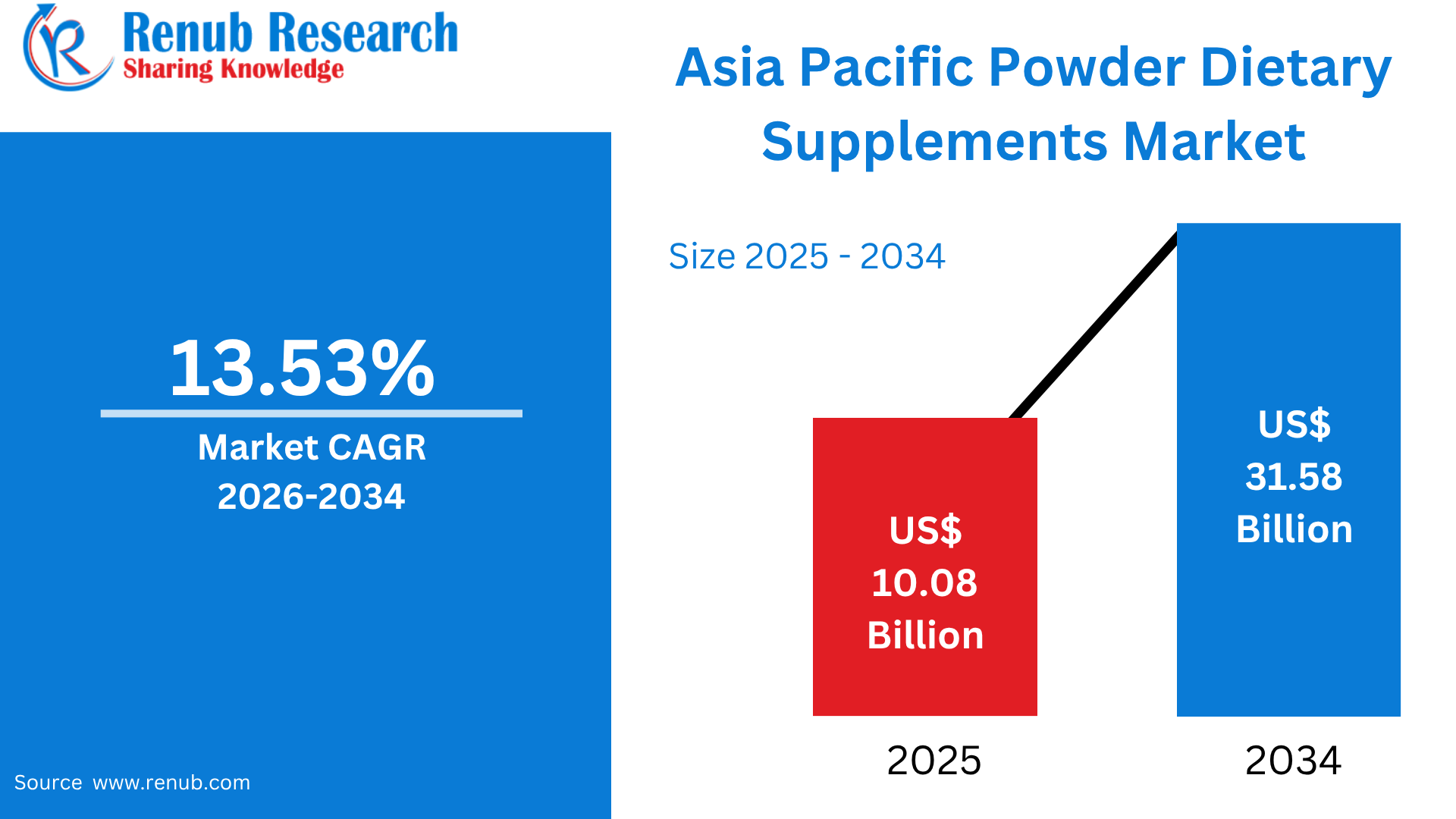
Asia Pacific Powder Dietary Supplements Market is projected to grow from US$ 10.08 billion in 2025 to US$ 31.58 billion by 2034, registering a CAGR of 13.53% during the forecast period (2026–2034). Market growth is being fueled by increasing health consciousness, fast-paced lifestyles, rising adoption of sports and fitness nutrition, and higher consumer spending on preventive healthcare. Additionally, rapid urbanization, expanding e-commerce platforms, growing disposable incomes, and increasing demand for personalized nutrition solutions are further driving the adoption of powder dietary supplements across the Asia Pacific region.
What are Powder Dietary Supplements and their Popularity in Asia
Powder dietary supplements are concentrated nutritional products formulated in powdered form to provide essential vitamins, minerals, proteins, amino acids, probiotics, fiber, herbal extracts, collagen, and other bioactive ingredients that help support overall health and wellness. These supplements are typically mixed with water, milk, smoothies, or other beverages, making them convenient and easy to consume. Powder formulations offer flexible dosage options, faster absorption, longer shelf life, and the ability to combine multiple nutrients into a single serving. They are widely used for sports nutrition, weight management, immune support, digestive health, bone and joint health, healthy aging, and general nutritional supplementation.
In the Asia Pacific region, powder dietary supplements have gained significant popularity due to rising health awareness, increasing disposable incomes, rapid urbanization, and growing participation in fitness and wellness activities. Consumers across countries such as China, Japan, India, South Korea, and Australia are increasingly adopting protein powders, collagen supplements, herbal nutrition blends, and meal replacement powders as part of their daily health routines. The expanding middle-class population, aging demographics, and growing focus on preventive healthcare have further strengthened demand. Additionally, the rapid growth of e-commerce platforms, personalized nutrition solutions, and clean-label, plant-based supplement innovations continues to accelerate the adoption of powder dietary supplements throughout the Asia Pacific market.
Top Countries with the Highest Elderly Population in 2024
- Japan – 36%
- Hong Kong SAR (China) – 31%
- South Korea – 27%
- Taiwan (Province of China) – 27%
- Thailand – 22%
- Macao SAR (China) – 21%
- China – 21%
- Armenia – 20%
- Singapore – 19%
- North Korea – 18%
- Sri Lanka – 17%
- Israel – 16%
- Türkiye – 15%
- Vietnam – 14%
- Kazakhstan – 13%
- Iran – 12%
Powder Dietary Supplements Product Launches in Asia
- September 2025 – Clove Oral Care (India) (Nutritional Wellness Division) launched a range of powder-based nutritional supplements, including plant protein and wellness blends formulated with natural ingredients to support immunity, digestive health, and daily nutrition.
- May 2025 – OZiva (India) introduced OZiva Superfood Plant Protein+, a vegan protein powder enriched with Ayurvedic herbs, digestive enzymes, and vitamins to support muscle recovery and overall wellness.
- March 2025 – Tata GoFit (India) expanded its nutrition portfolio with GoFit Plant Protein Powder, featuring pea and brown rice protein for fitness enthusiasts and active consumers.
- January 2025 – By-Health (China) launched a High-Protein Nutrition Powder fortified with collagen peptides, vitamins, and minerals to support healthy aging, muscle maintenance, and immune health.
- October 2024 – FANCL (Japan) introduced Premium Collagen Powder EX, combining low-molecular-weight collagen peptides, vitamin C, and hyaluronic acid for skin and joint health.
- August 2024 – Meiji Holdings (Japan) expanded its sports nutrition range with SAVAS Whey Protein 100 Rich Cocoa, offering higher protein content and improved amino acid composition for athletes.
- June 2024 – Amway Nutrilite (Asia Pacific) launched Nutrilite All Plant Protein Plus Powder, containing soy, wheat, and pea proteins with added phytonutrients for everyday nutrition.
- April 2024 – Blackmores (Australia) introduced Blackmores Collagen Body Powder, formulated with hydrolyzed collagen peptides and vitamin C to support skin elasticity and connective tissue health across Asian markets.
- February 2024 – CJ Wellcare (South Korea) launched a Probiotic Protein Powder combining probiotics, dietary fiber, and plant protein to promote digestive wellness and muscle recovery.
- November 2023 – Herbalife Nutrition Asia Pacific introduced Formula 1 Healthy Meal Nutritional Shake Mix (New Asian Flavors), adding region-specific flavors while enhancing protein, fiber, and vitamin content for meal replacement and weight management.
Growth Driver
Rising Health Awareness and Preventive Healthcare Spending
Growing awareness of preventive healthcare is one of the primary drivers of the Asia Pacific powder dietary supplements market. Consumers are increasingly adopting nutritional supplements to improve immunity, digestive health, bone strength, heart health, and overall wellness rather than treating illnesses after they occur. According to the World Health Organization (WHO), non-communicable diseases (NCDs) account for nearly 74% of global deaths, encouraging governments and healthcare providers to promote preventive nutrition. Countries such as Japan, South Korea, Australia, China, and Singapore have witnessed increasing healthcare expenditure and stronger public health campaigns supporting healthy lifestyles. Furthermore, Asia Pacific has one of the world’s fastest-aging populations, with Japan having nearly 30% of its population aged 65 years and above, creating significant demand for protein powders, collagen supplements, calcium formulations, and functional nutrition products. Rising disposable incomes and greater consumer willingness to invest in daily wellness products are accelerating supplement adoption. Powder formulations are particularly preferred because they offer flexible dosing, higher nutrient concentration, easy mixing with beverages, and convenient daily consumption, making them an increasingly popular choice across all age groups.
Expansion of Sports Nutrition and Active Lifestyle Trends
The rapid growth of sports participation, gym memberships, and fitness culture across Asia Pacific is significantly boosting demand for powder dietary supplements. Increasing numbers of consumers are incorporating protein powders, amino acid blends, electrolyte powders, creatine supplements, and meal replacement formulations into their daily fitness routines. According to the International Health, Racquet & Sportsclub Association (IHRSA), the global fitness industry serves over 200 million health club members, with Asia Pacific emerging as one of the fastest-growing fitness regions. Countries including China, India, Australia, Japan, and South Korea are witnessing substantial increases in fitness centers, marathon events, yoga participation, and home workout programs. Social media influencers, professional athletes, and wellness experts continue to encourage protein supplementation among younger consumers. The popularity of plant-based protein powders derived from pea, soy, and rice proteins is also expanding rapidly due to increasing vegan and vegetarian populations. Additionally, busy urban lifestyles have increased demand for convenient nutritional products that support muscle recovery, weight management, and energy enhancement, positioning powder dietary supplements as an essential component of modern health and fitness regimens.
Rapid E-commerce Growth and Personalized Nutrition Demand
The expansion of digital commerce has transformed the powder dietary supplements market across Asia Pacific by improving product accessibility and consumer education. Asia Pacific accounts for more than 60% of global e-commerce sales, with China, India, Japan, and Southeast Asian countries leading online retail growth. Consumers increasingly purchase protein powders, collagen supplements, probiotics, superfood blends, and herbal nutrition products through digital platforms due to competitive pricing, subscription models, wider product selection, and doorstep delivery. Artificial intelligence and digital health technologies are also supporting the growth of personalized nutrition by recommending customized supplement formulations based on age, lifestyle, fitness goals, and health conditions. Mobile health applications, wearable fitness devices, and online nutrition consultations have further strengthened consumer confidence in personalized dietary supplementation. The growing popularity of direct-to-consumer brands and cross-border e-commerce has enabled manufacturers to reach previously underserved markets. As internet penetration and smartphone usage continue to rise across Asia Pacific, digital sales channels are expected to remain one of the strongest long-term growth drivers for powder dietary supplements.
Challenge
Strict Regulatory Compliance and Product Approval Requirements
Regulatory complexity remains one of the biggest challenges for the Asia Pacific powder dietary supplements market. Each country follows different regulations regarding ingredient approvals, health claims, labeling standards, import procedures, and product registration. For example, Japan regulates functional supplements through the Foods with Function Claims (FFC) framework, while China requires registration or filing through the National Medical Products Administration (NMPA) for many supplement categories. Australia regulates complementary medicines under the Therapeutic Goods Administration (TGA), while India’s Food Safety and Standards Authority of India (FSSAI) establishes standards for nutraceuticals and health supplements. These differing regulatory frameworks increase compliance costs, extend product launch timelines, and complicate cross-border expansion for manufacturers. Companies must also invest heavily in scientific validation, quality testing, ingredient traceability, and manufacturing certifications such as GMP and HACCP. Smaller manufacturers often face difficulties meeting these stringent regulatory requirements, limiting market entry and reducing innovation speed. Continuous regulatory updates across Asia Pacific further require ongoing investments in compliance and product reformulation.
Counterfeit Products and Consumer Trust Issues
The increasing availability of counterfeit and low-quality dietary supplements presents a major challenge for the Asia Pacific powder dietary supplements market. The rapid expansion of online marketplaces has made it easier for unauthorized sellers to distribute products with inaccurate ingredient claims, inferior raw materials, misleading health benefits, or counterfeit branding. According to the OECD, counterfeit goods account for approximately 2.5% of global merchandise trade, with health-related products representing a growing concern in international markets. Poor-quality supplements may contain contaminants, incorrect nutrient levels, or undeclared ingredients, posing risks to consumer health and damaging confidence in legitimate manufacturers. Premium supplement brands must invest significantly in authentication technologies such as QR-code verification, tamper-proof packaging, blockchain-enabled supply chains, and third-party quality certifications to maintain consumer trust. Governments across Asia Pacific are strengthening regulations and increasing inspections to combat counterfeit products; however, illegal online sales remain difficult to eliminate completely. Maintaining product transparency, clinical validation, and brand credibility will remain essential for sustainable market growth.
Preventive Healthcare and Immunity Boosting Asia Pacific Vitamins Supplements Demand
Asia Pacific Vitamins Supplements Market is witnessing robust growth, driven by increasing health consciousness, preventive healthcare adoption, and rising demand for immunity-supporting nutritional products. Vitamin supplements, including vitamins A, B-complex, C, D, E, and K, are widely consumed to address nutritional deficiencies, improve immune function, support bone health, and enhance overall wellness. The region accounts for nearly 60% of the global population, creating substantial long-term opportunities for vitamin supplement manufacturers. Increasing urbanization, sedentary lifestyles, and changing dietary habits have contributed to micronutrient deficiencies, particularly vitamin D and vitamin B12, across several Asia Pacific countries. Aging populations in Japan, South Korea, China, and Australia are also driving demand for daily vitamin supplementation to support healthy aging and chronic disease prevention. Growing middle-class incomes, expanding e-commerce, and increasing healthcare expenditure have accelerated the adoption of premium multivitamin powders, children’s vitamin formulations, and personalized nutrition products. Manufacturers continue to introduce sugar-free, plant-based, clean-label, and fortified vitamin powders to meet evolving consumer preferences, making vitamins one of the fastest-growing categories within the Asia Pacific powder dietary supplements market.
Asia Pacific Sports Nutrition and Healthy Aging Fuel Proteins and Amino Acids Expansion
Asia Pacific Proteins and Amino Acids Market continues to expand rapidly due to increasing participation in sports, rising fitness awareness, and growing demand for high-protein nutrition among consumers of all age groups. Protein powders, branched-chain amino acids (BCAAs), essential amino acids (EAAs), collagen peptides, and plant-based protein formulations are increasingly consumed for muscle recovery, weight management, healthy aging, and overall physical performance. Asia Pacific has experienced significant growth in gym memberships, recreational sports, and home fitness programs, supporting sustained demand for protein supplementation. Furthermore, the region’s expanding elderly population has increased demand for protein-rich nutritional products to help reduce age-related muscle loss and improve mobility. Consumers are also shifting toward plant-based proteins derived from soy, pea, rice, and oats due to sustainability concerns and dietary preferences. Product innovations featuring clean-label ingredients, lactose-free formulations, enhanced digestibility, and customized amino acid blends continue to strengthen market growth. Rising disposable incomes, increasing awareness of balanced nutrition, and expanding online retail platforms are expected to sustain strong demand for protein and amino acid powder supplements throughout Asia Pacific.
Asia Pacific Digestive Health and Functional Nutrition Driving Probiotics Growth
Asia Pacific Probiotics Market is experiencing strong growth as consumers increasingly recognize the importance of gut health, digestive wellness, and immune system support. Probiotic powder supplements containing beneficial bacterial strains such as Lactobacillus and Bifidobacterium are widely used to improve digestion, restore gut microbiota, enhance nutrient absorption, and strengthen immunity. Growing scientific awareness regarding the relationship between gut health and overall wellness has significantly expanded consumer adoption across all age groups. Countries including Japan, South Korea, China, and Australia have long-established markets for probiotic foods and supplements, while India and Southeast Asian nations are witnessing rapidly rising demand. The increasing prevalence of digestive disorders, antibiotic use, unhealthy dietary patterns, and stress-related gastrointestinal conditions has further accelerated probiotic consumption. Manufacturers are introducing shelf-stable powder formulations, synbiotic combinations containing probiotics and prebiotics, children’s probiotic supplements, and personalized gut health products to meet evolving consumer needs. Expanding healthcare awareness, premium product innovation, and the growing popularity of functional nutrition continue to position probiotics as one of the most promising categories within the Asia Pacific powder dietary supplements market.
Asia Pacific Organized Retail Strengthening Consumer Access in Powder Dietary Supplements
Asia Pacific Powder Dietary Supplements Supermarkets/Hypermarkets Market remains an important distribution channel due to its ability to provide consumers with extensive product selection, competitive pricing, and convenient one-stop shopping experiences. Large retail chains offer a comprehensive portfolio of protein powders, vitamin supplements, probiotics, collagen powders, meal replacements, sports nutrition products, and herbal formulations from both domestic and international brands. Rapid expansion of organized retail across China, India, Indonesia, Thailand, Malaysia, and Vietnam has significantly improved product availability beyond major metropolitan areas. Supermarkets and hypermarkets frequently attract consumers through promotional campaigns, bundled offers, loyalty programs, and in-store nutritional guidance, encouraging higher purchase volumes. Growing consumer confidence in purchasing branded nutritional products from established retail outlets also supports sales growth. Premium shelf placement, product demonstrations, and health-focused retail sections further improve product visibility. As household disposable incomes continue to rise and consumers increasingly seek convenient shopping experiences, supermarkets and hypermarkets are expected to remain one of the leading offline sales channels for powder dietary supplements throughout the Asia Pacific region.
Asia Pacific Trusted Healthcare Retail Driving Premium Supplement Sales
Asia Pacific Powder Dietary Supplements Pharmacies and Drug Stores Market continues to expand as consumers increasingly rely on healthcare professionals and pharmacists for nutritional guidance and supplement recommendations. Pharmacies serve as trusted retail channels for clinically formulated protein powders, vitamin supplements, probiotics, amino acid blends, medical nutrition products, and therapeutic dietary supplements. Consumers managing chronic conditions, post-surgical recovery, pregnancy nutrition, pediatric health, or age-related nutritional deficiencies often prefer pharmacy-purchased products due to greater confidence in quality, authenticity, and professional advice. The rapid expansion of pharmacy chains across China, Japan, India, Australia, South Korea, and Southeast Asia has improved consumer access to specialized nutritional products. Many pharmacies have also integrated digital health services, online ordering, and home delivery, further strengthening customer convenience. Manufacturers increasingly collaborate with healthcare professionals to promote evidence-based nutritional supplementation, while premium international brands continue to expand their pharmacy presence. With rising preventive healthcare spending, increasing aging populations, and growing demand for clinically validated nutritional products, pharmacies and drug stores are expected to remain a key distribution channel supporting the long-term growth of the Asia Pacific powder dietary supplements market.
China E-Commerce Leadership and Preventive Healthcare Fuel Growth
China represents the largest powder dietary supplements market in the Asia Pacific region, driven by rapid urbanization, rising disposable incomes, and growing awareness of preventive healthcare. With a population exceeding 1.4 billion people and one of the world’s largest middle-class consumer bases, the country offers enormous opportunities for dietary supplement manufacturers. Increasing demand for protein powders, collagen supplements, herbal nutrition blends, probiotics, meal replacements, and sports nutrition products is supported by rising fitness participation and health-conscious lifestyles. China’s digital economy has significantly accelerated supplement sales through major e-commerce platforms and live-streaming commerce, enabling consumers to access both domestic and international brands. Traditional Chinese Medicine (TCM) continues to influence product development, with herbal ingredients increasingly incorporated into powder formulations. Government efforts to strengthen product quality, improve food safety regulations, and enhance consumer confidence have further supported market development. Continuous innovation in personalized nutrition, premium functional ingredients, and AI-powered health management solutions positions China as the leading force shaping powder dietary supplement trends across Asia Pacific.
Japan Healthy Aging and Premium Nutrition Supporting Demand
Japan’s powder dietary supplements market is characterized by a rapidly aging population, high healthcare awareness, and strong consumer preference for preventive nutrition. Approximately 30% of Japan’s population is aged 65 years or older, creating sustained demand for nutritional products that support healthy aging, muscle maintenance, bone strength, immunity, and digestive health. Powder supplements containing collagen peptides, protein, probiotics, dietary fiber, amino acids, vitamins, and functional botanicals are widely consumed across all age groups. Japanese consumers demonstrate strong trust in scientifically validated products and high-quality manufacturing standards, encouraging the growth of premium supplement brands. Convenience stores, pharmacies, supermarkets, and online retail platforms provide widespread product availability, while subscription-based nutrition services continue to expand. Manufacturers increasingly focus on clean-label formulations, low-sugar products, natural ingredients, and personalized nutrition tailored to specific health needs. Continuous innovation in functional foods, combined with strict quality regulations and high consumer purchasing power, enables Japan to remain one of Asia Pacific’s most mature and high-value powder dietary supplements markets.
India Rising Fitness Culture and Expanding Consumer Base Driving Growth
India has emerged as one of the fastest-growing powder dietary supplements markets in Asia Pacific, supported by increasing health awareness, rapid urbanization, rising disposable incomes, and growing participation in fitness and wellness activities. Home to a population exceeding 1.4 billion people, India offers significant long-term growth opportunities for protein powders, herbal nutrition products, probiotics, meal replacement powders, and weight management supplements. Increasing gym memberships, sports participation, yoga adoption, and preventive healthcare awareness have accelerated demand among younger consumers and working professionals. Traditional ingredients such as ashwagandha, turmeric, moringa, and amla continue to influence product innovation, alongside modern sports nutrition formulations. The rapid expansion of e-commerce platforms and digital payment systems has improved product accessibility across metropolitan cities as well as Tier II and Tier III markets. Although price sensitivity remains a challenge, growing middle-class purchasing power and stronger regulatory oversight by food authorities are improving consumer confidence, making India one of the region’s highest-growth markets for powder dietary supplements.
South Korea Beauty, Wellness, and Functional Nutrition Accelerating Expansion
South Korea’s powder dietary supplements market is driven by the country’s highly developed beauty, wellness, and preventive healthcare culture. Consumers increasingly purchase protein powders, collagen supplements, probiotics, detox formulations, amino acid blends, and functional nutrition products to support both health and physical appearance. The country’s technologically advanced digital ecosystem has transformed supplement purchasing through e-commerce, mobile applications, live commerce, and influencer-driven marketing. South Korea has one of the highest internet and smartphone penetration rates globally, enabling rapid adoption of personalized nutrition solutions and direct-to-consumer supplement brands. Premium products featuring clinically researched ingredients, clean-label formulations, plant-based proteins, and scientifically validated health claims continue to gain strong consumer acceptance. Government regulations emphasizing product safety, manufacturing quality, and transparent labeling have strengthened market credibility while encouraging innovation. Growing fitness participation, increasing demand for anti-aging nutrition, and the influence of K-beauty and K-wellness trends continue to position South Korea as one of the most innovative and premium powder dietary supplements markets in the Asia Pacific region.
Recent Developments in Asia Pacific Powder Dietary Supplements Market
- In January 2024, Dr. Reddy’s strengthened its women’s health portfolio by acquiring the MenoLabs business from Amyris during the company’s Chapter 11 proceedings. The deal gives Dr. Reddy’s full ownership of MenoLabs’ seven-brand dietary supplement range designed for perimenopause and menopause symptom relief. This strategic expansion enhances the company’s position in the rapidly growing women’s health supplement market.
- In April 2023, Kirin Holdings Co. Ltd advanced its diversification strategy by acquiring Australian vitamin manufacturer Blackmores Ltd for USD 1.2 billion. The acquisition marks a significant step in Kirin’s shift beyond its traditional alcoholic beverage business into the broader health and wellness sector. It also offered Blackmores’ shareholders a favorable exit amid a challenging market climate.
Asia Pacific Powder Dietary Supplements Market Segments
Type
- Vitamins
- Minerals
- Proteins and Amino Acids
- Herbal Supplements
- Fatty Acids
- Probiotics
- Other Types
Distribution Channel
- Supermarkets/Hypermarkets
- Pharmacies and Drug Stores
- Convenience/Grocery Stores
- Online Retail Stores
- Other Distribution Channels
Countries
- Australia
- China
- India
- Indonesia
- Japan
- Malaysia
- New Zealand
- Pakistan
- South Korea
- Rest of Asia Pacific
All companies have been covered with 5 Viewpoints
- Overviews
- Key Person
- Recent Developments
- SWOT Analysis
- Revenue Analysis
Key players
- Abbott Laboratories
- The Carlyle Group
- Bayer AG
- GlaxoSmithKline PLC
- Amway Corporation
- Now Health Group Inc.
- Pfizer Inc.
- Herbalife International of America Inc.
- Cipla Inc.
- Dabur India Ltd
Report Details:
| Report Features | Details |
| Base Year |
2024 |
| Historical Period |
2021 - 2024 |
| Forecast Period |
2025 - 2033 |
| Market |
US$ Billion |
| Segment Covered |
Type, Distribution Channel and Countries |
| Countries Covered |
|
| Companies Covered |
|
| Customization Scope |
20% Free Customization |
| Post-Sale Analyst Support |
1 Year (52 Weeks) |
| Delivery Format |
PDF and Excel through Email (We can also provide the editable version of the report in PPT/Word format on request) |
Customization Services available
- Analysis of Market Size and Its Segments
- More Company Profiles (Upto 10 without any additional cost):
- Additional Countries (Other than mentioned Countries):
- Region/Country Specific Reports:
- Market Entry Strategy:
- Region-Specific Market Dynamics:
- Regional Market Share Analysis:
- Trade Analysis:
- Production Insights:
- Others Customized Requests:
For more information contact our analysts.
Need More Assistance?
- Talk to our analysts to get more precious information on the current market trends.
- Include more countries and segments and customize the report based on the final requirement.
- Get a competitive advantage in your industry by knowing the report findings and making a positive impact on your revenues and operations.
- Our analysts are always ready to provide more help and pertinent information if you need any additional assistance.