Anti-venom Market Size, Share, Growth, Trends, Industry Analysis & Forecast 2026–2034
Buy NowGlobal Anti-Venom Industry Size
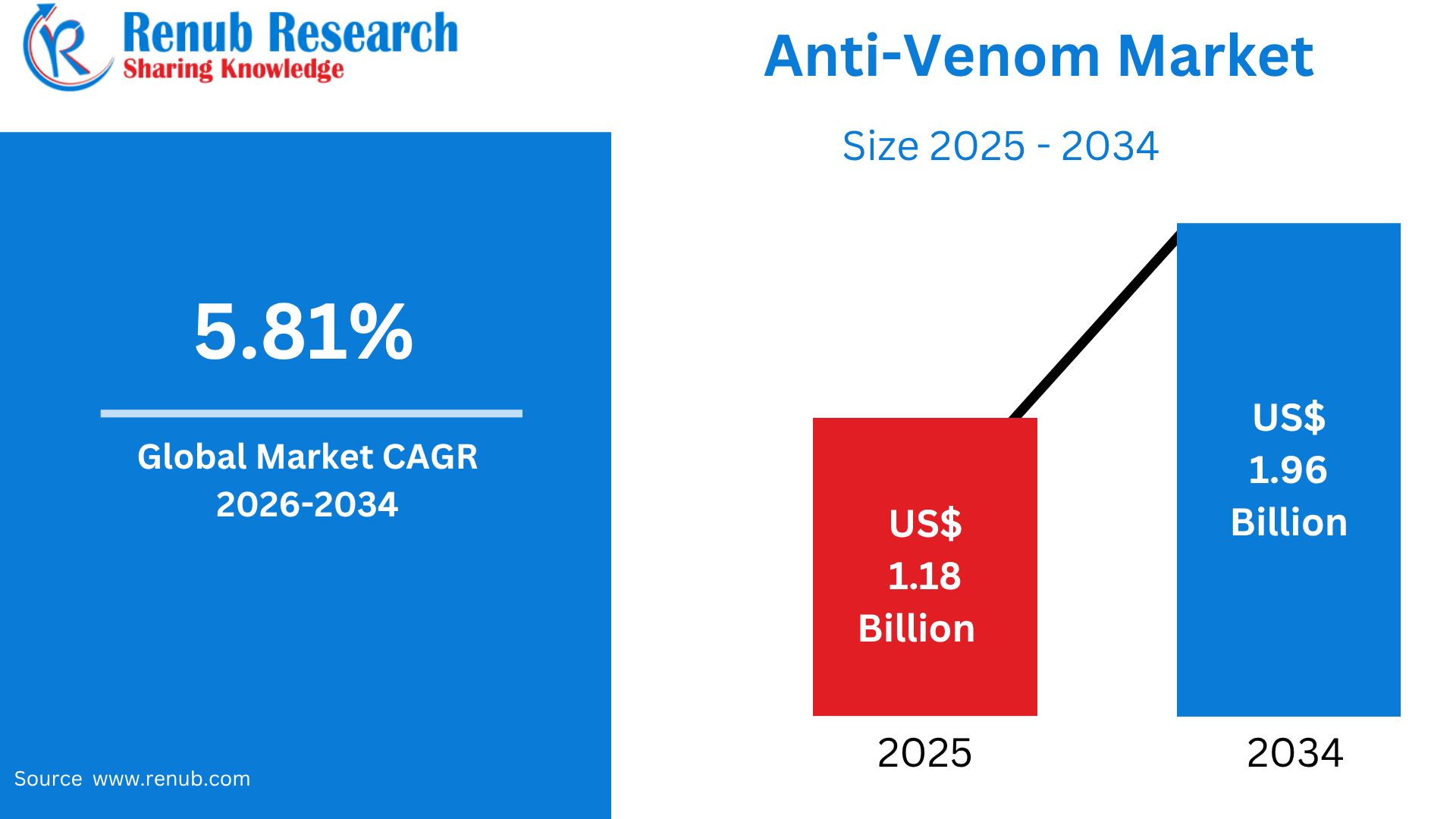
Anti-venom Market is projected to increase from US$ 1.18 billion in 2025 to US$ 1.96 billion by 2034, registering a compound annual growth rate (CAGR) of 5.81% during the forecast period from 2026 to 2034. Market growth is primarily driven by the rising incidence of snakebites, scorpion stings, and other venomous animal envenomation cases, particularly in tropical and rural regions. Increasing awareness about the importance of timely medical intervention, along with improved access to healthcare services and emergency treatment, is contributing to higher demand for anti-venom therapies.
Anti-venom Market Outlooks
Anti-venom, which is otherwise known as antivenin, is a type of medical treatment that is used to prevent and treat the effects of venom from poisonous animals that may bite or sting. The process of preparing anti-venom is done by obtaining venom from poisonous animals, which is then injected into other animals, such as horses or sheep. The immune system of the animal is then able to produce antibodies that are later harvested to make anti-venom. Anti-venom is then introduced into an individual’s body, where it is able to bind with the poisonous substances of the venom, hence protecting the body from its effects.
Anti-venom is considered to be a very valuable commodity globally, especially in regions that are commonly invaded by poisonous animal bites or stings. Anti-venom is commonly used in Asia, Africa, Latin America, and Australia. Anti-venom is considered to be very popular today because of the awareness and availability of health care services. Anti-venom is considered to be a very valuable commodity in today’s health care system globally because of its ability to save lives by protecting against complications that may arise from poisonous bites.
What is Anti-venom and Its Uses & Popularity Worldwide
Anti-venom is a biological medicine used to treat poisoning caused by the bites or stings of venomous animals, including snakes, scorpions, spiders, jellyfish, and certain marine species. It is produced by immunizing animals, usually horses or sheep, with small, controlled amounts of venom to stimulate the production of antibodies. These antibodies are then purified to create anti-venom, which neutralizes venom toxins once administered to an affected patient. Anti-venom is primarily used in hospitals and emergency care settings to prevent severe complications such as paralysis, internal bleeding, organ failure, tissue damage, and death. Early administration significantly improves survival rates and reduces long-term disability, making anti-venom one of the most effective treatments for venomous envenomation. Different anti-venoms are developed to target specific snake species or multiple venomous species, depending on regional requirements and venom composition.
Globally, anti-venom remains an essential component of emergency healthcare, particularly in tropical and subtropical regions where venomous snakes and scorpions are common. Countries across Asia, Africa, Latin America, and Oceania experience hundreds of thousands of venomous bites annually, creating continuous demand for effective anti-venom products. Governments, public health organizations, and international agencies are investing in improved anti-venom production, distribution, and accessibility to reduce mortality and disability associated with envenomation. Advances in biotechnology, purification methods, and quality control have enhanced the safety and efficacy of modern anti-venoms while reducing adverse reactions. Growing awareness among healthcare professionals, expansion of rural healthcare infrastructure, and global initiatives to improve emergency treatment access continue to increase the popularity and utilization of anti-venom therapies worldwide.
Global Snakebite Burden and Public Health Impact
Snakebite remains a major global public health challenge and was officially recognized by the World Health Organization (WHO) as a Neglected Tropical Disease (NTD) in 2017. Each year, an estimated 2.7 million people experience snakebite envenoming worldwide, leading to approximately 81,000–138,000 deaths and nearly 400,000 cases of permanent disability, including amputations and severe tissue damage. The burden is disproportionately concentrated in low- and middle-income countries, where agricultural occupations, poor socioeconomic conditions, limited public awareness, and inadequate access to healthcare increase both the risk of snakebites and the likelihood of adverse outcomes. Asia reports the highest incidence globally, accounting for up to 2 million envenomation cases annually, followed by Africa with an estimated 435,000–580,000 cases each year. South Asia—including India, Sri Lanka, Pakistan, Nepal, and Bangladesh—accounts for approximately 96,600 snakebite deaths, representing nearly 70% of global mortality. In Southeast Asia, countries such as Indonesia, Myanmar, and Thailand are estimated to experience approximately 15,900 snakebite-related deaths annually, highlighting the urgent need for improved anti-venom availability, healthcare access, and public health interventions.
India’s Snakebite Burden and Anti-snake Venom Treatment Landscape
India bears one of the world’s highest snakebite burdens, with an estimated 3–4 million snakebite incidents annually, resulting in approximately 50,000 deaths each year, accounting for nearly 50% of global snakebite fatalities. However, the actual disease burden is believed to be substantially higher, as many snakebite victims in rural and remote areas do not seek treatment at healthcare facilities, leading to significant underreporting. According to the Central Bureau of Health Intelligence (CBHI), the country recorded an average of around 300,000 reported snakebite cases and approximately 2,000 reported deaths annually between 2016 and 2020.
Approximately 90% of venomous snakebites in India are caused by the country’s “Big Four” species—Indian cobra, common krait, Russell’s viper, and saw-scaled viper. Polyvalent anti-snake venom (ASV), formulated to neutralize venom from these four species, is effective in treating nearly 80% of envenomation cases. Despite this, challenges including shortages of trained healthcare professionals, limited access to well-equipped treatment facilities, and insufficient data on snakebite incidence, mortality, morbidity, treatment outcomes, and socioeconomic impact continue to hinder effective snakebite management and public health planning across the country.
Growth Driver
Rising Incidence of Snakebites and Other Venomous Animal Envenomation
The increasing number of snakebites, scorpion stings, and other venomous animal attacks is one of the primary growth drivers of the global anti-venom market. According to global health estimates, approximately 5.4 million snakebites occur every year, resulting in 1.8–2.7 million cases of envenomation and 81,000–138,000 deaths annually. In addition, nearly 400,000 survivors suffer permanent disabilities such as amputations, tissue necrosis, or chronic complications. Rural populations in Asia, Sub-Saharan Africa, Latin America, and parts of Oceania remain the most vulnerable due to frequent agricultural activities and limited access to emergency healthcare. Scorpion stings also affect more than one million people annually worldwide, particularly in North Africa, the Middle East, India, and Latin America. Growing awareness of these public health challenges has encouraged governments and healthcare organizations to strengthen anti-venom procurement, emergency preparedness, and rural healthcare infrastructure. The persistent burden of venomous animal attacks continues to create stable long-term demand for effective anti-venom therapies worldwide.
Government Initiatives and Improved Healthcare Accessibility
Government programs and international public health initiatives are significantly supporting the expansion of the anti-venom market. The World Health Organization (WHO) has identified snakebite envenoming as a high-priority neglected tropical disease, encouraging countries to improve anti-venom production, strengthen supply chains, and expand treatment availability in high-risk regions. Many governments are increasing investments in emergency care facilities, rural hospitals, and community health centers to ensure timely access to life-saving anti-venom. Public awareness campaigns are also educating populations about the importance of immediate medical treatment following venomous bites and stings, reducing reliance on traditional remedies. Improvements in transportation networks and emergency medical services have enhanced the distribution of anti-venom products to remote communities where envenomation rates are highest. In addition, public-private partnerships and international funding programs continue supporting anti-venom manufacturing and stockpiling. These coordinated healthcare improvements are increasing treatment accessibility and contributing significantly to the sustained growth of the global anti-venom market.
Advancements in Biotechnology and Anti-venom Manufacturing
Technological advancements in biotechnology and biologics manufacturing are improving the safety, effectiveness, and availability of anti-venom products. Modern purification techniques have significantly reduced the risk of allergic reactions and serum sickness associated with traditional equine-derived anti-venoms. Manufacturers are increasingly adopting advanced plasma fractionation, chromatographic purification, and recombinant antibody technologies to enhance product quality and consistency. Research institutions are also developing monoclonal antibody-based anti-venoms and next-generation recombinant therapies that may offer broader venom neutralization with fewer adverse effects. Improved quality control standards and cold-chain logistics have strengthened product stability and distribution across international markets. Several manufacturers are expanding production capacity to address shortages in regions with high snakebite incidence. Growing investments in venom research, toxin characterization, and species-specific anti-venom development continue to improve clinical outcomes. Continuous innovation in manufacturing technologies and biologic therapeutics is expected to accelerate product availability and support long-term growth of the global anti-venom market.
Challenges
Limited Availability and Supply Shortages in High-Burden Regions
Despite increasing global demand, limited production capacity and inadequate distribution continue to challenge the anti-venom market. Many low- and middle-income countries with the highest incidence of snakebites and scorpion stings experience chronic shortages of quality-assured anti-venom products. Production is concentrated among a relatively small number of specialized manufacturers, making global supply vulnerable to manufacturing disruptions and regulatory delays. Anti-venom products require complex biological production processes, specialized facilities, and strict quality assurance, limiting rapid capacity expansion. In remote rural communities, poor transportation infrastructure and inadequate cold-chain storage often delay product delivery, reducing treatment effectiveness. High inventory costs and relatively low commercial profitability discourage manufacturers from entering smaller regional markets. In addition, mismatches between available anti-venom products and local venomous species can reduce treatment efficacy. Addressing manufacturing limitations, improving regional production capabilities, and strengthening distribution networks remain essential for ensuring equitable access to life-saving anti-venom therapies worldwide.
High Production Costs and Risk of Adverse Reactions
The high cost of anti-venom production and the potential for adverse reactions remain significant barriers to market growth. Manufacturing anti-venom involves maintaining venomous animals, immunizing horses or sheep, collecting plasma, purifying antibodies, and performing rigorous quality testing, making production both time-consuming and expensive. As a result, treatment costs can be substantial, particularly in countries without government subsidies or comprehensive health insurance. Furthermore, conventional animal-derived anti-venoms may cause hypersensitivity reactions, including anaphylaxis, fever, rash, and serum sickness, requiring careful medical supervision during administration. These risks may discourage use in healthcare facilities with limited emergency resources. Regulatory approval processes are also stringent, requiring extensive clinical evaluation to demonstrate safety and efficacy. Although newer purification methods and recombinant technologies are improving product safety, widespread adoption remains limited by development costs and manufacturing complexity. Reducing production expenses while improving product safety continues to be a major challenge for the global anti-venom market.
Anti-venom Product Launches Worldwide
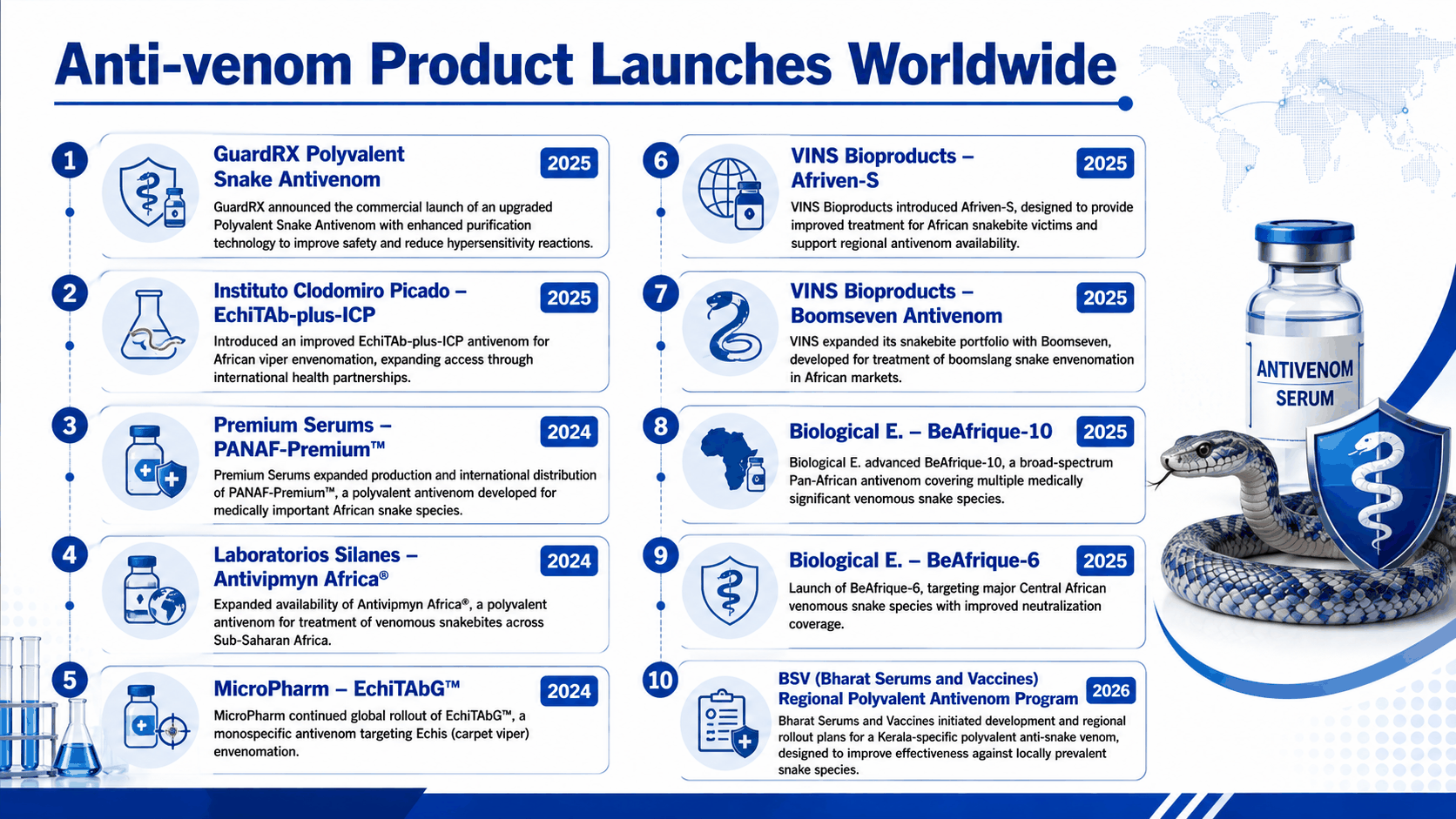
- GuardRX Polyvalent Snake Antivenom (2025) – GuardRX announced the commercial launch of an upgraded Polyvalent Snake Antivenom with enhanced purification technology to improve safety and reduce hypersensitivity reactions.
- Instituto Clodomiro Picado – EchiTAb-plus-ICP (2025) – Introduced an improved EchiTAb-plus-ICP antivenom for African viper envenomation, expanding access through international health partnerships.
- Premium Serums – PANAF-Premium™ (2024) – Premium Serums expanded production and international distribution of PANAF-Premium™, a polyvalent antivenom developed for medically important African snake species.
- Laboratorios Silanes – Antivipmyn Africa® (2024) – Expanded availability of Antivipmyn Africa®, a polyvalent antivenom for treatment of venomous snakebites across Sub-Saharan Africa.
- MicroPharm – EchiTAbG™ (2024) – MicroPharm continued global rollout of EchiTAbG™, a monospecific antivenom targeting Echis (carpet viper) envenomation.
- VINS Bioproducts – Afriven-S (2025) – VINS Bioproducts introduced Afriven-S, designed to provide improved treatment for African snakebite victims and support regional antivenom availability.
- VINS Bioproducts – Boomseven Antivenom (2025) – VINS expanded its snakebite portfolio with Boomseven, developed for treatment of boomslang snake envenomation in African markets.
- Biological E. – BeAfrique-10 (2025) – Biological E. advanced BeAfrique-10, a broad-spectrum Pan-African antivenom covering multiple medically significant venomous snake species.
- Biological E. – BeAfrique-6 (2025) – Launch of BeAfrique-6, targeting major Central African venomous snake species with improved neutralization coverage.
- BSV (Bharat Serums and Vaccines) Regional Polyvalent Antivenom Program (2026) – Bharat Serums and Vaccines initiated development and regional rollout plans for a Kerala-specific polyvalent anti-snake venom, designed to improve effectiveness against locally prevalent snake species.
Polyvalent Anti-venom Broad-Spectrum Protection Driving Global Demand
The polyvalent anti-venom market represents the largest segment of the global anti-venom industry because these products are designed to neutralize venom from multiple snake species using a single formulation. Polyvalent anti-venoms are particularly valuable in regions where several medically important venomous snakes coexist and accurate species identification is difficult. Globally, approximately 5.4 million snakebites occur each year, resulting in 1.8–2.7 million envenomation cases, creating substantial demand for broad-spectrum therapies. Polyvalent anti-venoms are widely used across Asia, Africa, and Latin America, where healthcare providers require immediate treatment before identifying the offending snake. Governments and public health agencies frequently prioritize stocking polyvalent anti-venoms because they simplify inventory management and improve emergency preparedness. Advances in antibody purification, plasma fractionation, and quality control have improved product safety while reducing adverse reactions. Increasing investments in neglected tropical disease programs, expanding rural healthcare access, and strengthening emergency response systems continue to support long-term growth of the global polyvalent anti-venom market.
Monovalent Anti-venom Species-Specific Treatment Improving Clinical Outcomes
The monovalent anti-venom market continues to expand due to increasing emphasis on highly targeted treatment for specific venomous species. Monovalent anti-venoms are developed to neutralize venom from a single snake or venomous animal species, offering greater specificity and often requiring lower treatment doses than polyvalent alternatives. These products are widely used in countries where venomous species are well documented and rapid species identification is possible. Clinical studies have demonstrated that species-specific anti-venoms can improve treatment efficiency while reducing unnecessary antibody exposure and minimizing hypersensitivity reactions. Developed healthcare systems increasingly utilize monovalent products alongside advanced diagnostic protocols to optimize patient care. Improvements in venom characterization, molecular toxin analysis, and recombinant antibody development are further enhancing therapeutic performance. Although monovalent anti-venoms require precise identification of the biting species, their high efficacy makes them an essential component of emergency medicine. Continued investment in precision biologics and species-specific research is expected to support steady growth of the global monovalent anti-venom market.
Scorpion Anti-venom Rising Demand in Tropical and Desert Regions
The global scorpion anti-venom market is expanding steadily due to the persistent burden of scorpion stings in tropical, subtropical, and desert regions. Worldwide, more than one million scorpion stings are estimated to occur annually, with children and elderly individuals facing the highest risk of severe complications. Regions across North Africa, the Middle East, India, Mexico, Brazil, and other parts of Latin America account for a large proportion of medically significant envenomation cases. Scorpion anti-venom rapidly neutralizes venom toxins, reducing the risk of cardiovascular complications, respiratory failure, neurological symptoms, and death. Governments in endemic countries continue expanding emergency medical services and maintaining strategic anti-venom stockpiles to improve treatment accessibility. Manufacturers are also enhancing purification technologies to improve product safety and reduce allergic reactions. Increasing physician awareness, strengthening healthcare infrastructure, and expanding public education regarding early medical intervention continue to support sustained growth of the global scorpion anti-venom market.
Spider Anti-venom Specialized Therapy for Severe Spider Envenomation
The spider anti-venom market represents a specialized but important segment of the global anti-venom industry. Although most spider bites produce mild symptoms, medically significant species such as widow spiders, funnel-web spiders, and certain recluse spiders can cause severe neurological, cardiovascular, and systemic complications requiring urgent treatment. Countries including Australia, Brazil, the United States, and parts of Latin America maintain specialized anti-venom programs to manage high-risk spider envenomation. Spider anti-venom is primarily administered in hospitals and emergency departments when severe clinical symptoms develop or life-threatening toxicity is confirmed. Ongoing research into venom proteins and toxin mechanisms has improved understanding of spider venom composition, supporting development of safer and more effective anti-venom therapies. Public awareness campaigns, improved emergency response systems, and expansion of poison control networks continue strengthening clinical management of venomous spider bites. Continued investment in biotechnology and toxin research is expected to support moderate long-term growth in the global spider anti-venom market.
Anti-venom Hospitals Primary Distribution Channel for Emergency Treatment
Hospitals represent the dominant end-user segment within the global anti-venom market because virtually all severe venomous bites and stings require immediate medical evaluation and supervised administration of anti-venom. Every year, 1.8–2.7 million people worldwide require treatment for snakebite envenomation, while millions more seek medical care for scorpion stings and other venomous animal injuries. Hospitals maintain specialized emergency departments, intensive care units, and critical care facilities capable of managing complications such as respiratory paralysis, hemorrhage, shock, renal failure, and severe allergic reactions. Public hospitals in high-incidence countries often maintain dedicated anti-venom inventories as part of national emergency preparedness programs. Improvements in cold-chain storage, inventory management, emergency transportation, and physician training have strengthened hospital-based treatment capacity. Increasing government investment in rural hospitals, trauma centers, and emergency medicine infrastructure continues expanding access to life-saving anti-venom therapies. As healthcare systems strengthen globally, hospitals are expected to remain the largest and most important distribution channel for anti-venom products.
United States Advanced Healthcare Infrastructure Supporting Anti-venom Specialized Treatment
The United States anti-venom market is expanding steadily due to increasing awareness of venomous animal envenomation and the availability of advanced emergency healthcare services. Although the country records significantly fewer snakebite fatalities than many tropical nations, an estimated 7,000–8,000 venomous snakebites occur annually, primarily involving pit vipers such as rattlesnakes, copperheads, and cottonmouths. Arizona, Texas, Florida, and California account for a large proportion of reported cases. In addition to snakebites, scorpion stings are common in the southwestern United States, particularly Arizona. Hospitals and poison control centers maintain specialized anti-venom inventories to ensure rapid treatment of severe envenomation. Continuous improvements in emergency medicine, trauma care, and intensive care facilities have significantly reduced mortality rates. Pharmaceutical companies continue investing in improved biologic therapies with enhanced safety profiles and longer shelf life. Increasing physician training, strengthened emergency response systems, and ongoing research into recombinant antibody technologies are expected to support continued growth of the United States anti-venom market.
Anti-venom Specialized Import-Based United Kingdom Market for Rare Envenomation Cases
The United Kingdom anti-venom market is relatively small but highly specialized because the country has very few medically significant native venomous animals. The European adder (Vipera berus) is the only venomous snake native to the UK, with approximately 100–200 bites reported annually, most of which result in mild or moderate symptoms. However, specialized anti-venom demand is supported by imported exotic snake exposures involving privately owned reptiles, zoological collections, and research institutions. Major hospitals and designated toxicology centers maintain access to anti-venom products through national emergency distribution systems capable of supplying treatments for numerous exotic venomous species. Strong healthcare infrastructure, centralized poison information services, and highly trained emergency physicians ensure rapid clinical management of envenomation cases. The UK also contributes significantly to venom research, toxin biology, and clinical toxicology through academic institutions and collaborative research programs. Continued investment in emergency preparedness and international anti-venom procurement is expected to sustain steady growth in the United Kingdom anti-venom market.
India High Snakebite Burden Driving Significant Market Demand
India represents one of the world’s largest anti-venom markets due to its exceptionally high incidence of snakebite envenomation. The country reports millions of snakebite incidents annually, with an estimated 58,000 snakebite-related deaths each year, making snakebite a major public health concern. Rural agricultural communities remain particularly vulnerable because of frequent exposure to venomous snakes, including the “Big Four” species—Indian cobra, common krait, Russell’s viper, and saw-scaled viper. Polyvalent anti-venom remains the standard treatment across hospitals and primary healthcare centers because it protects multiple medically important species. Government health programs continue strengthening anti-venom production, procurement, and distribution to underserved rural regions. Expansion of trauma centers, emergency transport systems, and physician training has improved patient survival rates. Domestic manufacturers continue increasing production capacity while investing in improved purification technologies and quality standards. Rising public awareness, stronger healthcare infrastructure, and continued government support are expected to drive sustained long-term growth of India’s anti-venom market.
Saudi Arabia Anti-venom Government Healthcare Investment Strengthening Emergency Care
Saudi Arabia’s anti-venom market is growing steadily due to the presence of venomous snakes and scorpions across desert and semi-arid regions. Scorpion stings remain one of the most common venom-related medical emergencies, while venomous snakes such as horned vipers, carpet vipers, and cobras contribute to seasonal envenomation cases, particularly in rural provinces. The Saudi healthcare system has established well-equipped emergency departments and regional hospitals that maintain strategic anti-venom stockpiles to ensure timely treatment. Government investment in healthcare modernization under Vision 2030 has strengthened emergency medicine capabilities, hospital infrastructure, and nationwide medical logistics. Continuous physician education and public awareness campaigns encourage rapid hospital treatment following venomous bites and stings, reducing complications and mortality. Research institutions are also working to improve understanding of regional venom composition to enhance anti-venom effectiveness. Growing healthcare expenditure, improved emergency preparedness, and expanding access to specialized biologic therapies are expected to support the long-term development of the Saudi Arabian anti-venom market.
Market Segmentation
Type
- Polyvalent Anti-Venom
- Monovalent Anti-Venom
Animal Type
- WheatSnake
- Scorpion
- Spider
- Others
End-User
- Clinics
- Hospitals
- Ambulatory Surgical Centers
- Others
Countries
North America
- United States
- Canada
Europe
- France
- Germany
- Italy
- Spain
- United Kingdom
- Belgium
- Netherlands
- Turkey
Asia Pacific
- China
- Japan
- India
- Australia
- South Korea
- Thailand
- Malaysia
- Indonesia
- New Zealand
Latin America
- Brazil
- Mexico
- Argentina
Middle East & Africa
- South Africa
- Saudi Arabia
- United Arab Emirates
All companies have been covered with 5 Viewpoints
- Overviews
- Key Person
- Recent Developments
- SWOT Analysis
- Revenue Analysis
Company Analysis:
- Bharat Serums and Vaccines Limited (BSV)
- Boehringer Ingelheim International GmbH
- Boston Scientific Corporation
- CSL Limited
- Merck & Co. Inc.
- Merck KGaA
- Pfizer Inc.
- Haffkine Bio-Pharmaceutical Corporation Limited
Report Details:
| Report Features | Details |
| Base Year |
2025 |
| Historical Period |
2022 - 2025 |
| Forecast Period |
2026 - 2034 |
| Market |
US$ Billion |
| Segment Covered |
Type, Animal Type, End-User and Countries |
| Countries Covered |
|
| Companies Covered |
|
| Customization Scope |
20% Free Customization |
| Post-Sale Analyst Support |
1 Year (52 Weeks) |
| Delivery Format |
PDF and Excel through Email (We can also provide the editable version of the report in PPT/Word format on request) |
Customization Services available
- Analysis of Market Size and Its Segments
- More Company Profiles (Upto 10 without any additional cost):
- Additional Countries (Other than mentioned Countries):
- Region/Country Specific Reports:
- Market Entry Strategy:
- Region-Specific Market Dynamics:
- Regional Market Share Analysis:
- Trade Analysis:
- Production Insights:
- Others Customized Requests:
For more information contact our analysts.
Need More Assistance?
- Talk to our analysts to get more precious information on the current market trends.
- Include more countries and segments and customize the report based on the final requirement.
- Get a competitive advantage in your industry by knowing the report findings and making a positive impact on your revenues and operations.
- Our analysts are always ready to provide more help and pertinent information if you need any additional assistance.