Global Alzheimer’s Drugs Market Report by Drug Class, Drug Type, Distribution Channel, Countries and Company Analysis 2026-2034
Buy NowAlzheimer’s Drugs Market Size & Forecast
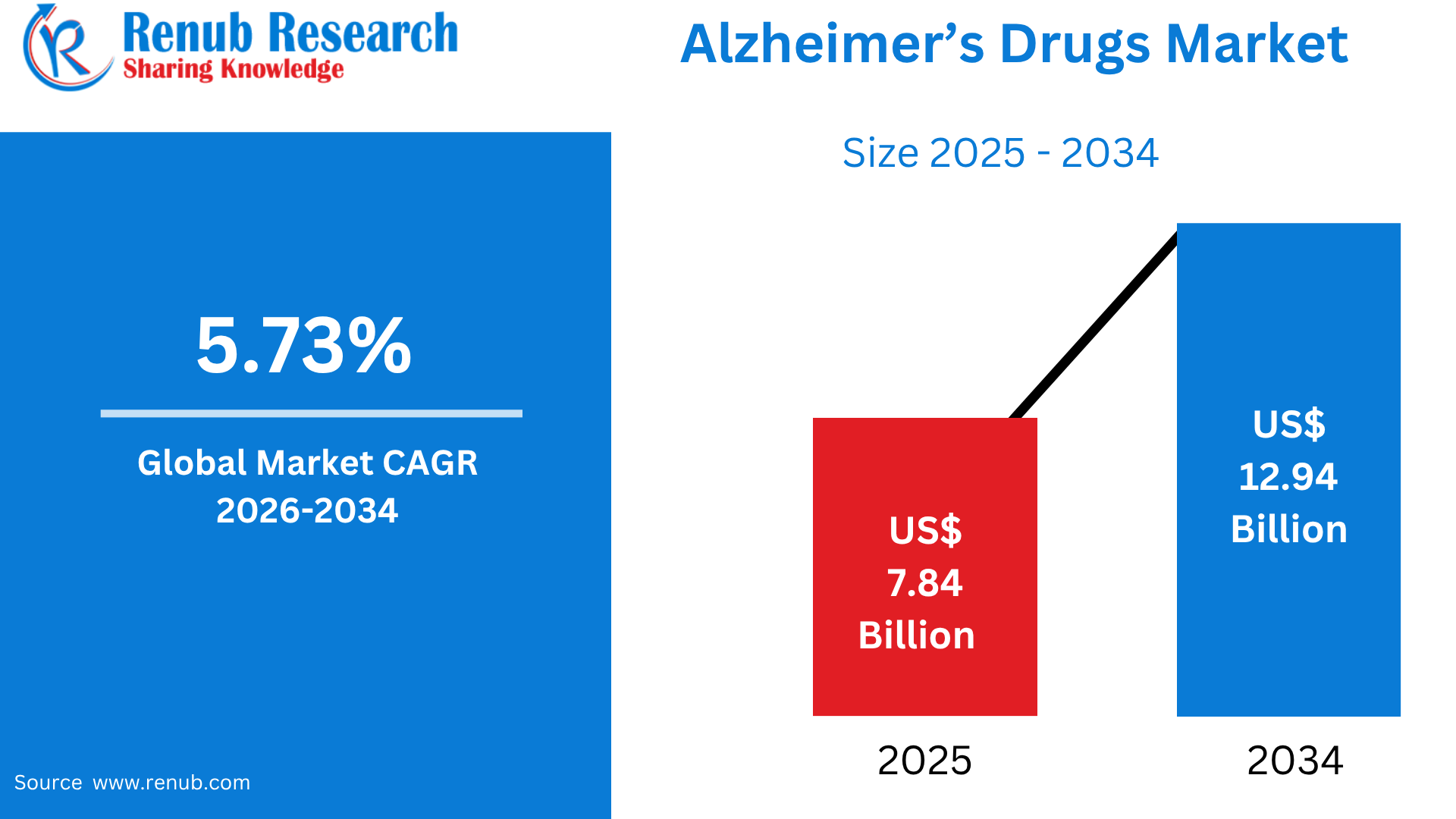
The Alzheimer’s Drugs Market is projected to expand from approximately US$ 7.84 billion in 2025 to US$ 12.94 billion by 2034, representing a CAGR of 5.73% during 2026–2034. Market growth is primarily supported by the increasing global burden of Alzheimer’s disease, rapid population aging, and rising demand for effective therapies that can address disease progression and symptoms. The development and commercialization of disease-modifying therapies, particularly treatments targeting amyloid-beta pathology, are creating new growth opportunities and transforming the treatment landscape.
What Are Alzheimer’s Drugs and Their Uses & Popularity Worldwide
Alzheimer’s drugs are medicines used to manage symptoms of Alzheimer’s disease and target biological processes associated with disease progression. Traditional treatments include cholinesterase inhibitors such as donepezil, rivastigmine, and galantamine, which can support memory and cognitive functioning, while memantine, an NMDA receptor antagonist, is commonly used in moderate-to-severe disease. More recently, disease-modifying therapies targeting amyloid-beta have expanded treatment options for selected patients in the early stages of Alzheimer’s disease. These medicines aim to slow clinical decline rather than simply relieve symptoms.
The worldwide importance of Alzheimer’s drugs is increasing alongside the growing dementia burden and population aging. According to the World Health Organization (WHO), 57 million people were living with dementia in 2021, with nearly 10 million new cases occurring each year. Alzheimer’s disease accounts for an estimated 60–70% of dementia cases. More than 60% of people with dementia live in low- and middle-income countries, highlighting the need to improve diagnosis, treatment access, and healthcare infrastructure. Consequently, rising disease prevalence, awareness, improved diagnosis, and advances in drug development are strengthening demand for Alzheimer’s therapies worldwide.
Facts:
- 50 million people suffer from dementia worldwide, and by 2025, the number is expected to reach 140 million.
- There are seven stages of Alzheimer's disease, and with each stage the severity and development of the disease increases.
- There are 130,000 Alzheimer's patients in Saudi Arabia.
- 9.9 million new cases of dementia annually in the world, every three seconds someone develops dementia globally.
- One in three elderly people dies from Alzheimer's or a type of dementia.
- Alzheimer's and other forms of dementia ranked seventh in the list of leading causes of death globally in 2019.
- 65% of Alzheimer's and dementia deaths are women.
Prevalence of Clinical Alzheimer’s Dementia and Other Dementias in the United States
- An estimated 7.4 million Americans age 65 and older are living with clinical Alzheimer’s dementia in 2026.
• About 1 in 9 people (11%) age 65 and older has clinical Alzheimer’s dementia.
• The percentage of people with clinical Alzheimer’s dementia increases with age: for example, 5.2% of people age 65 to 74 and 35.8% of people age 85 and older have clinical Alzheimer’s dementia.
• People younger than 65 can also develop clinical Alzheimer's dementia. Although prevalence studies of younger-onset dementia in the U.S. are limited, researchers believe about 110 of every 100,000 people age 30 to 64 years, or about 200,000 Americans in total, have younger-onset dementia.
Key Trends in the USA Population Aged 65+ by Age Group
- Steady Growth in the 65+ Population: The population aged 65 years and above is projected to increase substantially from 6.1 million in 2020 to 13.8 million by 2060.
- More Than Doubling Over Four Decades: The total population aged 65+ is expected to rise by approximately 126% between 2020 and 2060, highlighting rapid population aging.
- 2020 Baseline: In 2020, approximately 6.1 million people were aged 65 or older, providing the starting point for the projected demographic increase.
- Growth by 2030: The population is projected to reach 8.5 million by 2030, representing an increase of around 2.4 million compared with 2020.
- Strong Expansion by 2040: By 2040, the 65+ population is expected to reach 11.2 million, nearly 1.8 times the 2020 level.
- 12.7 Million by 2050: The population aged 65+ is projected to reach 12.7 million in 2050, reflecting continued growth in the aging population.
- 13.8 Million by 2060: By 2060, the total population aged 65+ is forecast to reach 13.8 million, the highest level shown in the chart.
- Ages 65–74: The 65–74 age group increases gradually throughout the forecast period, reaching approximately 2.4 million by 2060.
- Ages 75–84: The 75–84 age group represents a substantial share of the older population and expands significantly as the overall population ages.
- Ages 85+ – Rapid Expansion: The 85+ population shows particularly strong growth, becoming an increasingly important component of the total elderly population by 2060.
- Implication for Healthcare: The sharp increase in older adults, particularly those aged 75 and above, is expected to increase demand for healthcare services, long-term care, chronic disease management, and age-related treatments.
- Implication for Alzheimer’s Market: The growing number of people in older age groups is particularly significant for the Alzheimer’s drugs market, as advancing age is one of the strongest risk factors for Alzheimer’s disease and dementia.
Growth Driver
Rising Global Burden of Alzheimer’s Disease
The increasing prevalence of Alzheimer’s disease and dementia is creating a larger patient population requiring pharmacological treatment, making disease burden one of the strongest growth drivers for the Alzheimer’s drugs market. According to the World Health Organization (WHO), 57 million people were living with dementia worldwide in 2021, with nearly 10 million new cases occurring every year. Alzheimer’s disease is the most common form of dementia and may account for 60–70% of dementia cases. More than 60% of people living with dementia are in low- and middle-income countries, creating substantial unmet treatment needs as healthcare infrastructure develops. Population aging is further strengthening this trend because age remains the strongest known risk factor for dementia. In the United States alone, approximately 7.2 million people aged 65 and older were living with Alzheimer’s dementia in 2025, according to the Alzheimer’s Association. The expanding patient pool is therefore increasing demand for symptomatic treatments and newer disease-modifying therapies, supporting sustained market growth.
Emergence of Disease-Modifying Alzheimer’s Therapies
The development of disease-modifying therapies is transforming the Alzheimer’s treatment landscape and creating significant opportunities for market expansion. Unlike conventional medicines that primarily manage symptoms, newer therapies targeting amyloid-beta pathology are designed to slow clinical progression in appropriately selected patients during early stages of disease. The U.S. FDA approved Kisunla (donanemab-azbt) in July 2024 for adults with Alzheimer’s disease, specifically patients with mild cognitive impairment or mild dementia stages who have confirmed amyloid pathology. In its pivotal study involving 1,736 participants, donanemab demonstrated a statistically significant reduction in clinical decline compared with placebo at 76 weeks. The approval followed the earlier emergence of other anti-amyloid therapies and has increased investment in Alzheimer’s drug development, diagnostics, biomarker testing, and specialized treatment infrastructure. Continued clinical research into amyloid, tau, inflammation, and other disease mechanisms is expanding the pipeline of potential therapies. Consequently, innovation in disease modification is expected to increase treatment adoption and strengthen the value of the Alzheimer’s drugs market.
Improved Diagnosis and Growing Demand for Early Treatment
Advances in Alzheimer’s diagnosis are supporting market growth by enabling patients to be identified earlier and potentially become eligible for treatment before substantial cognitive decline occurs. Modern diagnostic approaches increasingly incorporate cognitive assessments, brain imaging, and biomarkers that can help identify underlying Alzheimer’s pathology. Early diagnosis is particularly important for disease-modifying therapies because currently approved anti-amyloid treatments are intended for patients in early symptomatic stages with confirmed amyloid pathology. Public awareness is also increasing demand for earlier evaluation. A 2025 Alzheimer’s Association survey reported that nearly 4 in 5 Americans would want to know if they had Alzheimer’s disease before it affected their daily lives, demonstrating strong interest in early detection and treatment. WHO also emphasizes diagnosis as the first step toward accessing appropriate services and care. As diagnostic capacity, specialist care, biomarker testing, and awareness improve, more patients may enter formal treatment pathways. This expansion of the diagnosed and treatable population is expected to support pharmaceutical demand worldwide.
Challenge
High Treatment Costs and Limited Access to Advanced Therapies
High treatment costs and unequal healthcare access remain significant challenges for the Alzheimer’s drugs market, particularly for newer disease-modifying therapies that require specialized diagnosis, monitoring, and administration. Alzheimer’s care already creates a substantial economic burden: WHO estimated that dementia generated approximately US$1.3 trillion in global economic costs in 2019, including healthcare, social care, and informal caregiving. Access disparities are particularly pronounced in low- and middle-income countries, where more than 60% of people living with dementia reside. WHO reports substantial differences in dementia-care infrastructure, including as much as 51% higher access to community-based services in high-income countries’ rural areas compared with low- and middle-income countries’ rural areas. Advanced treatments can also require amyloid confirmation, specialist evaluation, intravenous administration, and monitoring for adverse events, creating additional costs and logistical requirements. Consequently, reimbursement limitations, affordability concerns, inadequate specialist capacity, and uneven diagnostic infrastructure can restrict the uptake of newer Alzheimer’s medicines, particularly outside developed pharmaceutical markets.
Safety Concerns and Complexity of Disease-Modifying Treatments
Safety risks and the complexity of administering disease-modifying therapies represent another important challenge for the Alzheimer’s drugs market. Anti-amyloid medicines can cause amyloid-related imaging abnormalities (ARIA), including brain swelling and bleeding, requiring appropriate patient selection and monitoring. For example, the FDA’s prescribing information for donanemab includes a boxed warning regarding ARIA and notes that patients who are APOE ε4 homozygotes have a higher incidence of ARIA, including symptomatic and serious cases. Such risks can increase the need for genetic assessment, MRI monitoring, specialist supervision, and careful treatment decisions. In addition, Alzheimer’s is a biologically complex disease involving multiple pathological processes, meaning that therapies targeting a single mechanism may provide only partial benefits. WHO’s 2026 guidance notes that there is still no widely available curative treatment for dementia, emphasizing the continuing unmet medical need. Safety considerations, treatment complexity, uncertain long-term outcomes, and the need for repeated monitoring can therefore limit adoption among some patients and healthcare providers. These factors also increase clinical-development and commercialization challenges for pharmaceutical companies.
Alzheimer’s Drugs Launches Worldwide
- Leqembi (Lecanemab) – United States, 2023: Eisai and Biogen’s Leqembi became a major milestone in Alzheimer’s treatment after receiving traditional FDA approval in July 2023 for patients with early Alzheimer’s disease. It was the first traditionally approved therapy designed to address the underlying biology of Alzheimer’s by targeting amyloid-beta plaques.
- Kisunla (Donanemab) – United States, 2024: Eli Lilly’s Kisunla received FDA approval in July 2024 for patients with mild cognitive impairment or mild dementia due to Alzheimer’s disease with confirmed amyloid pathology. The drug is administered as an intravenous infusion every four weeks.
- Aduhelm (Aducanumab) – United States, 2021: Biogen’s Aduhelm received accelerated FDA approval in June 2021, becoming the first FDA-approved therapy specifically targeting the underlying biology of Alzheimer’s disease. The product was subsequently discontinued, with commercial availability ending in 2024.
- Leqembi (Lecanemab) – Japan, 2023: Lecanemab expanded internationally after receiving regulatory approval in Japan in December 2023, providing another major market for the anti-amyloid therapy developed by Eisai and Biogen.
- Leqembi – European Union, 2025: The European Medicines Agency authorized Leqembi for appropriately selected adults with mild cognitive impairment or mild dementia due to Alzheimer’s disease and confirmed amyloid pathology. The EU indication specifically addresses APOE ε4 status.
- Kisunla (Donanemab) – Japan, 2024: Donanemab received approval in Japan, expanding access to the disease-modifying treatment in one of the world’s largest aging populations. It is intended for patients with early symptomatic Alzheimer’s disease.
- Kisunla (Donanemab) – China, 2025: Donanemab subsequently expanded into China, adding another major Asian pharmaceutical market to its international footprint. The therapy is aimed at eligible patients with early symptomatic Alzheimer’s disease.
- Kisunla (Donanemab) – Australia, 2025: Australia approved donanemab in May 2025 for eligible patients with early symptomatic Alzheimer’s disease. The approval followed regulatory decisions in Brazil and Mexico earlier in 2025.
- Kisunla (Donanemab) – United Kingdom, 2025: Donanemab gained UK regulatory approval for selected patients with early Alzheimer’s disease, representing another important expansion of anti-amyloid treatment availability. The UK authorization includes restrictions related to APOE4 status and patient eligibility.
- Leqembi IQLIK – United States, 2025: Eisai introduced a subcutaneous formulation of lecanemab, designed to provide a more convenient maintenance-treatment option compared with intravenous administration. The development reflects the industry’s shift toward easier administration and improved treatment convenience for patients and caregivers.
Growing Adoption of Multimodal Treatment Approaches
Alzheimer’s combination drugs market is expanding as healthcare professionals increasingly recognize the need to address the disease through multiple therapeutic mechanisms. Combination therapy involves the use of two or more medicines, such as cholinesterase inhibitors and NMDA receptor antagonists, to manage different aspects of Alzheimer’s disease. This approach can help improve or maintain cognitive function, behavior, and the ability to perform daily activities. The growing disease burden is creating a larger population requiring long-term pharmacological management. According to the World Health Organization (WHO), approximately 57 million people were living with dementia worldwide in 2021, with nearly 10 million new cases occurring annually. Alzheimer’s disease accounts for an estimated 60–70% of dementia cases. Combination treatment is particularly relevant as Alzheimer’s involves multiple pathological mechanisms and progressive symptoms. Pharmaceutical companies are therefore investigating improved combination regimens and formulations that may enhance adherence, simplify dosing, and provide complementary therapeutic effects. Rising disease prevalence, treatment awareness, and continuing research into multi-target approaches are expected to support segment growth.
Established Therapies Continue to Support Cholinesterase Inhibitors Demand
Cholinesterase inhibitors remain an important component of Alzheimer’s disease treatment because they help increase the availability of acetylcholine, a neurotransmitter involved in memory, learning, and cognitive function. The major medicines in this category include donepezil, rivastigmine, and galantamine, which are commonly used to manage symptoms in patients with mild to moderate Alzheimer’s disease, while donepezil is also indicated for severe disease. Their established clinical use, relatively broad availability, and availability of generic formulations continue to support market demand. The large underlying patient population provides a strong foundation for this segment. WHO estimates that dementia affects more than 57 million people globally, with almost 10 million new cases each year. Cholinesterase inhibitors remain particularly relevant in markets where newer disease-modifying therapies may be expensive or difficult to access. Pharmaceutical research is also focused on improving tolerability, dosing convenience, and formulations to address adverse effects and improve adherence. Consequently, despite the emergence of newer Alzheimer’s therapies, cholinesterase inhibitors are expected to remain an important part of global treatment protocols.
Strong Position Supported by Broad Clinical Use and Generic Availability
Donepezil represents one of the most widely used medicines in the Alzheimer’s treatment landscape. As a cholinesterase inhibitor, it works by increasing acetylcholine availability in the brain, helping support cognitive functions such as memory and thinking. Donepezil is approved for the treatment of mild, moderate, and severe Alzheimer’s dementia, giving it a broader disease-stage application than several other established cholinesterase inhibitors. Its once-daily dosing also provides a practical advantage for patients and caregivers managing long-term treatment. The availability of generic versions has further improved affordability and accessibility, particularly in developing and price-sensitive markets. The drug continues to have a substantial addressable patient population because Alzheimer’s represents the largest share of dementia cases worldwide. With WHO estimating that Alzheimer’s disease and other dementias affect tens of millions of people globally, demand for established therapies remains significant. In addition, research into combination approaches involving donepezil and other therapeutic agents is supporting continued clinical interest. Its established safety profile, physician familiarity, affordability, and broad indications are expected to maintain donepezil’s importance in the Alzheimer’s drugs market.
Dual Mechanism and Extended-Release Formulations Drive Galantamine Alzheimer’s Drugs Demand
Galantamine is an established cholinesterase inhibitor primarily used for the symptomatic treatment of mild to moderate Alzheimer’s disease. Its mechanism combines inhibition of acetylcholinesterase with modulation of nicotinic acetylcholine receptors, providing a complementary approach to improving cholinergic signaling in the brain. This pharmacological profile supports its use for managing cognitive symptoms and maintaining daily functioning in appropriate patients. Demand for galantamine is benefiting from the growing prevalence of Alzheimer’s disease and increased awareness of early diagnosis and treatment. The WHO estimates that approximately 10 million new dementia cases occur globally each year, creating a continuously expanding need for symptomatic therapies. Extended-release formulations have also improved dosing convenience and can help reduce the frequency of administration, supporting treatment adherence. However, galantamine competes with established alternatives such as donepezil and rivastigmine, as well as newer disease-modifying therapies. Continued research into improving tolerability, optimizing formulations, and identifying patients who may benefit most from cholinergic treatment is expected to sustain demand. Growing healthcare access and earlier intervention are likely to provide additional opportunities for the galantamine segment.
Hospitals Remain Critical for Specialized Treatment and Drug Management
Hospital pharmacies play a vital role in the distribution and management of Alzheimer’s medicines, particularly as treatment becomes increasingly specialized. Hospital-based pharmacists support the appropriate selection, dispensing, dosing, monitoring, and counseling associated with therapies ranging from cholinesterase inhibitors and NMDA receptor antagonists to newer disease-modifying treatments. The importance of this channel is increasing as Alzheimer’s disease becomes a larger healthcare burden. WHO estimates that more than 57 million people worldwide were living with dementia in 2021, with the number expected to rise substantially as populations age. Hospital pharmacies are particularly important for advanced therapies that may require specialist assessment, intravenous administration, or monitoring for treatment-related adverse events. For example, anti-amyloid therapies require careful patient selection and monitoring for amyloid-related imaging abnormalities (ARIA). Hospital pharmacists can also help patients and caregivers understand dosing schedules, drug interactions, contraindications, and potential side effects. Increasing multidisciplinary care involving neurologists, geriatricians, nurses, diagnostic specialists, and pharmacists is therefore strengthening the role of hospital pharmacies. Rising diagnosis rates, treatment innovation, and demand for specialized Alzheimer’s care are expected to support continued growth of this distribution channel.
Advanced Research and Rapid Adoption of Innovative Therapies in United States
United States Alzheimer’s drugs market remains one of the most advanced globally, supported by a large aging population, substantial healthcare expenditure, strong pharmaceutical capabilities, and extensive investment in neurological research. According to the Alzheimer’s Association, approximately 7.2 million Americans aged 65 and older were living with Alzheimer’s dementia in 2025, highlighting the country’s substantial treatment need. The U.S. also benefits from a strong ecosystem of biotechnology companies, academic institutions, clinical-trial networks, and federal research funding. The availability of disease-modifying therapies has further transformed the market. In August 2025, Eisai and Biogen announced FDA approval of LEQEMBI IQLIK (lecanemab-irmb) for once-weekly subcutaneous maintenance dosing, providing an alternative to intravenous administration. The autoinjector contains 360 mg/1.8 mL and is designed to deliver the dose in 15 seconds or less. The introduction of such delivery innovations can improve convenience and potentially expand treatment adoption. Despite high drug costs and reimbursement challenges, continued innovation in diagnostics, biomarkers, personalized medicine, and disease-modifying treatments is expected to maintain the United States as a major global Alzheimer’s pharmaceutical market.
NHS Support and Focus on Early Diagnosis in the United Kingdom
United Kingdom Alzheimer’s drugs market is supported by the country’s established healthcare infrastructure, government-backed dementia initiatives, and the central role of the National Health Service (NHS) in diagnosis and treatment. The UK has placed increasing emphasis on earlier dementia diagnosis, coordinated care, and improving support for patients and caregivers. According to the Alzheimer’s Society, approximately 900,000 people are estimated to be living with dementia in the UK, with the number projected to rise as the population ages. The emergence of disease-modifying treatments is creating new opportunities but also placing greater demands on diagnostic capacity, specialist services, and healthcare budgets. NICE recommendations and NHS commissioning decisions play an important role in determining access to innovative Alzheimer’s medicines, making cost-effectiveness a key consideration. The country also benefits from extensive clinical research conducted by universities, hospitals, and research organizations. Increasing use of biomarkers, advanced imaging, and data-driven patient monitoring is strengthening the treatment ecosystem. With population aging and growing awareness of dementia, demand for both established symptomatic medicines and newer disease-modifying therapies is expected to increase, although affordability and healthcare-resource constraints may influence adoption.
India Awareness and Demand for Affordable Treatments
India Alzheimer’s drugs market is developing as population aging, improved healthcare access, and greater awareness of dementia gradually increase diagnosis and treatment rates. India has one of the world’s largest older populations, creating a substantial long-term patient base for dementia therapies. The United Nations projects that India’s population aged 60 years and above will increase significantly over the coming decades, increasing the importance of age-related neurological healthcare. Historically, underdiagnosis and limited awareness have restricted treatment uptake, but awareness among families and healthcare professionals is improving. Generic medicines remain particularly important because affordability is a major consideration for patients paying significant portions of healthcare expenses out of pocket. Cholinesterase inhibitors and other established therapies therefore continue to have relevance, while access to newer disease-modifying medicines remains more limited because of high treatment costs, specialist requirements, and diagnostic infrastructure needs. In February 2024, Eli Lilly CEO David Ricks stated that the company was preparing for a potential launch of donanemab in additional markets following regulatory review, reflecting growing international interest in newer Alzheimer’s therapies. Expansion of private healthcare, specialist neurology services, diagnostic capabilities, and government initiatives aimed at improving elderly care is expected to gradually strengthen India’s Alzheimer’s pharmaceutical market.
Saudi Arabia Healthcare Investment and Expanding Specialist Care
Saudi Arabia Alzheimer’s drugs market is gradually expanding as healthcare infrastructure improves, the population ages, and awareness of dementia increases. Saudi Arabia has been investing substantially in healthcare modernization under Saudi Vision 2030, including the expansion of specialized medical services, digital health infrastructure, and access to advanced treatments. These developments are creating a stronger environment for the diagnosis and management of neurological disorders. Hospitals, specialist clinics, and medical centers play an important role in delivering Alzheimer’s therapies, particularly as treatment becomes more dependent on specialist diagnosis and monitoring. The market includes established symptomatic medicines as well as newer disease-modifying therapies, although access to innovative treatments can be influenced by pricing, reimbursement, and clinical eligibility requirements. Regional regulatory developments are also supporting awareness of advanced therapies. In August 2024, the UAE Ministry of Health and Prevention approved Leqembi (lecanemab) for appropriate patients with early Alzheimer’s disease, representing an important development in the wider Gulf region and potentially supporting regional awareness of disease-modifying treatments. Continued healthcare investment, increasing specialist capacity, and growing public awareness are expected to support steady expansion of the Saudi Arabian Alzheimer’s drugs market.
Alzheimer's Drugs Market Segments
Drug Class
- Cholinesterase Inhibitors
- NMDA Receptor Antagonist
- Combination Drugs
- Others
Drug Type
- Galantamine
- Donepezil
- Memantine
- Rivastigmine
- Others
Distribution Channel
- Hospital Pharmacies
- Retail Pharmacies
- Online Pharmacies
Countries
North America
- United States
- Canada
Europe
- France
- Germany
- Italy
- Spain
- United Kingdom
- Belgium
- Netherlands
- Turkey
Asia Pacific
- China
- Japan
- India
- Australia
- South Korea
- Thailand
- Malaysia
- Indonesia
- New Zealand
Latin America
- Brazil
- Mexico
- Argentina
Middle East & Africa
- South Africa
- Saudi Arabia
- UAE
All the Key players have been covered from 5 Viewpoints:
- Business overview
- Key Persons
- Recent Development & Strategies
- SWOT Analysis
- Revenue Analysis
Key Players Analysis
-
Abbvie Inc.
-
AstraZeneca PLC
-
Biogen Inc.
-
Eisai Co. Ltd.
-
Eli Lilly and Company
-
H. Lundbeck A/S
-
F. Hoffmann-La Roche AG
-
Merck & Co. Inc.
-
Novartis AG
-
Ono Pharmaceutical Co. Ltd.
-
Pfizer Inc.
-
Teva Pharmaceutical Industries Limited
Report Details:
| Report Features | Details |
| Base Year |
2025 |
| Historical Period |
2022 - 2025 |
| Forecast Period |
2026 - 2034 |
| Market |
US$ Billion |
| Segment Covered |
Drug Class, Drug Type, Distribution Channel and Countries |
| Countries Covered |
|
| Companies Covered |
|
| Customization Scope |
20% Free Customization |
| Post-Sale Analyst Support |
1 Year (52 Weeks) |
| Delivery Format |
PDF and Excel through Email (We can also provide the editable version of the report in PPT/Word format on request) |
Customization Services available
- Analysis of Market Size and Its Segments
- More Company Profiles (Upto 10 without any additional cost):
- Additional Countries (Other than mentioned Countries):
- Region/Country Specific Reports:
- Market Entry Strategy:
- Region-Specific Market Dynamics:
- Regional Market Share Analysis:
- Trade Analysis:
- Production Insights:
- Others Customized Requests:
For more information contact our analysts.
Need More Assistance?
- Talk to our analysts to get more precious information on the current market trends.
- Include more countries and segments and customize the report based on the final requirement.
- Get a competitive advantage in your industry by knowing the report findings and making a positive impact on your revenues and operations.
- Our analysts are always ready to provide more help and pertinent information if you need any additional assistance.