Alcoholic Beverage Market Report by Type, Packaging, Distribution Channel, Country and Company Analysis 2026-2034
Buy NowAlcoholic Beverage Market Size and Forecast
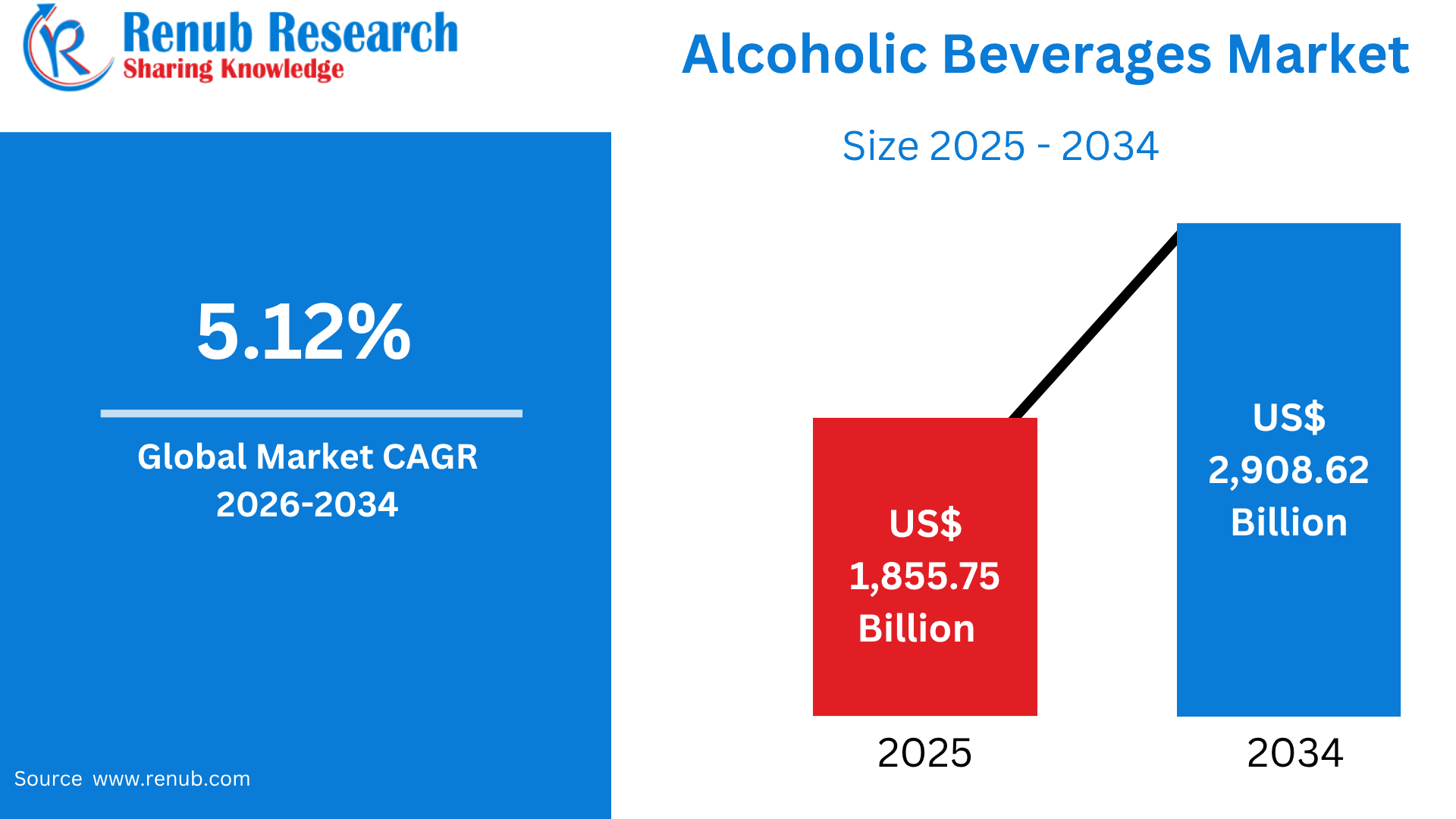
Alcoholic Beverages Market is projected to grow from US$ 1,855.75 billion in 2025 to US$ 2,908.62 billion by 2034, registering a CAGR of 5.12% during 2026–2034. Market growth is driven by rising consumer demand for premium, craft, and innovative alcoholic beverages, along with the expanding social drinking culture worldwide. Increasing urbanization, changing lifestyles, and higher disposable incomes are boosting consumption, while the growing popularity of flavored, low-alcohol, and ready-to-drink (RTD) beverages continues to create new growth opportunities across global markets.
What are Alcoholic Beverages and Their Uses & Popularity Worldwide?
Alcoholic beverages are drinks that contain ethanol (ethyl alcohol) produced through the fermentation of sugars from grains, fruits, vegetables, or other agricultural ingredients. They are broadly categorized into beer, wine, spirits, cider, ready-to-drink (RTD) beverages, and flavored alcoholic drinks. Beer is typically brewed from malted grains such as barley, wine is fermented from grapes and other fruits, while spirits including whisky, vodka, rum, gin, tequila, and brandy are produced through distillation. Alcoholic beverages are consumed for socialization, celebration, relaxation, hospitality, and cultural or religious traditions. They also play an important role in the hospitality, tourism, entertainment, and foodservice industries, where they are paired with meals and featured in festivals, nightlife, and recreational events.
Worldwide, alcoholic beverages remain one of the largest segments of the global food and beverage industry, driven by changing consumer lifestyles, urbanization, rising disposable incomes, and increasing demand for premium products. Premium spirits, craft beer, fine wines, flavored alcoholic beverages, and ready-to-drink (RTD) cocktails are witnessing strong growth, particularly among younger adult consumers. Health-conscious drinking trends have also encouraged manufacturers to introduce low-alcohol, no-alcohol, organic, gluten-free, and low-calorie alternatives. In addition, expanding e-commerce platforms, digital marketing, product innovation, and growing tourism continue to strengthen global demand. Emerging economies in Asia-Pacific, Latin America, and Africa, together with mature markets in North America and Europe, are expected to remain key contributors to the worldwide popularity and long-term growth of alcoholic beverages.
Growth Driver
Premiumization and Expanding Craft Beverage Consumption
The increasing consumer preference for premium alcoholic beverages is one of the strongest growth drivers for the global alcoholic beverages market. Consumers are increasingly willing to pay higher prices for premium spirits, aged whisky, craft beer, fine wines, artisanal gin, tequila, and premium ready-to-drink (RTD) cocktails that offer superior quality, authentic ingredients, and unique flavor profiles. Premium and super-premium spirits continue to outperform standard products, particularly in North America, Europe, and Asia-Pacific. Craft brewing has also transformed the beer industry, with more than 9,000 craft breweries operating in the United States alone, while Europe remains home to thousands of independent breweries. Millennials and Generation Z consumers increasingly seek limited-edition products, locally produced beverages, and premium drinking experiences. Luxury packaging, product innovation, and brand storytelling further influence purchasing decisions. Expanding tourism, hospitality, and nightlife industries continue to boost premium alcohol sales worldwide. Rising disposable incomes in emerging economies are also encouraging consumers to trade up from economy brands to premium alcoholic beverages, supporting sustained market expansion.
Urbanization, Social Drinking Culture, and Hospitality Industry Expansion
Rapid urbanization and evolving social lifestyles are significantly driving global alcoholic beverage consumption. According to the United Nations, approximately 57% of the global population currently lives in urban areas, and this figure is expected to continue increasing over the coming decades. Urban consumers generally have greater exposure to restaurants, bars, pubs, clubs, hotels, sporting events, music festivals, and entertainment venues where alcoholic beverages are widely consumed. The rapid growth of tourism and international travel has also expanded alcohol consumption across hospitality and foodservice sectors. Younger adult consumers increasingly view alcoholic beverages as part of social gatherings, celebrations, networking events, and leisure activities. Rising disposable incomes and expanding middle-class populations in Asia-Pacific, Latin America, and the Middle East have further strengthened demand for beer, wine, spirits, and cocktails. The expansion of modern retail outlets, duty-free stores, and online alcohol delivery platforms has improved product accessibility, enabling manufacturers to reach broader consumer segments and stimulate long-term market growth.
Product Innovation and Rising Demand for Low-Alcohol and Ready-to-Drink Beverages
Continuous product innovation is reshaping the global alcoholic beverages market by attracting new consumer segments and addressing changing lifestyle preferences. Manufacturers are expanding portfolios with flavored spirits, fruit-infused beers, botanical gins, hard seltzers, canned cocktails, premium ready-to-drink (RTD) beverages, and low- or no-alcohol alternatives. The global RTD alcoholic beverage segment has experienced strong double-digit growth in several developed markets as consumers seek convenience, portability, and consistent flavor profiles. Younger consumers increasingly favor beverages with lower alcohol content, reduced sugar, natural ingredients, and functional benefits. Premium canned cocktails, wine spritzers, flavored malt beverages, and hard kombucha have gained significant popularity across North America, Europe, and Asia-Pacific. Companies continue investing in sustainable packaging, recyclable aluminum cans, and innovative product formulations to differentiate their brands. Digital marketing, celebrity collaborations, and social media promotions have further accelerated product adoption. Continuous innovation enables manufacturers to respond quickly to changing consumer preferences while expanding premium and health-conscious alcohol categories worldwide.
Challenge
Strict Government Regulations and Increasing Health Awareness
Government regulations and growing public health awareness remain significant challenges for the global alcoholic beverages market. Many countries have implemented stricter policies covering alcohol taxation, advertising restrictions, packaging regulations, minimum legal drinking ages, and licensing requirements. The World Health Organization (WHO) estimates that harmful alcohol consumption contributes to approximately 3 million deaths annually, representing about 5% of global deaths, prompting governments to strengthen alcohol control policies. Several countries have increased excise taxes and introduced mandatory health warning labels to discourage excessive alcohol consumption. Advertising restrictions across television, digital media, and sporting events further limit promotional opportunities for alcohol manufacturers. At the same time, rising consumer awareness regarding liver disease, obesity, mental health, and alcohol-related illnesses has encouraged many consumers to reduce alcohol intake or switch to low-alcohol and alcohol-free alternatives. These evolving regulatory and health trends present ongoing challenges for traditional alcoholic beverage producers worldwide.
Supply Chain Disruptions and Rising Raw Material Costs
The alcoholic beverages industry continues to face pressure from rising production costs and supply chain uncertainties. Key raw materials including barley, wheat, grapes, sugarcane, agave, hops, and glass packaging have experienced substantial price volatility due to climate change, adverse weather conditions, inflation, labor shortages, and geopolitical disruptions. Energy and transportation costs have also increased significantly, affecting brewing, distillation, refrigeration, and global distribution. For wine producers, irregular rainfall, droughts, and heatwaves have reduced grape yields in several major producing regions, while beer manufacturers face fluctuating barley and hop prices. Premium spirits producers also experience higher costs for aging, storage, glass bottles, and premium packaging materials. These rising expenses place pressure on profit margins and often lead to retail price increases that may reduce consumer demand in price-sensitive markets. Manufacturers are increasingly investing in local sourcing, sustainable agriculture, production efficiency, and supply chain diversification to minimize operational risks and maintain long-term competitiveness.
Major Alcoholic Beverage Product Launches Worldwide
- March 2026 – Carbliss (USA) launched 19.2 oz single-serve malt-based RTD cocktail cans following a successful pilot in Iowa, expanding its grab-and-go ready-to-drink portfolio.
- August 2025 – Jack Daniel’s introduced Jack Daniel’s Tennessee Blackberry, a flavored Tennessee whiskey combining its classic whiskey with natural blackberry flavor.
- August 2025 – Jack Daniel’s made Single Barrel Heritage Barrel Tennessee Whiskey a permanent addition to its premium whiskey portfolio after strong consumer demand.
- October 2025 – Jack Daniel’s launched Single Barrel Special Release Tanyard Hill Rye, a limited-edition premium rye whiskey featuring a distinctive flavor profile.
- February 2025 – Jack Daniel’s introduced its 14-Year-Old Tennessee Whiskey, the brand’s oldest age-stated whiskey released in more than a century.
- 2025 – Diageo expanded its ready-to-serve cocktail range with Ketel One Lemon Drop Martini, available in 350 ml and 750 ml bottles for at-home cocktail occasions.
- 2025 – Jack Daniel’s & Coca-Cola expanded its RTD lineup with the Jack & Coca-Cola Flavors Pack, featuring Original, Cherry, and the new Vanilla variant.
- 2025 – Maker’s Mark introduced the Wood Finishing Series: The Keepers Release, a limited-edition premium bourbon created using its signature wood-finishing process.
- March 2026 – Carlsberg Britvic (UK) launched Mythos, a Greek-style premium lager, expanding its world beer portfolio across major UK retail channels.
- December 2024 – Diageo India launched India Rare Spirits, an exclusive luxury whisky cask ownership platform that allows collectors to own bespoke, aged whisky casks tailored to individual preferences.
Premiumization and Craft Brewing Fueling Global Beer Market Growth
Beer Market remains the largest segment of the global alcoholic beverages industry, accounting for over 75% of total alcoholic beverage consumption by volume worldwide. Beer continues to enjoy widespread popularity due to its relatively low alcohol content, affordability, and broad variety of styles, including lagers, ales, stouts, wheat beers, and specialty brews. Growing consumer demand for premium, craft, and flavored beers has transformed the industry, with more than 9,000 craft breweries operating in the United States alone and thousands more across Europe and Asia-Pacific. Low-alcohol and alcohol-free beer categories are also expanding rapidly as health-conscious consumers seek balanced drinking options. Rising urbanization, increasing disposable incomes, and expanding hospitality sectors continue to boost beer consumption globally. Product innovation, sustainable brewing practices, premium packaging, and digital marketing strategies are further strengthening market growth. The increasing popularity of beer festivals, sports sponsorships, and social gatherings is expected to sustain long-term demand across both developed and emerging economies.
Premium Spirits and Cocktail Culture Driving Distilled Spirits Expansion
Distilled Spirits Market is witnessing robust growth, supported by rising consumer demand for premium alcoholic beverages and luxury drinking experiences. Popular spirit categories include whisky, vodka, rum, gin, tequila, brandy, and liqueurs, with premium and super-premium products recording the fastest growth across global markets. Consumers increasingly prefer aged, handcrafted, small-batch, and limited-edition spirits, encouraging manufacturers to invest in product innovation and premium branding. The rapid expansion of cocktail culture, mixology, and home bartending has significantly increased demand for distilled spirits, particularly among millennials and younger consumers. Restaurants, bars, hotels, and premium lounges remain major consumption channels, while online alcohol retail platforms continue expanding product accessibility. Flavored spirits, organic ingredients, sustainable distillation methods, and premium packaging have become important competitive differentiators. Rising disposable incomes in emerging economies and growing tourism activities further support market expansion. Continuous innovation and premiumization are expected to maintain strong long-term growth in the global distilled spirits industry.
Premium Packaging and Sustainability Supporting Alcoholic Beverage Demand
Alcoholic Beverage Glass Bottle Market remains a critical segment of the global packaging industry due to its ability to preserve product quality while enhancing premium brand perception. Glass bottles are extensively used for packaging wine, whisky, vodka, gin, rum, premium beer, and other high-value alcoholic beverages because they provide excellent protection against oxygen, moisture, and flavor contamination. Globally, glass is among the most recyclable packaging materials, with recycling rates exceeding 70% in several European countries, supporting sustainability initiatives within the beverage industry. Consumers associate glass bottles with authenticity, premium quality, and luxury, making them the preferred packaging option for premium alcoholic beverages. Manufacturers continue investing in lightweight glass technologies, innovative bottle designs, embossed branding, and recyclable packaging to reduce transportation costs and environmental impact. Although glass packaging remains more expensive and heavier than alternative materials, its superior product protection, premium appearance, and environmental advantages continue to drive sustained market demand worldwide.
Lightweight and Cost-Effective Packaging Expanding Alcoholic Beverage Plastic Bottle Market Reach
Alcoholic Beverage Plastic Bottle Market is gaining momentum due to increasing demand for lightweight, durable, and affordable packaging solutions. Plastic bottles are widely used for ready-to-drink (RTD) alcoholic beverages, ciders, flavored alcoholic drinks, economy wines, and selected spirits where portability and convenience are major purchasing factors. Compared with glass, plastic bottles significantly reduce transportation costs, improve handling efficiency, and minimize breakage during distribution. Their lightweight nature makes them particularly suitable for outdoor events, festivals, sporting venues, travel, and convenience retail channels. Beverage manufacturers are increasingly adopting recyclable PET materials and incorporating recycled plastic content to comply with sustainability regulations and reduce environmental impact. Technological advances have improved plastic bottle strength, barrier properties, and product shelf life, making them more suitable for alcoholic beverage packaging. While premium spirits and wines continue to favor glass packaging, rising demand for affordable, convenient, and portable beverage formats continues to support steady growth in the plastic bottle segment globally.
Specialty Retail and Premium Product Demand: Alcoholic Beverage Liquor Stores Driving Sales
Alcoholic Beverage Liquor Stores Market remains one of the most important retail distribution channels for beer, wine, spirits, and premium alcoholic beverages worldwide. Liquor stores provide consumers with extensive product selections, expert recommendations, tasting events, and personalized purchasing experiences that are difficult to replicate through traditional retail channels. Growing demand for premium spirits, imported wines, craft beers, and limited-edition alcoholic beverages has strengthened the role of specialty liquor retailers. Consumers increasingly rely on knowledgeable store staff when selecting unfamiliar products, premium labels, or food and beverage pairings. Expansion of organized retail chains and independent specialty stores has improved product accessibility across urban and suburban markets. In addition, many liquor retailers have adopted digital transformation strategies, including online ordering, home delivery, click-and-collect services, and customer loyalty programs. The combination of personalized service, premium product availability, and omnichannel retail capabilities continues to position liquor stores as a vital sales channel within the global alcoholic beverages market.
Alcoholic Beverages Premiumization and RTD Innovation Driving United States Growth
United States Alcoholic Beverages Market is one of the world’s largest and most mature markets, supported by high consumer spending, an extensive retail network, and a well-established hospitality industry. The U.S. offers a diverse portfolio of alcoholic beverages, including beer, wine, spirits, hard seltzers, and ready-to-drink (RTD) cocktails. The country has more than 9,000 craft breweries and a rapidly expanding premium spirits industry, reflecting strong consumer demand for high-quality and innovative products. Premiumization remains a key trend, with consumers increasingly purchasing craft beers, aged whiskies, premium tequilas, and imported wines. The rapid growth of e-commerce, alcohol delivery services, and digital retail platforms has further improved product accessibility. Social gatherings, sporting events, festivals, and nightlife continue to support alcohol consumption, while flavored and low-calorie beverages attract younger consumers. Despite state-specific regulatory differences, continuous product innovation and changing consumer preferences are expected to sustain long-term market expansion. March 2026, Carbliss expanded its 19.2-ounce single-serve malt-based RTD cocktail cans following a successful pilot launch in Iowa, responding to growing consumer demand for convenient grab-and-go alcoholic beverages.
Craft Beverages and Premium Beer Supporting United Kingdom Market Expansion
United Kingdom Alcoholic Beverages Market remains one of Europe’s most established industries, deeply rooted in the country’s cultural and social traditions. Beer, whisky, gin, cider, and wine continue to dominate consumption, while premium and craft alcoholic beverages are gaining significant popularity. The UK is home to more than 2,000 breweries, making it one of Europe’s leading craft beer markets. Consumers increasingly seek premium-quality beverages, unique flavors, and locally produced products. The growing popularity of pubs, restaurants, music festivals, and sporting events continues to drive alcoholic beverage sales. Health-conscious consumers are also boosting demand for low-alcohol and alcohol-free alternatives. Supermarkets, specialty liquor retailers, and expanding online sales channels have significantly improved consumer access to alcoholic beverages. Ongoing product innovation, premium branding, and changing drinking preferences are expected to support stable market growth throughout the forecast period. March 2026, Carlsberg Britvic expanded its UK portfolio by launching Mythos, a Greek-style premium lager, through Booker and Tesco, with wider retail and convenience store distribution planned later in the year.
Urbanization and Premium Spirits Fueling Indian Industry Growth
India Alcoholic Beverages Market is experiencing rapid expansion, driven by rising urbanization, increasing disposable incomes, and changing consumer lifestyles. India has a population exceeding 1.4 billion, with a rapidly expanding middle class that continues to support rising demand for beer, whisky, rum, vodka, and premium spirits. Whisky remains the country’s largest alcoholic beverage category, while premium beers, imported wines, and craft spirits are gaining popularity among younger urban consumers. The expansion of restaurants, pubs, hotels, and nightlife establishments has significantly increased alcohol consumption in metropolitan cities. Although alcohol sales remain regulated differently across individual states, manufacturers continue investing in premiumization, innovation, and localized product development. E-commerce-enabled home delivery, premium retail outlets, and growing tourism are also supporting market growth. Rising demand for luxury spirits and experiential drinking continues to position India as one of the world’s fastest-growing alcoholic beverage markets. December 2024, Diageo India introduced India Rare Spirits, an exclusive luxury whisky cask ownership program allowing consumers to own customized, aged whisky casks, marking a significant milestone in India’s premium spirits industry.
Saudi Arabia Non-Alcoholic Alternatives and Tourism Initiatives Shaping Demand
Saudi Arabia Alcoholic Beverages Market remains highly restricted due to religious and legal regulations prohibiting the commercial sale and consumption of alcoholic beverages. As a result, the country has no conventional retail alcohol market. However, demand for non-alcoholic beer, alcohol-free malt beverages, sparkling drinks, and premium mocktails has grown steadily, supported by changing consumer preferences and the expansion of the hospitality industry. Under Saudi Vision 2030, investments in tourism, international events, luxury hotels, and entertainment have increased demand for premium alcohol-free beverage alternatives that replicate the taste and social experience of traditional alcoholic drinks. International beverage manufacturers continue expanding their portfolios of halal-certified, alcohol-free products for both residents and tourists. Modern retail channels and foodservice establishments have also broadened the availability of premium non-alcoholic beverages, supporting steady market expansion within the country’s regulatory framework. November 2025, Saudi Arabia announced plans to establish two additional alcohol retail outlets, including one serving non-Muslim foreign employees of Saudi Aramco, reflecting gradual regulatory adjustments aimed at supporting international business operations and tourism while maintaining existing legal controls.
Market Segments
Type
- Beer
- Distilled Spirits
- Wine
- Others
Packaging
- Glass Bottle
- Tin
- Plastic Bottle
Distribution Channel
- Convenience Stores
- On Premises
- Liquor Stores
- Grocery Shops
- Internet Retailing
- Supermarkets
Country
North America
- United States
- Canada
Europe
- France
- Germany
- Italy
- Spain
- United Kingdom
- Belgium
- Netherlands
- Turkey
Asia Pacific
- China
- Japan
- India
- Australia
- South Korea
- Thailand
- Malaysia
- Indonesia
- New Zealand
Latin America
- Brazil
- Mexico
- Argentina
Middle East & Africa
- South Africa
- Saudi Arabia
- United Arab Emirates
All companies have been covered with 5 Viewpoints
- Overviews
- Key Person
- Recent Developments
- SWOT Analysis
- Revenue Analysis
Company Analysis:
- Anheuser-Busch InBev SA/NV
- Carlsberg Group
- Constellation Brands Inc.
- Heineken N.V.
- Molson Coors Beverage Company
- Pernod Ricard SA
- Suntory Holdings Limited
Report Details:
| Report Features | Details |
| Base Year |
2025 |
| Historical Period |
2022 - 2025 |
| Forecast Period |
2026 - 2034 |
| Market |
US$ Billion |
| Segment Covered |
Type, Packaging, Distribution Channel and Countries |
| Countries Covered |
|
| Companies Covered |
1. Anheuser-Busch InBev SA/NV |
| Customization Scope |
20% Free Customization |
| Post-Sale Analyst Support |
1 Year (52 Weeks) |
| Delivery Format |
PDF and Excel through Email (We can also provide the editable version of the report in PPT/Word format on request) |
Customization Services available
- Analysis of Market Size and Its Segments
- More Company Profiles (Upto 10 without any additional cost):
- Additional Countries (Other than mentioned Countries):
- Region/Country Specific Reports:
- Market Entry Strategy:
- Region-Specific Market Dynamics:
- Regional Market Share Analysis:
- Trade Analysis:
- Production Insights:
- Others Customized Requests:
For more information contact our analysts.
Need More Assistance?
- Talk to our analysts to get more precious information on the current market trends.
- Include more countries and segments and customize the report based on the final requirement.
- Get a competitive advantage in your industry by knowing the report findings and making a positive impact on your revenues and operations.
- Our analysts are always ready to provide more help and pertinent information if you need any additional assistance.