Air Purifier Market Report by Type, Technology, Application, Distribution Channel, Country and Company Analysis 2026-2034
Buy NowAir Purifier Market Size and Forecast
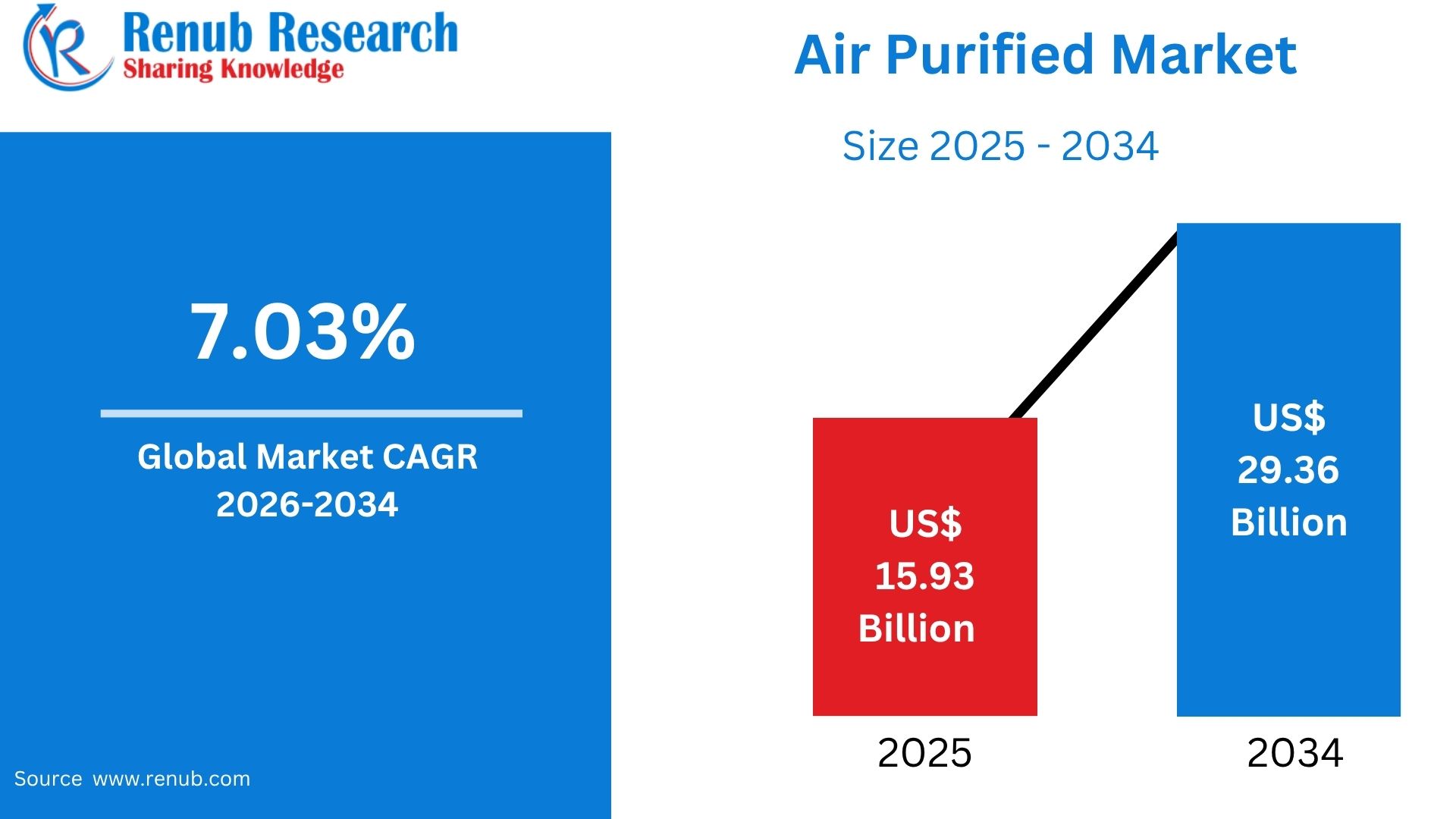
The Air Purifier Market is projected to expand from US$ 15.93 billion in 2025 to US$ 29.36 billion by 2034, representing a CAGR of 7.03% during 2026–2034. Market expansion is being supported by growing concerns about indoor and outdoor air pollution, increasing awareness of the health effects of airborne pollutants, and rising demand for cleaner indoor environments. Rapid urbanization and industrialization are contributing to deteriorating air quality in many regions, encouraging households and businesses to invest in air-cleaning technologies. In addition, technological advancements such as HEPA filtration, activated carbon systems, UV-based purification, smart sensors, and connected air-quality monitoring are improving purifier efficiency and convenience.
What is an Air Purifier and Its Uses & Popularity Worldwide?
An air purifier is an electrical device designed to improve indoor air quality by removing or reducing pollutants, allergens, and harmful particles from the air. Depending on the technology, air purifiers can use HEPA filters, activated carbon, ultraviolet (UV) light, ionization, or multi-stage filtration to capture fine particulate matter, dust, pollen, smoke, odors, bacteria, and other airborne contaminants. They are increasingly used in homes, offices, hospitals, schools, hotels, retail spaces, and industrial facilities to create cleaner and healthier indoor environments.
Air purifiers are particularly useful in densely populated cities where outdoor pollution can enter buildings and contribute to poor indoor air quality. Rising awareness of respiratory health, allergies, and the effects of prolonged exposure to particulate pollution has increased consumer interest in purification systems. Their popularity is also supported by technological improvements, including smart sensors, real-time air-quality monitoring, mobile connectivity, automated filtration, and energy-efficient operation. Worldwide, demand is particularly strong in urban markets where pollution levels are high, and consumers increasingly prioritize health, wellness, and comfortable indoor living environments.
Key Trends in Annual Population-Weighted PM₂.₅ Concentrations (2010–2023)
·South Asia – Highest Pollution Levels
-
- South Asia consistently recorded the highest PM₂.₅ concentrations throughout the period.
- Levels generally remained above 50 µg/m³, reaching approximately 59 µg/m³ in 2018.
- Pollution declined to around 48 µg/m³ in 2022 before increasing again to approximately 56 µg/m³ in 2023.
·North Africa & Middle East – Elevated and Fluctuating Pollution
-
- PM₂.₅ concentrations remained relatively high, generally between 35 and 41 µg/m³.
- The region reached approximately 41 µg/m³ in 2022, followed by a decline to around 38 µg/m³ in 2023.
- Persistent particulate pollution continues to make air-quality management a major concern.
·East, West, Central & Southern Africa – Moderate-to-High Levels
-
- PM₂.₅ concentrations fluctuated considerably, ranging from approximately 33 to 41 µg/m³.
- The region recorded its highest level of about 41 µg/m³ in 2015.
- Concentrations subsequently declined and stood at roughly 36 µg/m³ in 2023.
·Global Average – Relatively Stable
-
- Global population-weighted PM₂.₅ levels remained broadly stable at approximately 35–37 µg/m³ during 2010–2023.
- The global level peaked at around 37 µg/m³ in 2015 and declined gradually thereafter.
- By 2023, the global concentration was approximately 33 µg/m³.
·Southeast Asia, East Asia & Oceania – Significant Improvement
-
- PM₂.₅ levels declined substantially from approximately 40 µg/m³ in 2010 to around 29 µg/m³ in 2023.
- The region experienced a particularly noticeable decline after 2015.
- This indicates progress in controlling particulate pollution despite continued exposure in several highly populated areas.
·Latin America & Caribbean – Relatively Moderate Pollution
-
- Concentrations remained relatively stable, generally between 17 and 19 µg/m³.
- PM₂.₅ levels were approximately 18 µg/m³ in 2010 and around 17 µg/m³ in 2023.
- Overall changes during the period were comparatively limited.
·Central & Eastern Europe and Central Asia – Gradual Decline
-
- PM₂.₅ concentrations decreased from approximately 22 µg/m³ in 2010 to around 17 µg/m³ in 2023.
- The region showed a gradual downward trend, despite some year-to-year fluctuations.
·High-Income Countries – Lowest PM₂.₅ Levels
-
- High-income countries consistently recorded the lowest concentrations among the regions shown.
- Levels declined from approximately 13 µg/m³ in 2010 to around 10 µg/m³ in 2023.
- The sustained decline indicates improvements in emissions control, air-quality regulation, and pollution-management measures.
·Overall Regional Gap
-
- The chart highlights a substantial disparity in exposure: South Asia’s 2023 level was more than five times higher than the high-income-country level.
- The data also show that several regions experienced declines over 2010–2023, while South Asia remained persistently elevated.
Growth Drivers of the Air Purifier Market
Rising Air Pollution and Growing Health Awareness
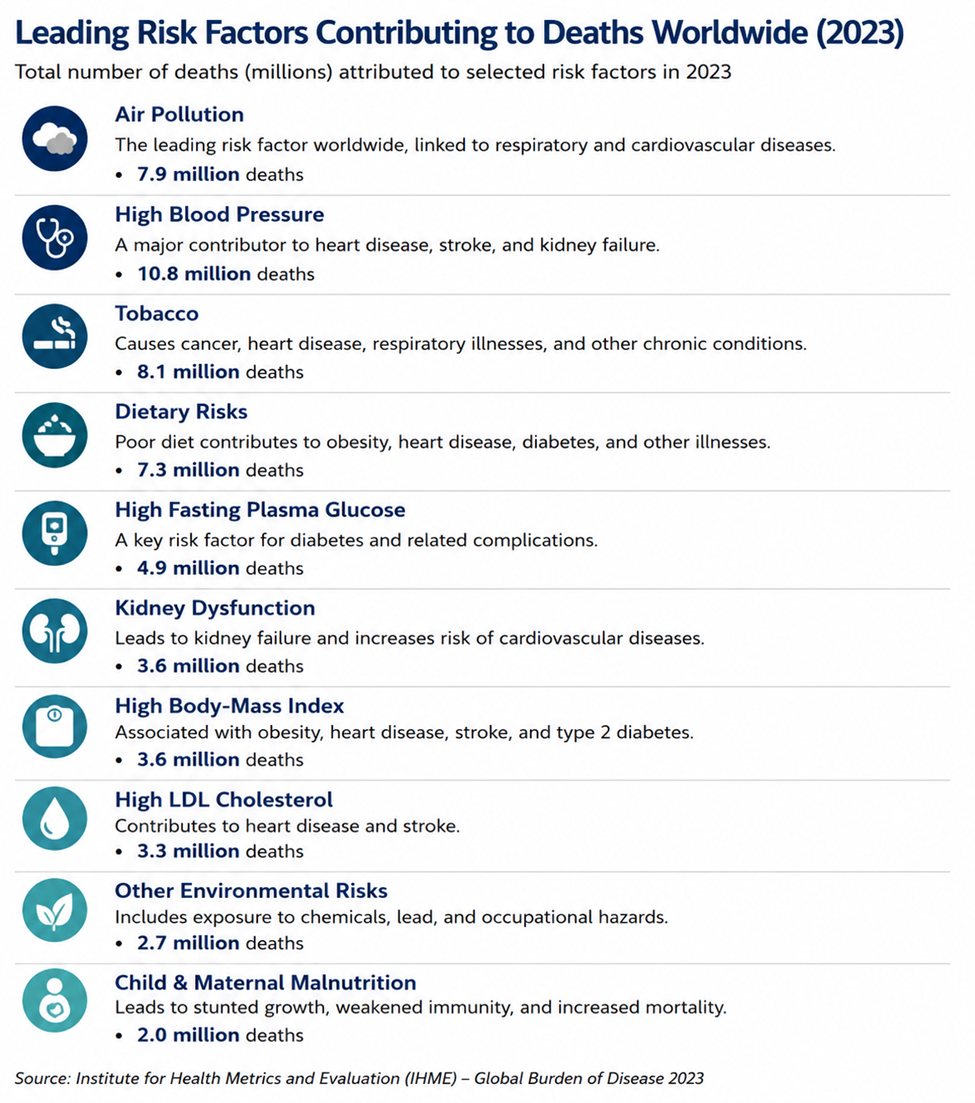
Increasing exposure to polluted air is one of the strongest factors supporting the global air purifier market. The World Health Organization (WHO) reports that 99% of the global population breathes air exceeding its recommended air-quality limits, highlighting the widespread nature of the problem. Combined exposure to ambient and household air pollution is associated with approximately 7 million premature deaths annually. This growing health burden is encouraging households, businesses, healthcare facilities, and educational institutions to invest in technologies that can reduce indoor pollutants. Fine particulate matter, smoke, dust, pollen, and other airborne contaminants have increased consumer awareness of indoor air quality. The demand is particularly strong in heavily urbanized areas where traffic, industrial activity, construction, and seasonal pollution episodes can deteriorate outdoor air quality. Consumers are increasingly viewing air purification as part of preventive health and wellness spending rather than simply a household appliance. Manufacturers are responding with HEPA filtration, activated-carbon systems, particulate sensors, and real-time air-quality displays, further supporting market adoption.
Rapid Urbanization and Increasing Indoor Air-Quality Concerns
Urbanization is creating favorable conditions for air purifier adoption as populations increasingly live and work in enclosed environments. Indoor spaces can accumulate pollutants from cooking, cleaning products, building materials, tobacco smoke, dust, and outdoor pollution entering through doors and ventilation systems. EPA evidence indicates that concentrations of some indoor pollutants can be 2–5 times higher than typical outdoor concentrations, while people spend a substantial portion of their time indoors. This situation is increasing demand for residential and commercial purification systems in apartments, offices, schools, hotels, hospitals, and retail establishments. Growing construction of energy-efficient buildings can also increase the importance of controlled ventilation and filtration when natural air exchange is limited. In emerging economies, rising disposable incomes and expanding middle-class populations are making technologically advanced household appliances more accessible. Meanwhile, smart-home development is encouraging integration of air purifiers with mobile applications, sensors, and home automation platforms. These trends are expanding the addressable market beyond traditional residential applications and supporting broader adoption worldwide.
Technological Innovation and Smart Air Purification Systems
Advances in filtration and connected technologies are transforming air purifiers from basic filtration appliances into intelligent indoor-air-quality management systems. Modern products increasingly combine HEPA filtration, activated carbon, UV-based technologies, particulate sensors, automated fan control, and Wi-Fi connectivity. Smart sensors can continuously measure changes in indoor air quality and automatically adjust purification intensity, improving convenience and potentially reducing unnecessary energy consumption. Smartphone applications allow users to monitor air-quality indicators, receive filter-replacement alerts, and control devices remotely. Artificial intelligence and data analytics are also being incorporated into premium systems to identify pollution patterns and optimize operation. Commercial and healthcare users are particularly interested in higher-capacity systems capable of continuous operation in larger spaces. The increasing global burden of household air pollution is another important opportunity: WHO estimates that around 2.1 billion people still cook using polluting fuels and technologies, while household air pollution was associated with 2.9 million deaths in 2021. Although air purifiers cannot replace clean-energy or pollution-control measures, these conditions are encouraging demand for indoor air-quality technologies.
Challenges of the Air Purifier Market
High Product and Maintenance Costs
The relatively high upfront cost of advanced air purification systems remains a barrier to adoption, particularly in price-sensitive emerging markets. Premium models equipped with HEPA filtration, multiple purification stages, smart sensors, UV technology, and connected features can cost considerably more than conventional filtration products. In addition to the initial purchase price, consumers must periodically replace filters to maintain effective performance. Replacement frequency varies according to product design, operating hours, indoor pollution levels, and filter capacity, creating an ongoing ownership expense. Electricity consumption can also influence total operating costs, especially when purifiers are used continuously in large rooms or commercial facilities. These costs can discourage households from purchasing high-end systems and encourage consumers to select cheaper products with fewer capabilities. The challenge is particularly significant in regions where household air pollution is widespread but disposable income is relatively limited. WHO reports that 2.1 billion people worldwide still rely on polluting fuels and technologies for cooking, illustrating the affordability challenge surrounding cleaner household technologies. Manufacturers therefore face pressure to develop affordable, energy-efficient, and longer-lasting purification solutions.
Lack of Awareness and Performance-Related Concerns
Despite increasing awareness of air pollution, many consumers remain uncertain about which air purifier technology is appropriate for their specific indoor environment. Confusion surrounding HEPA grades, CADR ratings, room coverage, activated-carbon performance, filter replacement requirements, and different purification technologies can make purchasing decisions difficult. Some consumers may also have unrealistic expectations about what an air purifier can accomplish, particularly regarding gases, odors, microorganisms, or outdoor pollution. Furthermore, an air purifier is not a substitute for eliminating pollution sources or improving ventilation. WHO emphasizes that reducing exposure to household air pollution requires broader adoption of cleaner fuels and technologies. Product-performance claims and inconsistent consumer understanding can therefore affect trust in the category. In developing markets, limited knowledge about indoor air quality can further restrict penetration despite significant pollution exposure. Manufacturers and retailers need to provide clearer performance information, standardized testing, and consumer education. Greater awareness of indoor pollution sources, filter maintenance, and appropriate room sizing would help users understand the practical benefits of air purification and support sustained market adoption.
Air Purifier Product Launches Worldwide
- Coway Airmega 100 – United States, January 2024: Coway introduced the Airmega 100 as a compact cylindrical air purifier designed for smaller spaces. It features 360-degree air intake and a three-stage filtration system, targeting allergens, smoke, odors, and fine airborne particles.
- Daikin MCK70Z & MC80Z – Saudi Arabia, July 2024: Daikin launched two plug-and-play air purifiers, the MCK70Z and MC80Z, with connected features that allow users to monitor, control, and schedule operation through the Onecta smartphone application.
- Coway Airmega 350 & Airmega 450 – United States, February 2025: Coway launched the Airmega 350 and 450 with its HyperVortex filtration system, designed to optimize airflow, improve filtration efficiency, reduce airflow loss, and lower operating noise.
- Coway Airmega 50 – United States/Europe, June 2025: Coway introduced the Airmega 50 as its smallest and most affordable Airmega purifier at launch. The compact model provides 360-degree air purification and is designed for bedrooms, desks, dormitories, nurseries, and home offices.
- Coway NOBLE 2.0 Air Purifier – South Korea/Global, 2025: Coway expanded its premium portfolio with the NOBLE 2.0 series, featuring a four-sided 4D filter and 360-degree air purification. The system is designed to purify spaces of up to 133 m².
- Dyson Purifier Hot+Cool HP1 – United Kingdom/Global, 2025: Dyson introduced the Purifier Hot+Cool HP1 as a multifunctional system combining air purification, heating, and cooling. It incorporates HEPA filtration, activated carbon filtration, app connectivity, and oscillating airflow.
- Dyson Purifier Humidify+Cool PH2 De-NOx – United Kingdom/Global, 2025: Dyson launched the PH2 De-NOx with air purification, humidification, and cooling functions. Its upgraded K-Carbon filter is designed to capture up to 50% more NO₂ than the previous generation, while its water tank supports up to 36 hours of operation.
- Dyson HushJet Purifier Compact HJ10 – Global, 2025: Dyson introduced the HushJet Purifier Compact with a new HushJet nozzle aimed at delivering quieter air purification in a smaller form factor. The product was announced for launch in late 2025 and was positioned for smaller rooms and personal spaces.
- Xiaomi Mijia Smart Air Purifier 6 – China, August 2025: Xiaomi introduced the Mijia Smart Air Purifier 6, targeting larger residential spaces with advanced filtration and high air-cleaning capacity. The model was initially launched in China, with a wider international rollout subsequently indicated.
- Xiaomi Mijia Smart Air Purifier with Humidification Pro – China/Global, 2026: Xiaomi introduced a 2-in-1 purifier and humidifier designed to address both airborne pollutants and indoor humidity. The system offers a clean-air delivery rate of up to 422 m³/h, a 14.6 dBA Sleep Mode, and UV sterilization for the water system.
Smart-home Standalone/Portable Air Purifier adoption
The standalone and portable air purifier market is expanding as consumers increasingly seek flexible solutions for improving indoor air quality. Portable air purifiers are designed for enclosed spaces such as bedrooms, living rooms, offices, classrooms, and small commercial areas, offering the advantage of easy installation and mobility. Rising exposure to particulate matter, allergens, dust, smoke, and other indoor pollutants is encouraging households and businesses to adopt these systems. The World Health Organization estimates that 99% of the global population is exposed to air pollution levels exceeding its guideline limits, highlighting the growing need for effective air-quality management. Smart-home adoption is further supporting market development, with modern portable purifiers increasingly featuring Wi-Fi connectivity, mobile applications, real-time PM2.5 monitoring, automatic operating modes, and filter-life alerts. Compact designs and energy-efficient operation are also making these products attractive to urban consumers. As awareness of indoor air pollution and respiratory health continues to increase, portable air purifiers are expected to gain wider adoption across residential and small commercial applications.
Increasing consumer awareness of HEPA Air Purifier adoption
HEPA air purifier market represents a major segment of the air purification industry because High-Efficiency Particulate Air filtration is highly effective at capturing airborne particulate matter. True HEPA filters are generally designed to remove at least 99.97% of particles measuring 0.3 microns under standardized testing conditions. This capability enables HEPA-based systems to capture fine particles such as dust, pollen, mold spores, and other airborne particulates. Their effectiveness has increased demand among households concerned about allergies and indoor air quality, while healthcare facilities use high-efficiency filtration as part of broader infection-control and environmental management strategies. Growing urbanization and exposure to particulate pollution are additional factors supporting adoption. HEPA filters are also increasingly integrated into smart air purifiers that provide real-time air-quality monitoring and automated fan-speed adjustment. The combination of strong particulate-removal performance, increasing consumer awareness, and technological innovation is expected to sustain demand for HEPA-based air purification systems across residential, commercial, and institutional applications.
Increasing awareness of VOCs and indoor chemical exposure drives Activated Carbon Air Purifier
The activated carbon air purifier market is gaining traction because of the technology’s ability to reduce odors, volatile organic compounds (VOCs), smoke, and certain gaseous contaminants. Activated carbon contains a highly porous structure that provides a large surface area for adsorbing gases and odor-causing molecules. This makes carbon-based filtration particularly useful in kitchens, homes, laboratories, offices, and commercial facilities where cooking odors, tobacco smoke, chemical vapors, and other gaseous pollutants may accumulate. Increasing awareness of VOCs and indoor chemical exposure is encouraging consumers and businesses to consider filtration technologies beyond conventional particulate removal. Activated carbon is frequently combined with HEPA filtration, creating multi-stage air purifiers capable of addressing both particulate and gaseous pollutants. Demand is also being supported by growing interest in healthier indoor environments and improved ventilation and air-quality management. As buildings become more energy efficient and increasingly sealed to reduce energy consumption, the need for technologies that help manage indoor pollutants and odors is expected to support continued adoption of activated carbon filtration systems.
Growing awareness of indoor air quality of Commercial Area drives air purifier adoption
The commercial air purifier market is expanding as organizations place greater emphasis on indoor environmental quality across offices, hospitals, schools, hotels, retail facilities, and other large buildings. Commercial-grade air purification systems are engineered to process substantially larger volumes of air than typical residential units and are therefore equipped with higher airflow capacity, larger filters, and continuous-duty operating capabilities. The importance of indoor air management has increased as businesses seek to provide healthier environments for employees, visitors, students, patients, and customers. Healthcare facilities represent a particularly important application because effective air filtration and ventilation are essential components of broader infection-prevention and environmental-control strategies. Offices, educational institutions, hospitality facilities, and retail spaces are also adopting air purification technologies to address particulate matter, allergens, odors, and other airborne contaminants. The continued development of large commercial buildings, increasing occupancy densities, and growing awareness of indoor air quality are expected to create further opportunities for commercial air purification solutions.
Physical stores remain an important purchasing channel for Air Purifier in many emerging markets
The offline air purifier market comprises sales through physical distribution channels such as electronics retailers, home-appliance stores, specialty appliance outlets, and other brick-and-mortar establishments. Despite the rapid expansion of e-commerce, offline retail remains important because consumers can physically examine products, compare designs and features, and receive assistance from sales representatives before purchasing. This is particularly relevant for air purifiers, where buyers may want to understand coverage area, noise levels, filter types, airflow capacity, energy consumption, and replacement-filter requirements before making a decision. Physical stores remain an important purchasing channel for home appliances in many emerging markets, where consumers continue to value in-person demonstrations and immediate product availability. Manufacturers are therefore partnering with regional retailers and appliance chains to expand distribution and strengthen brand visibility. Although online platforms are increasing their share of air-purifier sales, the offline channel continues to provide important advantages through product demonstrations, customer support, financing options, and direct purchase availability. As awareness of indoor air pollution increases, offline retailers are expected to remain an important component of the air purifier distribution ecosystem.
Rising Health Awareness and Wildfire Exposure in the United States
United States air purifier market is expanding steadily as consumers, businesses, and institutions place greater emphasis on indoor air quality and respiratory health. According to the U.S. Environmental Protection Agency (EPA), indoor concentrations of some pollutants can be 2–5 times higher than outdoor levels, and in some cases may reach more than 100 times higher. This has increased interest in filtration technologies such as HEPA and activated carbon systems for controlling dust, pollen, smoke, odors, and other indoor pollutants. Seasonal allergies are another important demand driver, with the CDC reporting that approximately 1 in 4 U.S. adults experienced seasonal allergies in recent years. In addition, recurring wildfire smoke events have increased consumer awareness of fine particulate matter and the importance of indoor air filtration. Air purifiers are increasingly being adopted in homes, offices, healthcare facilities, schools, and hospitality establishments. Smart features such as PM2.5 sensors, mobile connectivity, automated fan control, and filter-life monitoring are further supporting adoption. In January 2024, Coway introduced the Airmega 100 in the U.S., featuring 360-degree air intake and a three-stage filtration system designed for residential indoor air cleaning.
Focus on Indoor Pollution and Allergens in the United Kingdom
United Kingdom air purifier market is witnessing gradual growth as consumers become more conscious of indoor pollution, allergens, and respiratory health. The UK government’s air-quality assessments highlight particulate matter, nitrogen dioxide, and other pollutants as important environmental concerns, particularly in urban areas. Air purifiers are increasingly being considered for homes, offices, schools, healthcare facilities, and hospitality establishments to help reduce airborne particles such as dust, pollen, pet dander, and fine particulate matter. Seasonal allergies also contribute to demand, particularly during periods of elevated pollen concentrations. Changing weather patterns, urbanization, and greater awareness of indoor environmental quality are encouraging consumers to invest in filtration technologies. Products equipped with HEPA filters, activated carbon layers, air-quality sensors, and automatic operating modes are gaining attention because they address both particulate and odor-related concerns. The market is also supported by the increasing availability of consumer guidance and product-comparison services. In January 2026, Air Purifiers Co., a UK-based air-purifier recommendation company, continued its focus on helping consumers select air-quality solutions suited to their residential requirements, reflecting the country’s growing consumer interest in indoor air management.
Severe Urban Pollution Drives India Air Purifier Adoption
India air purifier market is experiencing strong growth, particularly in major metropolitan areas where high particulate pollution has increased awareness of respiratory and environmental health. According to the World Health Organization, ambient outdoor air pollution caused an estimated 4.2 million premature deaths globally in 2019, while household and ambient air pollution together represent a major global health burden. India’s urban centers, including Delhi-NCR, Mumbai, Kolkata, Bengaluru, and other large cities, experience periods of elevated particulate pollution, particularly during winter and other unfavorable atmospheric conditions. These conditions are encouraging households and businesses to consider air purifiers for reducing indoor exposure to dust, smoke, PM2.5, and allergens. Adoption is expanding beyond residential applications into offices, schools, healthcare facilities, hotels, and other commercial spaces. Government initiatives such as India’s National Clean Air Programme (NCAP) have also increased public attention toward air-quality management, with the program targeting improvements in air quality across numerous cities. Product availability across multiple price points is another important factor supporting market penetration. In October 2024, Philips expanded its Indian air-purifier portfolio with models including the 3200 Series, 4200 Pro, and 900 Series Mini, offering consumers additional options across different room sizes and price segments.
Dust, Climate, and Indoor Air Quality drive the Saudi Arabia Market
Saudi Arabia air purifier market is developing as consumers and businesses increasingly focus on indoor air quality in response to the country’s arid climate, frequent dust exposure, and expanding urban infrastructure. Saudi Arabia experiences substantial airborne dust because of its desert environment, while seasonal dust storms can further increase particulate concentrations. These conditions create demand for air purification technologies capable of capturing fine particles and improving indoor comfort. Residential consumers are increasingly using air purifiers in bedrooms, living rooms, and other enclosed spaces, while commercial applications are expanding across offices, hotels, hospitals, shopping centers, and modern residential developments. The country’s focus on new construction, smart buildings, and improved living standards is also creating opportunities for connected air-quality management technologies. In July 2024, Daikin introduced the MCK70Z and MC80Z plug-and-play air purifiers, equipped with connectivity through the company’s Onecta platform. The systems allow users to monitor, control, and schedule purifier operation through smartphones or tablets, while providing indoor and outdoor air-quality information. Such smart capabilities are expected to strengthen consumer interest as Saudi Arabia’s market increasingly combines air purification with connected-home and building technologies.
Market Segments
Type
- Standalone/Portable
- In-duct/Fixed
Technology
- HEPA (High Efficiency Particulate Air)
- Activated Carbon
- Ionic Filters
- Electrostatic Precipitator
- Others
Application
- Commercial
- Industrial
- Residential
Distribution Channel
- Offline
- Online
Countries
North America
- United States
- Canada
Europe
- France
- Germany
- Italy
- Spain
- United Kingdom
- Belgium
- Netherlands
- Turkey
Asia Pacific
- China
- Japan
- India
- Australia
- South Korea
- Thailand
- Malaysia
- Indonesia
- New Zealand
Latin America
- Brazil
- Mexico
- Argentina
Middle East & Africa
- South Africa
- Saudi Arabia
- UAE
All the Key players have been covered from 5 Viewpoints:
- Overviews
- Key Person
- Recent Developments
- SWOT Analysis
- Revenue Analysis
Key Players Analysis
- Daikin Industries Ltd
- IQAir
- Whirlpool Corporation
- Resideo Technologies Inc.
- Unilever PLC
- Panasonic Corporation
- Xiaomi Corp
- Sharp Corporation
- Koninklijke Philips NV
- LG Electronics Inc.
Report Details:
| Report Features | Details |
| Base Year |
2025 |
| Historical Period |
2022 - 2025 |
| Forecast Period |
2026 - 2034 |
| Market |
US$ Billion |
| Segment Covered |
Product Type, Lead Type, End User and Countries |
| Countries Covered |
|
| Companies Covered |
|
| Customization Scope |
20% Free Customization |
| Post-Sale Analyst Support |
1 Year (52 Weeks) |
| Delivery Format |
PDF and Excel through Email (We can also provide the editable version of the report in PPT/Word format on request) |
Customization Services available
- Analysis of Market Size and Its Segments
- More Company Profiles (Upto 10 without any additional cost):
- Additional Countries (Other than mentioned Countries):
- Region/Country Specific Reports:
- Market Entry Strategy:
- Region-Specific Market Dynamics:
- Regional Market Share Analysis:
- Trade Analysis:
- Production Insights:
- Others Customized Requests:
For more information contact our analysts.
Need More Assistance?
- Talk to our analysts to get more precious information on the current market trends.
- Include more countries and segments and customize the report based on the final requirement.
- Get a competitive advantage in your industry by knowing the report findings and making a positive impact on your revenues and operations.
- Our analysts are always ready to provide more help and pertinent information if you need any additional assistance.