Global Active Pharmaceutical Ingredient (API) Market Report by Drug Type, Synthesis, Type of Manufacturer, Application, Countries and Company Analysis 2026-2034
Buy NowActive Pharmaceutical Ingredient Market Size & Forecast
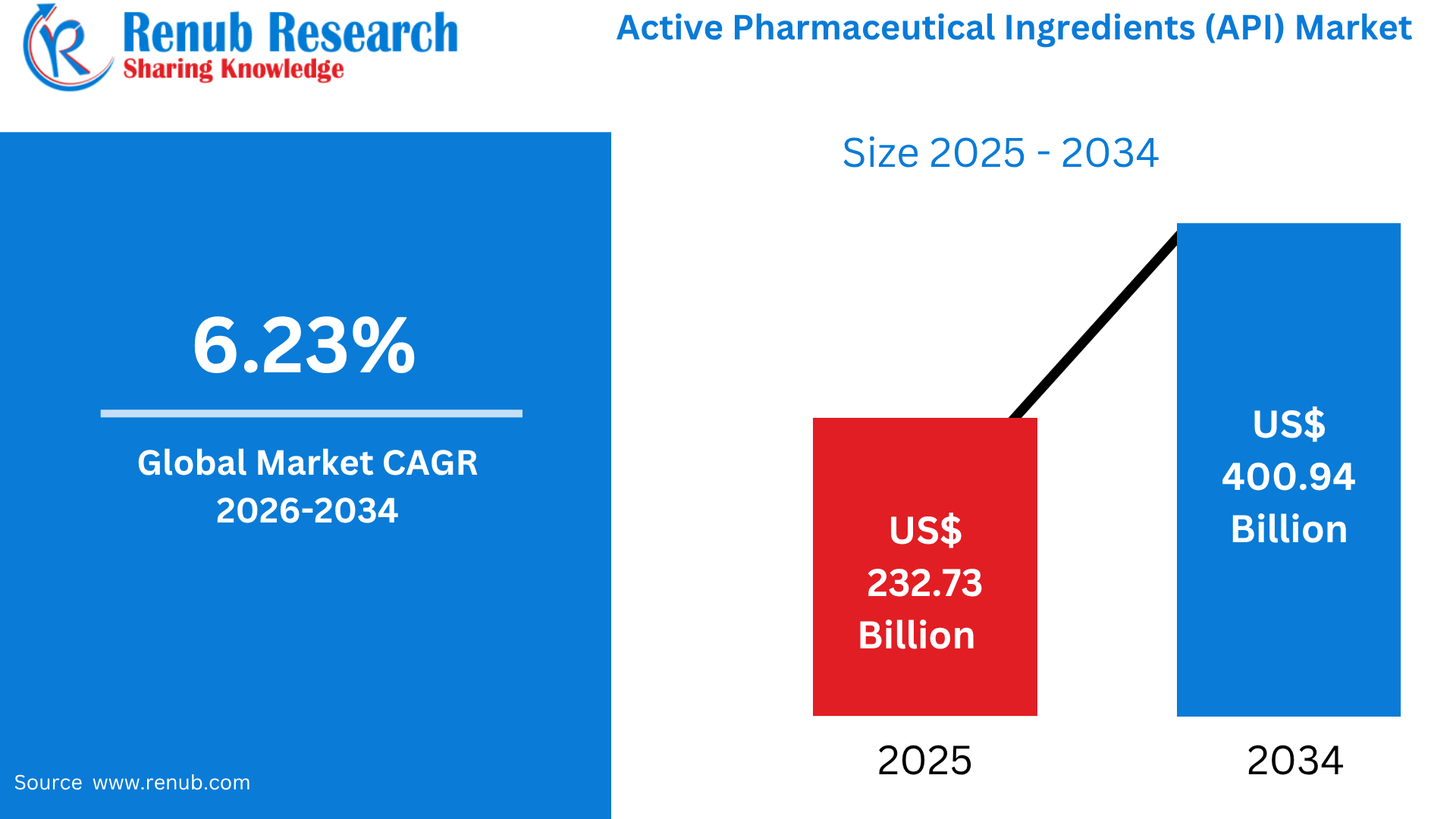
Active Pharmaceutical Ingredient (API) market is projected to expand from US$ 232.73 billion in 2025 to approximately US$ 400.94 billion by 2034, representing a CAGR of 6.23% between 2026 and 2034. Market growth is being supported by the rising consumption of generic medicines, the increasing global burden of chronic diseases, and continued expansion of pharmaceutical manufacturing capacity. The growing need for cost-effective therapies is encouraging pharmaceutical companies to increase API production and strengthen supply chains.
What are Active Pharmaceutical Ingredients (APIs)? Uses & Popularity Worldwide
Active Pharmaceutical Ingredients (APIs) are the biologically active substances in medicines that produce the intended therapeutic effect. They are the essential components responsible for treating, preventing, or managing diseases, while other ingredients in a formulation mainly support stability, delivery, taste, or appearance.
APIs are used across a broad range of medicines, including tablets, capsules, injections, vaccines, creams, inhalers, and biologic therapies. They can be manufactured through chemical synthesis, fermentation, biotechnology, or other specialized processes, depending on the molecule. APIs are widely used in treatments for chronic diseases such as diabetes, cardiovascular disorders, cancer, and respiratory conditions, as well as infectious and neurological diseases. Their global importance has increased with the expansion of generic medicines, specialty pharmaceuticals, and biologics.
According to the World Health Organization, noncommunicable diseases account for approximately 74% of deaths worldwide, creating sustained demand for pharmaceutical products and their active ingredients. Growing healthcare expenditure, aging populations, pharmaceutical innovation, and increasing medicine access in emerging economies are further supporting API demand. Consequently, APIs remain a critical and rapidly evolving component of the global pharmaceutical supply chain.
Top Countries in Active Pharmaceutical Ingredient (API) Manufacturing – 2025
1. India – Major Generic API Manufacturing Hub: India is one of the world’s leading API producers, particularly for generic medicines. Its cost-competitive manufacturing base, skilled workforce, established chemical industry, and large pharmaceutical sector support extensive domestic production and exports. India accounted for approximately 50% of active API DMFs supporting U.S. medicines in 2023.
2. China – Large-Scale API and Intermediate Production: China remains a critical source of APIs, pharmaceutical intermediates, and starting materials. It represented approximately 32% of API DMFs supporting U.S. medicines in 2023, making it one of the most important countries in the global pharmaceutical supply chain.
3. United States – High-Value and Specialized APIs: The U.S. maintains substantial API manufacturing capabilities, particularly for complex, high-potency, biologic, and specialty pharmaceutical ingredients. FDA data indicates that U.S. API manufacturing remains strategically important, even as manufacturing locations in India and China have expanded.
4. Germany – Advanced Pharmaceutical Manufacturing: Germany is an important European API manufacturing location, supported by advanced chemical expertise, stringent quality standards, and a sophisticated pharmaceutical industry. The country is particularly relevant for high-quality and specialized pharmaceutical ingredients.
5. Italy – Strong Chemical and Pharmaceutical Base: Italy has a well-established pharmaceutical manufacturing ecosystem and significant capabilities in producing APIs and pharmaceutical intermediates. Its proximity to European pharmaceutical markets and strong manufacturing expertise support its position in the global API supply chain.
6. Switzerland – High-Value and Innovative APIs: Switzerland plays an important role in the production of sophisticated pharmaceutical ingredients and innovative medicines. Its highly developed pharmaceutical industry, research capabilities, and concentration of multinational drug manufacturers make it particularly significant for high-value APIs.
7. France – Established European API Producer: France has a mature pharmaceutical and chemical manufacturing industry supporting API production for both domestic and international markets. Strong regulatory standards, scientific expertise, and pharmaceutical R&D contribute to its importance within Europe’s API ecosystem.
8. Ireland – Specialty and Biopharmaceutical Manufacturing: Ireland is a major pharmaceutical manufacturing center in Europe, particularly for innovative medicines, biologics, and high-value pharmaceutical products. The country hosts manufacturing operations of several major global pharmaceutical companies, supporting its role in specialized API production.
9. United Kingdom – Research-Driven API Production: The UK combines pharmaceutical research, biotechnology expertise, contract manufacturing, and advanced pharmaceutical production. Its capabilities are particularly relevant to innovative and complex pharmaceutical ingredients, supported by strong scientific institutions and regulatory infrastructure.
10. Japan – High-Quality Pharmaceutical Manufacturing: Japan has a technologically advanced pharmaceutical industry and strong capabilities in high-quality pharmaceutical manufacturing. Its API sector benefits from sophisticated production technologies, stringent quality requirements, and demand for innovative medicines.
Growth Drivers of the Active Pharmaceutical Ingredient (API) Market
Rising Demand for Generic and Affordable Medicines
The growing use of generic medicines is a major driver of the global Active Pharmaceutical Ingredient (API) market. Generic drugs contain the same active ingredients as their branded counterparts but are generally available at lower prices, making them increasingly important for cost-conscious healthcare systems. According to the World Health Organization, generic medicines can cost 30% to 80% less than originator products in many markets. The increasing prevalence of chronic diseases such as diabetes, cardiovascular disorders, and cancer is further raising demand for long-term drug therapies and, consequently, APIs. Emerging economies are also expanding access to essential medicines through generic-drug programs and public procurement. Pharmaceutical manufacturers are therefore increasing API sourcing and production capacity to support larger generic portfolios. In addition, patent expirations are creating opportunities for manufacturers to introduce generic versions of high-value medicines. This combination of affordability, expanding healthcare access, and increasing generic-drug production is expected to sustain API demand worldwide through 2034.
Increasing Prevalence of Chronic and Complex Diseases
The rising global burden of chronic diseases is significantly increasing demand for APIs used in long-term and specialized treatments. The World Health Organization estimates that noncommunicable diseases account for around 74% of deaths globally, with cardiovascular diseases, cancers, chronic respiratory diseases, and diabetes representing major contributors. As populations age and lifestyle-related disorders become more prevalent, demand for pharmaceutical treatments continues to increase. At the same time, the development of therapies for cancer, autoimmune disorders, neurological diseases, and rare conditions is creating demand for specialized and high-potency APIs. Biologics and targeted therapies are also expanding the range of sophisticated active ingredients required by pharmaceutical companies. Rising healthcare expenditure in developing economies is further improving access to medicines, increasing pharmaceutical consumption. API manufacturers are responding by investing in advanced synthesis technologies, high-potency production facilities, and specialized manufacturing capabilities. Consequently, the growing need for both conventional and advanced therapies is creating a broader and more resilient demand base for the global API market.
Expansion of Pharmaceutical Manufacturing and Outsourcing
The expansion of pharmaceutical manufacturing and increasing outsourcing of API production are creating significant opportunities for the API market. Pharmaceutical companies increasingly rely on contract development and manufacturing organizations (CDMOs) to reduce capital requirements, accelerate production, and access specialized technical capabilities. This trend has encouraged API manufacturers to expand production capacity and invest in modern facilities. Asia remains particularly important because of its large manufacturing base, skilled workforce, and comparatively competitive production costs. India and China together account for a substantial share of global generic-drug and API manufacturing activity. At the same time, pharmaceutical companies in North America and Europe are seeking greater supply-chain resilience following disruptions experienced during the COVID-19 pandemic. Governments are also encouraging domestic manufacturing of strategically important pharmaceutical ingredients. Investments in continuous manufacturing, automation, advanced chemical synthesis, and quality-control systems are improving production efficiency. As pharmaceutical companies increasingly adopt flexible outsourcing models and diversify suppliers, API manufacturers are expected to benefit from stronger long-term demand and expanding international partnerships.
Challenges of the Active Pharmaceutical Ingredient (API) Market
Strict Regulatory Requirements and Quality-Control Challenges
Stringent regulatory requirements represent a major challenge for API manufacturers because production facilities must comply with extensive quality, safety, environmental, and documentation standards. Regulatory agencies such as the U.S. FDA and European authorities require manufacturers to demonstrate consistent API quality, purity, stability, and traceability. Manufacturing facilities can face inspections, warning letters, product recalls, or supply restrictions when deficiencies are identified. The complexity increases for highly potent APIs, biologics-related ingredients, and specialized pharmaceutical compounds that require sophisticated containment and analytical systems. Manufacturers must therefore invest continuously in laboratory equipment, quality-management systems, validation procedures, employee training, and regulatory compliance. Smaller producers may find these investments particularly difficult because compliance costs can significantly increase operating expenses. Changes in regulatory expectations across different countries can also complicate international commercialization. Although strict standards improve medicine safety and quality, they increase development timelines and manufacturing costs. Maintaining consistent compliance across multiple production sites and international markets will remain an important operational challenge for API manufacturers.
Supply-Chain Disruptions and Dependence on Key Manufacturing Regions
The global API market remains vulnerable to supply-chain disruptions because pharmaceutical production depends on a complex network of raw-material suppliers, chemical manufacturers, intermediates producers, and specialized logistics providers. Heavy concentration of manufacturing capacity in countries such as China and India can create risks when geopolitical tensions, transportation disruptions, natural disasters, pandemics, or regulatory changes affect production. During the COVID-19 pandemic, pharmaceutical supply chains experienced significant disruptions, highlighting the importance of geographic diversification. Manufacturers also face volatility in prices for chemicals, solvents, energy, and other production inputs. Shortages of critical starting materials can delay API manufacturing and ultimately affect finished-drug availability. Governments in the United States and Europe are consequently promoting greater domestic or regional pharmaceutical manufacturing capacity to strengthen supply security. However, establishing new API plants requires substantial capital investment, skilled personnel, environmental approvals, and lengthy qualification processes. Balancing cost-efficient global sourcing with reliable and diversified supply networks will therefore remain a key challenge for API manufacturers through the forecast period.
API Product Launches / New API Portfolio Developments Worldwide
- Wanbury – Metformin HCl API Portfolio, India (2024): Wanbury announced a new API portfolio for FY2024–25 that included Metformin HCl, with estimated global demand of around 61,400 metric tons, alongside products such as Sertraline HCl and Diphenhydramine HCl.
- Wanbury – Sertraline HCl API, India (2024): As part of its expanded API portfolio, Wanbury announced plans to commercialize Sertraline HCl, an antidepressant API, with estimated global demand of approximately 650 metric tons.
- Wanbury – Diphenhydramine HCl APIs, India (2024): Wanbury included Diphenhydramine HCl and Diphenhydramine Citrate in its new API portfolio, targeting demand in antihistamine and related pharmaceutical applications.
- Wanbury – Mefenamic Acid API, India (2024): The company announced Mefenamic Acid as another upcoming API product, with estimated global requirements of approximately 1,469 metric tons, highlighting opportunities in analgesic and anti-inflammatory medicines.
- Wanbury – Tramadol API, India (2024): Tramadol was included in Wanbury’s planned API commercialization portfolio, with estimated global demand of about 556 metric tons.
- Lonza – AI-Enabled API Development Service, Switzerland (2024): Lonza launched an AI-enabled Route Scouting Service designed to accelerate the identification of synthetic routes for novel small-molecule APIs by combining AI technology with chemical and supply-chain expertise.
- Pfizer – API Manufacturing Facility, Singapore (2024): Pfizer opened a new approximately US$1 billion manufacturing facility in Singapore focused on producing APIs for medicines including cancer, pain, and antibiotic treatments, strengthening its global API manufacturing network.
- Gland Pharma & Neuland Laboratories – Sterile API Manufacturing Partnership, India (2026): The companies announced a long-term CDMO partnership focused on sterile APIs for complex injectable therapies, including development of a dedicated manufacturing suite with approximately 1,400 kg annual sterile API capacity.
- FDA Novel API Approvals – United States (2024): The FDA approved 50 novel drugs in 2024, introducing numerous new active ingredients into the U.S. pharmaceutical market. Examples included concizumab, olezarsen, ensartinib, and crinecerfont, reflecting continued innovation in API development.
- FDA First Generic API-Linked Product Approvals – United States (2024): The FDA continued expanding access to generic medicines through first-time generic approvals. In December 2024, for example, prucalopride tablets received first-generic approval, supporting continued demand for commercially available generic APIs.
Expanding Outsourcing and Third-Party API Manufacturing
Merchant APIs Market is expanding as pharmaceutical companies increasingly outsource active pharmaceutical ingredient production to specialized manufacturers. Merchant API suppliers serve multiple customers, including branded drug manufacturers, generic pharmaceutical companies, and contract development and manufacturing organizations (CDMOs). This business model allows pharmaceutical companies to access specialized production capabilities without making extensive investments in dedicated API facilities. The global pharmaceutical industry continues to generate trillions of dollars in annual medicine sales, creating substantial demand for reliable API supplies. Increasing pressure to reduce manufacturing costs, improve supply-chain flexibility, and accelerate drug commercialization is encouraging companies to work with external API producers. Merchant manufacturers are also investing in high-potency production, continuous manufacturing, automation, and advanced quality-control systems. As pharmaceutical companies diversify their supplier networks and prioritize reliable sourcing, merchant API manufacturers are expected to gain greater importance across the pharmaceutical value chain.
Rising Demand for Biologics and Advanced Therapies
Biotech APIs Market is gaining momentum as pharmaceutical innovation increasingly shifts toward biologics, biosimilars, vaccines, recombinant proteins, and monoclonal antibodies. Biologics account for a substantial share of pharmaceutical research pipelines and represent some of the industry’s fastest-growing therapeutic categories. Manufacturing these products requires specialized cell-culture systems, fermentation technologies, purification processes, and stringent quality controls. Increasing investment in biotechnology research is encouraging manufacturers to expand bioprocessing capacity and develop more sophisticated production platforms. The growing number of biologic medicines reaching commercialization is also creating recurring demand for high-quality biotech APIs. In addition, biosimilar development is expanding as healthcare systems seek more affordable alternatives to expensive biologic therapies. Advances in single-use bioreactors, continuous bioprocessing, and process automation are improving manufacturing efficiency. Consequently, innovation in biotechnology and increasing demand for complex therapeutic products are expected to remain major contributors to the expansion of the biotech API segment.
Growing Demand for Affordable Medicines
Generic APIs remain a fundamental component of pharmaceutical manufacturing because they enable the production of lower-cost medicines after branded products lose patent protection. Generic medicines generally provide equivalent therapeutic benefits at substantially lower prices, making them important for improving healthcare affordability and accessibility. The World Health Organization estimates that medicines account for a significant portion of healthcare expenditure in many countries, increasing pressure on healthcare systems to control pharmaceutical costs. Patent expirations involving high-value drugs create opportunities for generic manufacturers and subsequently increase demand for APIs. Manufacturers are focusing on improving production efficiency, reducing waste, strengthening quality systems, and expanding manufacturing capacity to remain competitive. Regulatory requirements from agencies such as the FDA also encourage consistent API quality, documentation, and process control. Increasing healthcare coverage, aging populations, chronic disease prevalence, and cost-containment policies are supporting continued generic drug utilization. These trends are expected to sustain long-term demand for cost-effective, high-quality generic APIs.
Persistent Burden of Cardiovascular Disease
Cardiovascular Diseases APIs Market is supported by the continued global burden of cardiovascular conditions, including hypertension, coronary artery disease, heart failure, and cardiac arrhythmias. According to the World Health Organization, cardiovascular diseases are the leading cause of death worldwide, accounting for approximately 17.9 million deaths annually, highlighting the enormous need for effective cardiovascular medicines. API demand is supported by widespread use of antihypertensive, cholesterol-lowering, antiplatelet, anticoagulant, and heart-failure therapies. Aging populations, sedentary lifestyles, obesity, and other risk factors are contributing to the continued prevalence of cardiovascular disorders. Pharmaceutical manufacturers therefore require consistent supplies of high-quality APIs for both branded and generic cardiovascular medicines. At the same time, advances in cardiovascular treatment are creating demand for newer and more specialized active ingredients. Increasing generic penetration and expanding access to essential medicines in developing markets further support volume growth. Together, persistent disease prevalence, long-term medication use, and continuing pharmaceutical innovation are expected to maintain strong demand for cardiovascular APIs.
Rising API Demand for Musculoskeletal Treatments
Orthopedic Active Pharmaceutical Ingredient (API) Market is expanding as the global burden of musculoskeletal conditions continues to increase. The World Health Organization estimates that around 1.71 billion people worldwide live with musculoskeletal conditions, making these disorders a major source of disability. Aging populations, sedentary lifestyles, obesity, and increasing participation in sports are contributing to demand for treatments for arthritis, osteoporosis, fractures, and other orthopedic conditions. APIs used in analgesics, anti-inflammatory medicines, bone-strengthening therapies, and postoperative treatments are therefore witnessing stronger demand. The growing number of orthopedic surgeries and rehabilitation procedures is also creating opportunities for API manufacturers. Pharmaceutical companies are investing in improved formulations and targeted therapies to provide better pain management and support bone health. In emerging economies, expanding hospitals, specialty clinics, and orthopedic-care infrastructure are improving access to treatment. Rising awareness of osteoporosis prevention and early management of musculoskeletal disorders is further supporting pharmaceutical consumption. Consequently, increasing disease prevalence, treatment requirements, and healthcare investment are expected to sustain growth in the orthopedic API segment.
Innovation and Domestic United States API Manufacturing Strength
United States API Market is supported by its sophisticated pharmaceutical ecosystem, substantial healthcare expenditure, and strong investment in research and development. The country remains a major producer and consumer of pharmaceutical ingredients, particularly for innovative therapies, specialty medicines, and complex APIs. The CDC reports that 6 in 10 U.S. adults have at least one chronic disease, creating a substantial long-term requirement for pharmaceutical treatments and their active ingredients. The increasing use of generic medicines is also supporting API demand, while the presence of contract development and manufacturing organizations (CDMOs) provides pharmaceutical companies with specialized production capabilities. Regulatory oversight from the FDA promotes stringent quality, safety, and manufacturing standards, although compliance can increase production costs. In addition, supply-chain disruptions have encouraged pharmaceutical companies and policymakers to strengthen domestic and regional API production. Investments in advanced manufacturing, automation, high-potency APIs, and biologics-related technologies are further improving the country’s capabilities. With strong pharmaceutical innovation, healthcare demand, and efforts to reduce dependence on overseas suppliers, the U.S. is expected to remain a strategically important API market.
Strong Regulatory Framework and Pharmaceutical Innovation in United Kingdom
United Kingdom API Market benefits from an established pharmaceutical industry, advanced healthcare infrastructure, and a highly developed regulatory environment. Demand for APIs is supported by the country’s substantial consumption of prescription and generic medicines, particularly for chronic conditions associated with an aging population. The UK’s pharmaceutical sector also maintains strong connections with universities, research institutions, biotechnology companies, and contract manufacturers, encouraging innovation in complex and high-value APIs. Regulatory standards administered through the Medicines and Healthcare products Regulatory Agency (MHRA) emphasize quality, safety, and consistency throughout pharmaceutical manufacturing. The country is also strengthening pharmaceutical supply-chain resilience and encouraging investment in advanced manufacturing capabilities. Specialized facilities for biologics, oncology products, and antibody-drug conjugates are creating additional opportunities for API manufacturers. Furthermore, increasing demand for generic medicines and specialty treatments is supporting production requirements across multiple therapeutic areas. Investment in manufacturing infrastructure, research, and technology is helping the UK maintain its position as an important pharmaceutical production and API development center. The combination of scientific expertise, regulatory quality, and healthcare demand is expected to support steady market expansion.
India Cost-Competitive Manufacturing and Growing Self-Reliance
India API Market is one of the most important manufacturing hubs in the global pharmaceutical supply chain. India is particularly strong in generic-drug production, supported by a large chemical manufacturing base, skilled workforce, established pharmaceutical companies, and comparatively competitive production costs. According to India’s Department of Pharmaceuticals, the country is responsible for supplying a significant share of medicines used globally, strengthening demand for domestically manufactured APIs. Government initiatives aimed at increasing domestic production of critical pharmaceutical ingredients are further supporting industry investment. The Production Linked Incentive (PLI) scheme for pharmaceuticals includes incentives for manufacturing selected critical APIs, drug intermediates, and key starting materials. Rising healthcare expenditure, increasing generic-drug consumption, and expanding contract manufacturing are creating additional opportunities. Indian manufacturers are also investing in fermentation technologies, specialty chemicals, complex APIs, and advanced production facilities to reduce dependence on imports. As pharmaceutical companies worldwide seek diversified supply chains, India’s established manufacturing capabilities provide an important competitive advantage. Consequently, increasing domestic demand, government support, exports, and global outsourcing are expected to strengthen India’s API market.
Saudi Arabia Localization and Pharmaceutical Manufacturing Expansion
Saudi Arabia API Market is developing as the country increases investment in pharmaceutical manufacturing and healthcare infrastructure under its broader economic diversification strategy. Government efforts to strengthen domestic medicine production are creating opportunities for API manufacturers and reducing dependence on imported pharmaceutical products. Saudi Arabia faces a significant burden of chronic diseases, particularly diabetes and cardiovascular conditions, which supports sustained demand for medicines and pharmaceutical ingredients. The country’s healthcare transformation initiatives are also encouraging the adoption of advanced therapies, modern manufacturing technologies, and stronger local pharmaceutical capabilities. Investments in pharmaceutical production facilities and partnerships with international companies are helping transfer technology and manufacturing expertise into the domestic market. Local production of APIs can improve supply-chain resilience while supporting the country’s objective of developing a more self-sufficient healthcare sector. In addition, increasing healthcare expenditure and the expansion of hospitals and specialty-care facilities are generating demand for a wider range of pharmaceutical products. As localization initiatives, foreign investment, and pharmaceutical partnerships continue, Saudi Arabia is positioned to gradually strengthen its API manufacturing ecosystem and reduce reliance on imported ingredients.
Active Pharmaceutical Ingredient Market Segments
Drug Type
- Innovative
- Generic
Synthesis
- Synthetic
- Biotech
Type of Manufacturer
- Captive
- Merchant
Application
- Cardiovascular Diseases
- Oncology
- Central Nervous System and Neurology
- Orthopedic
- Endocrinology
- Pulmonology
- Gastroenterology
- Nephrology
- Ophthalmology
- Other Applications
Countries
North America
- United States
- Canada
Europe
- France
- Germany
- Italy
- Spain
- United Kingdom
- Belgium
- Netherlands
- Turkey
Asia Pacific
- China
- Japan
- India
- Australia
- South Korea
- Thailand
- Malaysia
- Indonesia
- New Zealand
Latin America
- Brazil
- Mexico
- Argentina
Middle East & Africa
- South Africa
- Saudi Arabia
- UAE
All companies have been covered with 5 Viewpoints
- Overviews
- Key Person
- Recent Developments
- SWOT Analysis
- Revenue Analysis
Key Players Analysis
- Pfizer, Inc.
- Novartis International AG
- Sanofi
- Boehringer Ingelheim
- Bristol-Myers Squibb
- Teva Pharmaceutical Industries Ltd.
- ELI Lilly and Company
- GlaxoSmithKline
- Merck & Co., Inc.
- Abbvie Inc
Report Details:
| Report Features | Details |
| Base Year |
2025 |
| Historical Period |
2022 - 2025 |
| Forecast Period |
2026 - 2034 |
| Market |
US$ Billion |
| Segment Covered |
Drug Type, Synthesis, Type of Manufacturer, Application and Countres |
| Countries Covered |
|
| Companies Covered |
|
| Customization Scope |
20% Free Customization |
| Post-Sale Analyst Support |
1 Year (52 Weeks) |
| Delivery Format |
PDF and Excel through Email (We can also provide the editable version of the report in PPT/Word format on request) |
Customization Services available
- Analysis of Market Size and Its Segments
- More Company Profiles (Upto 10 without any additional cost):
- Additional Countries (Other than mentioned Countries):
- Region/Country Specific Reports:
- Market Entry Strategy:
- Region-Specific Market Dynamics:
- Regional Market Share Analysis:
- Trade Analysis:
- Production Insights:
- Others Customized Requests:
For more information contact our analysts.
Need More Assistance?
- Talk to our analysts to get more precious information on the current market trends.
- Include more countries and segments and customize the report based on the final requirement.
- Get a competitive advantage in your industry by knowing the report findings and making a positive impact on your revenues and operations.
- Our analysts are always ready to provide more help and pertinent information if you need any additional assistance.